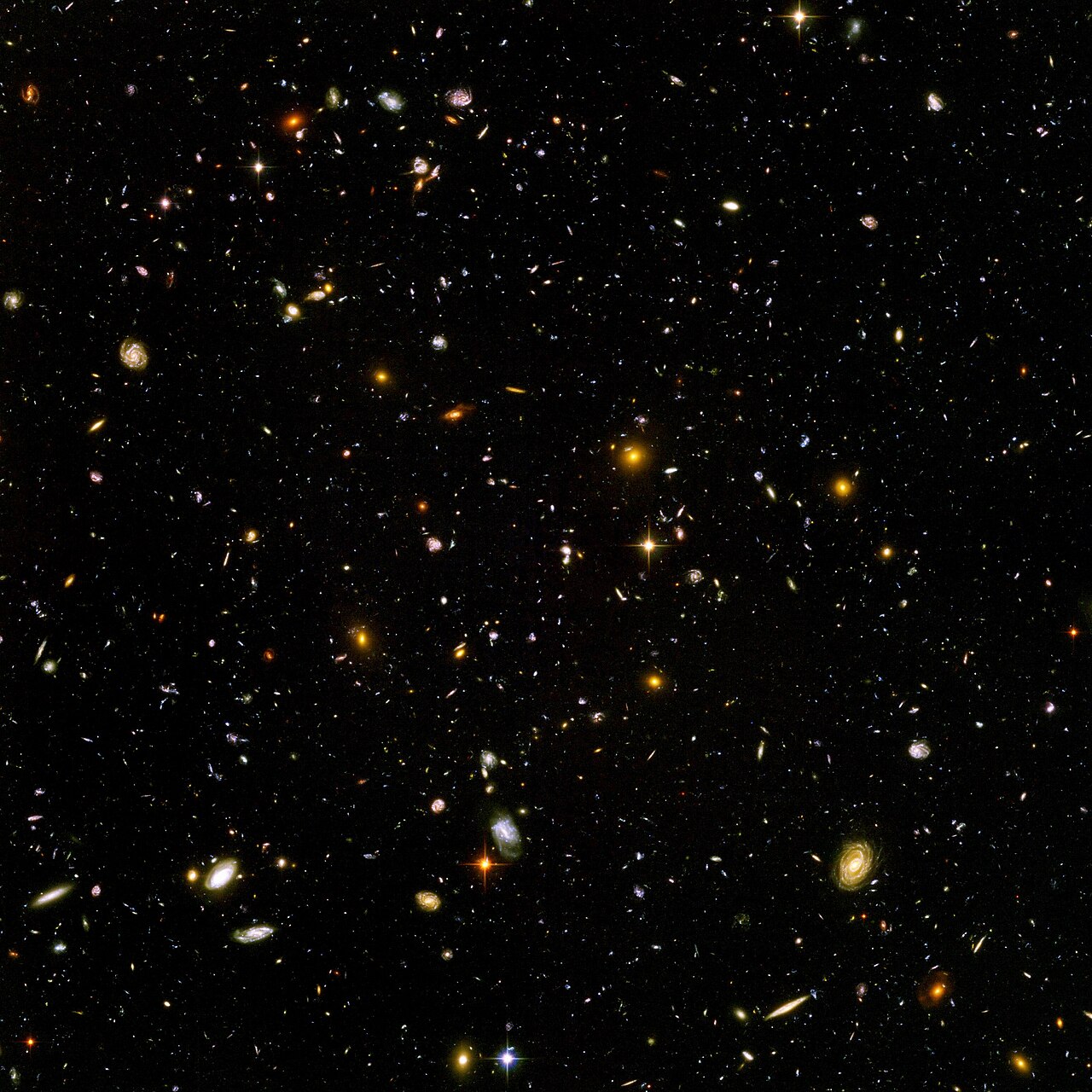
Space has a remarkable way of challenging common sense. The more scientists observe the cosmos, the more astonishing it becomes. Planets rain molten glass. Stars bend time. Galaxies collide without most of their stars ever crashing into each other. There are worlds where a year lasts less than a day and others where a single day is longer than an entire year.
What makes these facts even more incredible is that they are not science fiction. They are supported by observations from powerful telescopes, robotic spacecraft, laboratory physics, and decades of scientific research.
Our universe is governed by physical laws, yet those laws often produce phenomena far stranger than anything humans could have imagined. From black holes and neutron stars to exoplanets and distant galaxies, every discovery reveals that reality is often more extraordinary than fiction.
Here are 100 scientifically accurate space facts that sound unbelievable—but are absolutely true.
1. There Is No Sound in Space
Space is almost a perfect vacuum, meaning there are too few particles to carry sound waves. Explosions in space would be visually spectacular but completely silent to anyone nearby.
2. A Day on Venus Is Longer Than Its Year
Venus rotates extremely slowly. It takes about 243 Earth days to complete one rotation but only about 225 Earth days to orbit the Sun.
3. The Sun Contains More Than 99.8% of the Solar System’s Mass
Nearly all the matter in our solar system is concentrated inside the Sun. Everything else—including every planet, moon, asteroid, and comet—accounts for less than one percent.
4. Neutron Stars Can Spin Hundreds of Times Every Second
Some neutron stars, known as pulsars, rotate more than 700 times each second while remaining only about 20 kilometers across.
5. Space Is Not Completely Empty
Even the emptiest regions of intergalactic space contain a few atoms, photons, magnetic fields, and particles.
6. One Spoonful of a Neutron Star Would Weigh Around a Billion Tons on Earth
Neutron stars are so incredibly dense that a tiny amount of their material would have an enormous mass.
7. The International Space Station Falls Around Earth Forever
Astronauts experience weightlessness because the station is constantly falling toward Earth while moving sideways fast enough to continuously miss it.
8. The Sun Loses Millions of Tons of Mass Every Second
Through nuclear fusion, the Sun converts mass into energy according to Einstein’s equation E = mc².
9. Jupiter Has More Than 90 Known Moons
Scientists continue discovering additional small moons around Jupiter as telescopes improve.
10. Saturn Could Float in Water
Saturn’s average density is lower than water. Although no container large enough exists, the planet would theoretically float.
11. Black Holes Can Slowly Evaporate
According to Stephen Hawking’s theory, black holes emit extremely weak radiation and gradually lose mass over immense periods.
12. The Moon Is Slowly Moving Away from Earth
Laser measurements show the Moon drifts away by about 3.8 centimeters every year.
13. There Are More Trees on Earth Than Stars in the Milky Way
Earth contains roughly three trillion trees, while the Milky Way contains an estimated 100 to 400 billion stars.
14. The Milky Way Is Moving Through Space
Our galaxy travels through the universe at hundreds of kilometers per second.
15. Earth Is Not a Perfect Sphere
Earth bulges slightly at the equator because of its rotation, making it an oblate spheroid.
16. Mars Has the Largest Volcano in the Solar System
Olympus Mons rises about 22 kilometers above the surrounding plains.
17. Jupiter’s Great Red Spot Is Larger Than Earth
Although shrinking over time, this giant storm remains larger than our planet.
18. A Single Solar Flare Can Release More Energy Than Billions of Nuclear Bombs
The Sun regularly unleashes tremendous bursts of energy through magnetic activity.
19. Spacecraft Have Left the Solar System
Voyager 1 and Voyager 2 are traveling through interstellar space.
20. There Are Planets That Orbit Two Stars
Astronomers have confirmed numerous “circumbinary” planets, similar to the fictional world of Tatooine.
21. Some Exoplanets Are Darker Than Coal
Certain hot gas giants absorb almost all incoming light.
22. Uranus Rotates on Its Side
Its axis is tilted by about 98 degrees, making it appear to roll around the Sun.
23. Mercury Has Ice
Despite extreme daytime temperatures, permanently shadowed polar craters contain water ice.
24. The Sun Is White
From space, the Sun appears white. Earth’s atmosphere makes it often look yellow or orange.
25. Every Atom in Your Body Was Forged Inside Ancient Stars
Most elements heavier than hydrogen and helium formed through stellar nucleosynthesis.
26. Some Stars Are Older Than the Sun by Billions of Years
The oldest known stars formed shortly after the Big Bang.
27. The Night Sky Changes Over Time
Because stars move through space, familiar constellations slowly change shape over tens of thousands of years.
28. The Moon Has Moonquakes
Seismic instruments placed by Apollo astronauts detected quakes beneath the lunar surface.
29. The Largest Known Star Could Swallow Jupiter’s Orbit
Hypergiant stars reach sizes almost beyond imagination.
30. A Year on Mercury Lasts Only 88 Earth Days
Mercury races around the Sun faster than any other planet.
31. Pluto’s Largest Moon Is So Big That They Orbit Each Other
The Pluto–Charon system revolves around a point located outside Pluto itself.
32. There Are Rogue Planets Floating Alone Through Space
Some planets wander the galaxy without orbiting any star.
33. The Milky Way and Andromeda Will Collide
The two galaxies are expected to merge in roughly 4.5 billion years.
34. Most Stars in the Universe May Have Planets
Observations suggest planetary systems are extremely common.
35. You Cannot See the Great Wall of China from Space with the Naked Eye
This widespread myth is false.
36. The Sun’s Core Is About 15 Million Degrees Celsius
Fusion occurs under immense temperature and pressure.
37. A Black Hole Does Not Suck Everything Like a Cosmic Vacuum Cleaner
Objects far enough away orbit normally.
38. Space Smells Strange
Astronauts describe the scent on their suits after spacewalks as resembling burnt metal, welding fumes, or seared steak.
39. Earth Receives About 100 Tons of Space Dust Every Day
Tiny particles continuously enter our atmosphere.
40. The Universe Is Expanding
Galaxies are generally moving farther apart over cosmic time.
41. The Expansion of the Universe Is Accelerating
Dark energy appears to drive increasingly rapid expansion.
42. Lightning Exists on Other Planets
Jupiter, Saturn, and likely Venus experience powerful lightning storms.
43. Mars Has Blue Sunsets
Fine Martian dust scatters light differently from Earth’s atmosphere.
44. Diamonds May Fall Like Rain on Neptune and Uranus
High-pressure conditions may convert carbon into diamonds deep inside these planets.
45. Some Exoplanets Are Hotter Than Many Stars
Certain giant planets orbit so close to their stars that their atmospheres reach extraordinary temperatures.
46. The Largest Canyon in the Solar System Is on Mars
Valles Marineris stretches over 4,000 kilometers.
47. White Dwarfs Are About the Size of Earth
Despite their small size, they contain roughly the Sun’s mass.
48. A Teaspoon of White Dwarf Material Would Be Extremely Heavy
Its density is millions of times greater than ordinary matter.
49. Saturn Has a Hexagon at Its North Pole
A giant six-sided jet stream circles the pole.
50. Space Is Cold—but Not Everywhere
Temperature depends on whether an object absorbs sunlight or radiates heat.
51. Galaxies Can Contain Trillions of Stars
Some giant elliptical galaxies dwarf the Milky Way.
52. Earth Travels Around the Sun at Nearly 30 Kilometers Per Second
Yet we never feel the motion.
53. The Solar System Orbits the Milky Way
One galactic orbit takes roughly 230 million years.
54. A Solar Eclipse Is Possible Because the Sun and Moon Appear Nearly the Same Size
This is an extraordinary coincidence of size and distance.
55. Most of the Universe Is Invisible
Dark matter and dark energy together account for about 95% of the universe’s total mass-energy content.
56. The Closest Star Beyond the Sun Is More Than Four Light-Years Away
Even light takes years to cross the distance.
57. There Are More Stars Than Grains of Sand on Earth
Astronomers estimate the observable universe contains hundreds of sextillions of stars.
58. The Moon Has No Atmosphere Worth Breathing
Without atmospheric protection, temperatures vary dramatically.
59. Astronauts Grow Taller in Space
Reduced gravity allows the spine to expand slightly.
60. Space Can Damage DNA
Cosmic radiation poses one of the greatest challenges for deep-space exploration.
61. A Planet Can Orbit a Dead Star
Some planets survive after their parent stars evolve.
62. Stars Can “Cannibalize” Their Companions
In some binary systems, one star pulls material from another.
63. Some Galaxies Have No Spiral Arms
Galaxies come in many shapes.
64. Earth’s Magnetic Field Protects Life
It deflects much of the harmful charged particle radiation from the Sun.
65. There Are Stars Moving Fast Enough to Escape the Milky Way
These are called hypervelocity stars.
66. The Sun Will Eventually Become a White Dwarf
After expanding into a red giant, it will shed its outer layers.
67. Earth’s Atmosphere Extends Much Farther Than Most People Think
Its outermost layers gradually fade into space.
68. The Moon Was Likely Formed by a Giant Collision
The leading theory proposes a Mars-sized object struck the early Earth.
69. Some Comets Have Two Tails
Dust and ionized gas create separate tails.
70. A Comet’s Tail Always Points Away from the Sun
Solar wind determines its direction.
71. There Are Oceans Beneath the Ice of Several Moons
Europa and Enceladus likely contain global subsurface oceans.
72. Water Has Been Found Throughout the Solar System
Ice and water molecules exist on planets, moons, asteroids, and comets.
73. Jupiter Acts Like a Giant Vacuum Cleaner
Its enormous gravity captures or deflects many comets and asteroids.
74. Earth’s Rotation Is Gradually Slowing
The Moon’s gravity slowly lengthens our days.
75. Time Runs More Slowly Near Massive Objects
This prediction of general relativity has been experimentally confirmed.
76. GPS Satellites Must Correct for Relativity
Without these corrections, navigation systems would quickly become inaccurate.
77. The Universe Has a Cosmic Background Glow
The Cosmic Microwave Background is leftover radiation from the early universe.
78. Some Stars Pulse Like Giant Hearts
Variable stars regularly expand and contract.
79. Spacecraft Have Visited Every Major Planet
Robotic missions have explored all eight planets.
80. The Largest Impact Craters Can Span Thousands of Kilometers
Ancient collisions shaped many planetary surfaces.
81. Tiny Black Holes Have Never Been Observed
Although theorized in some models, none have been confirmed.
82. Earth’s Auroras Begin at the Sun
Charged particles from solar activity trigger spectacular polar lights.
83. There Are Mountains Taller Than Everest on Other Worlds
Olympus Mons greatly exceeds Mount Everest in height.
84. The Hottest Planet Is Not Mercury
Venus is hotter because of its runaway greenhouse atmosphere.
85. Stars Can Explode More Than Once in Different Ways
Some stars experience repeated nova eruptions before ending as supernovae.
86. The Brightest Object in Earth’s Sky After the Sun Is Usually the Moon
Its brightness comes from reflected sunlight.
87. There Are Exoplanets Made Mostly of Gas Larger Than Jupiter but Less Massive
Extreme heating causes their atmospheres to inflate.
88. A Light-Year Measures Distance, Not Time
It is the distance light travels in one year.
89. The Milky Way Has a Supermassive Black Hole
Sagittarius A* resides at our galaxy’s center.
90. Stars Are Born Inside Giant Clouds of Gas and Dust
These stellar nurseries are called molecular clouds.
91. Some Planets Orbit Their Stars in Just Hours
Ultra-short-period planets complete astonishingly rapid orbits.
92. There May Be More Planets Than Stars in the Milky Way
Current evidence suggests planets are incredibly abundant.
93. Spacecraft Have Landed on an Asteroid
Several missions have successfully touched down on asteroids.
94. Comets Can Contain Organic Molecules
Space chemistry produces surprisingly complex compounds.
95. Earth Is Continuously Hit by Cosmic Rays
Most are harmlessly absorbed by our atmosphere.
96. Some Galaxies Form Stars Thousands of Times Faster Than the Milky Way
These are known as starburst galaxies.
97. The Observable Universe Is About 93 Billion Light-Years Across
Cosmic expansion makes it far larger than its age might suggest.
98. No Human Has Ever Traveled Beyond the Moon
The Apollo missions remain the farthest humans have ventured from Earth.
99. Every Sunrise Is Slightly Different
Earth’s atmosphere constantly changes, altering the colors and appearance of sunlight.
100. The Universe Keeps Becoming More Amazing the More We Learn
Every new telescope, every robotic spacecraft, and every scientific mission reveals phenomena that once seemed impossible. From gravitational waves and exoplanets to black hole images and distant galaxies formed shortly after the Big Bang, modern astronomy continues to prove that the real universe is often far more astonishing than even the wildest science fiction.