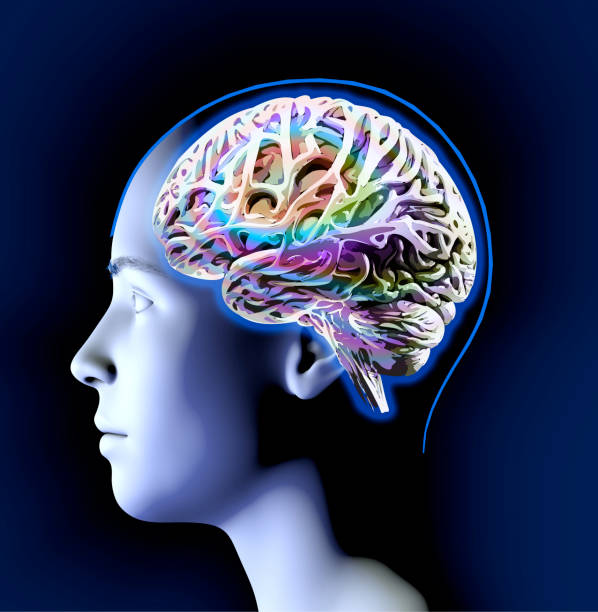
You promise yourself that tomorrow will be different. Tomorrow you will wake up early, lace up your shoes, and finally become the kind of person who exercises consistently. Tomorrow arrives. The alarm rings. Your brain whispers, “Not today.”
This quiet resistance is not a personal flaw. It is biology.
The human brain evolved to conserve energy. For most of our species’ history, food was scarce and survival depended on preserving calories. Movement was necessary for hunting, gathering, and escaping danger—but unnecessary exertion was wasteful. Your nervous system still carries that ancient programming. When modern life offers food without effort and entertainment without movement, your brain defaults to conservation mode.
At the same time, exercise initially feels uncomfortable. Muscles burn. Breathing grows heavy. Heart rate rises. The brain interprets these sensations as stress signals. The amygdala, which processes threat and discomfort, may amplify the urge to stop. Unless there is a powerful reward attached, your brain will often choose the couch.
Yet here is the beautiful paradox: the same brain that resists exercise is also capable of learning to crave it. Through neuroplasticity, the brain rewires itself in response to repeated experiences. Dopamine circuits that once lit up for scrolling or snacking can begin to light up for movement. Stress hormones that once spiked during a workout can be replaced by endorphins and endocannabinoids that create calm and pleasure.
You do not need to fight your brain. You can work with it. The following ten science-based strategies are not about forcing discipline through willpower alone. They are about gently retraining your mind so that exercise becomes something you want, not something you endure.
1. Reframe Exercise as a Reward, Not a Punishment
Language shapes perception, and perception shapes motivation.
If you tell yourself that exercise is punishment for eating dessert or for gaining weight, your brain categorizes it as a negative experience. Studies in psychology show that when behaviors are framed as obligations or corrections, intrinsic motivation decreases. The brain resists what feels like self-criticism.
Instead, reframe exercise as a reward. It is time you dedicate to your heart, your lungs, your future self. Aerobic exercise increases blood flow to the brain and stimulates the release of brain-derived neurotrophic factor, a protein that supports neuron growth and learning. Resistance training strengthens not only muscles but also insulin sensitivity and bone density. Movement regulates mood by influencing neurotransmitters such as serotonin and dopamine.
When you step into a workout thinking, “I get to move my body,” rather than “I have to burn calories,” you activate a different emotional response. The prefrontal cortex, which governs decision-making and long-term planning, becomes more engaged. The activity shifts from punishment to investment.
Over time, this reframing changes the emotional signature of exercise. Your brain begins associating movement with empowerment instead of shame. That emotional shift is powerful. It lays the foundation for consistency.
2. Start So Small It Feels Almost Ridiculous
One of the most reliable ways to build a new habit is to reduce friction to near zero.
Behavioral science shows that large goals often trigger avoidance. If you plan to run five kilometers every morning when you currently run none, your brain perceives a steep cost in effort. The anterior cingulate cortex, which helps evaluate effort versus reward, may decide the cost is too high.
But what if your goal were two minutes?
Two minutes of stretching. Two minutes of walking. Five push-ups. A single yoga pose.
This approach works because it bypasses the brain’s resistance threshold. Once you begin, momentum often carries you further. Even if it does not, you still reinforce the identity of someone who shows up.
Neuroscience supports this strategy. Habits form through repetition in the basal ganglia. The more frequently you perform a behavior, even in small doses, the stronger the neural pathway becomes. Consistency matters more than intensity in the early stages.
When exercise feels easy to start, your brain stops bracing for discomfort. Gradually, you can increase duration and intensity. But the key is this: fall in love with showing up before you worry about performance.
3. Attach Movement to Something You Already Love
The brain learns through association.
If you only allow yourself to listen to your favorite podcast while walking, or to watch a beloved show while cycling on a stationary bike, you create a powerful pairing. This technique is sometimes called temptation bundling. It works because the brain’s reward system, especially dopamine pathways, begins linking the pleasurable stimulus with the physical activity.
Over time, the two become intertwined. The anticipation of the podcast may spark the desire to move. Exercise shifts from a standalone chore to part of a ritual you genuinely enjoy.
Music can also play a profound role. Research shows that rhythmic, upbeat music can reduce perceived exertion during workouts. The motor cortex responds to rhythm, helping coordinate movement. Meanwhile, pleasurable music activates reward centers in the brain. When exercise is synchronized with music you love, it can feel smoother and more energizing.
By deliberately pairing movement with pleasure, you train your brain to expect good feelings during exercise rather than discomfort alone.
4. Focus on Immediate Benefits, Not Distant Goals
Many people begin exercising for long-term outcomes: weight loss, longevity, disease prevention. These are worthy goals. But the human brain is wired for immediate rewards.
The limbic system responds more strongly to short-term gains than to distant promises. Telling yourself that exercise will reduce your risk of cardiovascular disease decades from now does little to motivate you today.
Instead, notice what happens right after you move. Within minutes of moderate exercise, blood circulation increases. Oxygen delivery to the brain improves. Endorphins, the body’s natural opioids, are released, often creating a mild sense of euphoria sometimes called the runner’s high. Levels of anxiety can drop. Mental clarity can sharpen.
When you finish a workout, pause. Pay attention to your breathing slowing down, to the warmth in your muscles, to the subtle uplift in mood. This practice strengthens the brain’s association between exercise and positive internal states.
Over time, your brain begins to anticipate these immediate benefits. Exercise becomes a tool for stress relief, focus, and emotional regulation—not just a means to a distant outcome.
5. Redefine What “Counts” as Exercise
Your brain often resists rigid definitions.
If you believe exercise must involve intense gym sessions or structured routines, you may feel overwhelmed. But from a physiological perspective, movement exists on a spectrum. Walking briskly, climbing stairs, dancing in your room, gardening, and playing with children all elevate heart rate and engage muscles.
Public health research consistently shows that moderate physical activity accumulated throughout the day improves cardiovascular health, metabolic function, and mental well-being. The body responds to total movement volume, not just formal workouts.
When you redefine exercise as movement, you lower psychological barriers. The brain no longer categorizes activity as a high-stakes event requiring special preparation. Instead, it becomes part of daily life.
This flexibility increases adherence. And adherence is what transforms exercise from occasional effort into lasting habit.
6. Visualize the Identity You Want to Become
Humans are driven by identity as much as by outcomes.
If you repeatedly tell yourself, “I am not an athletic person,” your brain reinforces that narrative. The self-concept stored in neural networks influences behavior. Cognitive science suggests that actions aligned with identity feel easier and more authentic.
Instead of focusing solely on goals like losing ten kilograms or running a marathon, shift toward identity-based thinking. Picture yourself as someone who values movement. Someone who takes care of their body. Someone who prioritizes energy and vitality.
Visualization can strengthen this shift. When you vividly imagine yourself completing a workout, the motor cortex activates in patterns similar to actual movement. Mental rehearsal has been shown to improve performance and increase confidence.
The key is repetition. Each time you show up for a small session, you cast a vote for your new identity. Gradually, the brain updates its self-image. Exercise stops feeling like an external demand and starts feeling like an expression of who you are.
7. Use Social Connection as Fuel
The human brain is profoundly social.
Exercising with others can dramatically increase motivation. Social neuroscience shows that shared experiences amplify reward signals. When you move alongside friends, your brain releases oxytocin, a hormone associated with bonding. Positive social feedback reinforces behavior.
Group classes, walking clubs, team sports, or even virtual fitness communities can provide accountability and encouragement. Knowing someone expects you can engage commitment mechanisms in the brain that are stronger than private promises.
Even friendly competition can be motivating. Seeing a peer’s progress can activate comparison circuits that push you to improve. When framed positively, this can increase effort without undermining self-esteem.
Exercise becomes not just a solitary struggle but a shared journey. And humans are far more likely to persist in shared journeys.
8. Track Progress in a Way That Feels Meaningful
The brain thrives on evidence of progress.
Dopamine is released not only when we receive rewards but also when we anticipate and move toward them. Tracking improvements—whether in strength, endurance, flexibility, or consistency—provides tangible proof that effort leads to change.
This does not require obsessive data collection. It might be noting that you can now walk up stairs without breathlessness. Or that you lifted a slightly heavier weight than last month. Or that you completed three sessions this week instead of one.
Visible progress reinforces the effort-reward loop in the brain. The prefrontal cortex recognizes improvement, and motivation strengthens.
Importantly, progress should be personalized. Comparing yourself to unrealistic standards can backfire. Focus on your own trajectory. The brain responds best when success feels attainable and authentic.
9. Embrace Discomfort as a Sign of Growth
Part of learning to love exercise involves redefining discomfort.
When muscles burn during resistance training, it reflects metabolic processes such as the accumulation of hydrogen ions and the recruitment of muscle fibers. When your heart rate rises during cardio, your cardiovascular system is adapting to deliver oxygen more efficiently.
These sensations are not threats. They are signals of adaptation.
Cognitive reappraisal, a psychological technique, involves changing how you interpret physical sensations. Studies show that when individuals view increased heart rate as excitement rather than anxiety, performance improves. Similarly, when you interpret muscle fatigue as progress rather than pain, your emotional response softens.
This does not mean ignoring injury or pushing beyond safe limits. It means distinguishing between harmful pain and normal training stress. With experience, your brain learns that temporary discomfort leads to long-term strength.
As that understanding deepens, fear diminishes. And without fear, enjoyment has room to grow.
10. Celebrate Consistency, Not Perfection
Perfectionism is one of the greatest enemies of habit formation.
If you believe that missing one workout means failure, your brain may respond with discouragement and avoidance. This all-or-nothing thinking activates stress responses and undermines motivation.
Instead, celebrate consistency over time. The physiology of adaptation depends on repeated stimulus, not flawless execution. Missing a day does not erase neural pathways or muscle fibers. What matters is returning.
Self-compassion plays a measurable role in long-term behavior change. Research suggests that individuals who respond to setbacks with kindness rather than harsh self-criticism are more likely to persist.
When you forgive yourself for imperfection, you reduce the emotional cost of restarting. Exercise becomes a lifelong practice rather than a fragile streak.
The Transformation: From Resistance to Relationship
Loving exercise does not usually happen overnight. It is a gradual shift in perception, biology, and identity.
As weeks turn into months, something remarkable occurs. Your resting heart rate may decrease, indicating improved cardiovascular efficiency. Your mitochondria—the energy-producing structures inside cells—become more numerous and efficient. Your muscles adapt. Your brain releases neurotransmitters more readily during movement. The stress that once accompanied workouts begins to fade.
But beyond the physiology, a deeper transformation unfolds. Exercise becomes a conversation between you and your body. It becomes a space where you process thoughts, regulate emotions, and reconnect with physical presence.
You begin to crave the clarity after a brisk walk. The grounded feeling after lifting weights. The steady rhythm of breathing during a run. The sense of agency that comes from choosing to move.
This is not trickery in a manipulative sense. It is alignment. You are aligning your ancient brain with modern understanding. You are teaching it that movement is not a threat but a gift.
A Final Reflection: Falling in Love With Your Own Strength
At its core, exercise is not about sculpting appearance or chasing external validation. It is about discovering what your body can do.
The human organism is astonishingly adaptable. Muscles strengthen in response to load. Bones thicken under stress. The heart grows more efficient with training. The brain forms new neural connections. Each workout is a signal that says, “Adapt.” And the body listens.
When you learn to work with your mind rather than against it, exercise transforms from obligation to opportunity. It becomes an act of respect toward the only body you will ever inhabit.
You do not have to become a marathon runner or a competitive athlete. You only have to begin. Start small. Pair movement with joy. Focus on immediate benefits. Celebrate progress. Forgive imperfection.
Gradually, your brain will shift. What once felt like resistance may turn into anticipation. What once felt like effort may begin to feel like freedom.
And one day, you may notice something quietly extraordinary. You are no longer trying to trick your mind into loving exercise.
You simply do.