We live as though reality is solid.
The ground beneath our feet feels permanent. The sky appears dependable. The laws of physics seem fixed and unbreakable. We plan years ahead, build cities meant to last centuries, and speak of the future as though it is guaranteed.
Yet beneath this comforting sense of stability lies a universe governed by forces far larger and stranger than everyday life suggests. Our planet is a thin crust over a molten interior. Our atmosphere is a fragile layer clinging to gravity. Our Sun is a nuclear furnace balanced between collapse and explosion. Our galaxy drifts through cosmic space filled with radiation, black holes, and high-energy events.
Most of the time, the universe is kind. Catastrophes are rare on human timescales. But the laws of physics permit events so powerful that they could transform—or even end—our civilization in moments. None of these scenarios require fantasy. They arise from well-established science.
Below are ten scientifically plausible ways our reality could shatter in an instant.
1. A Nearby Gamma-Ray Burst
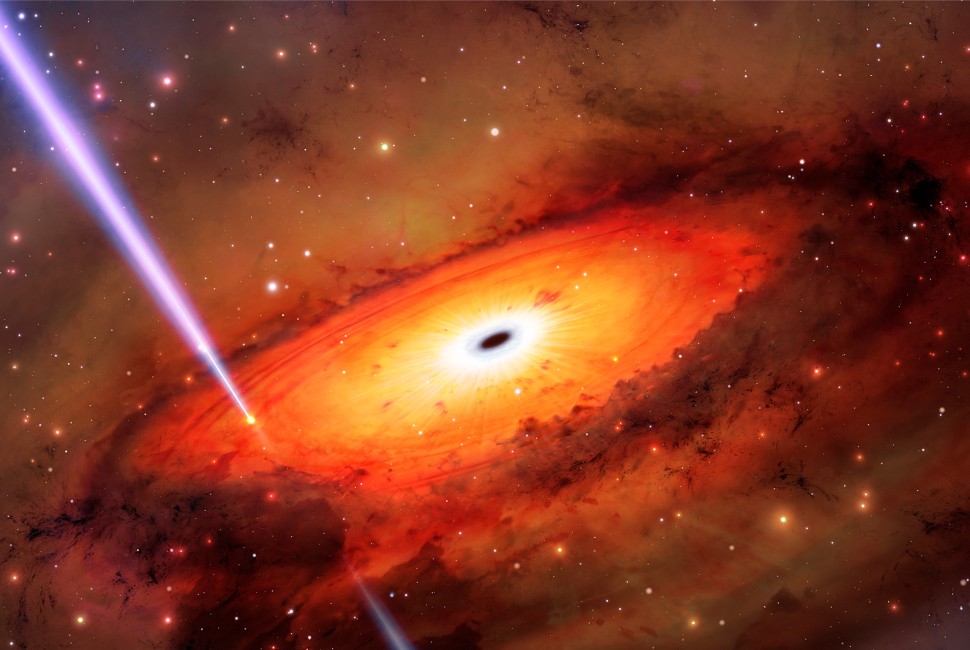
Gamma-ray bursts are among the most energetic events known in the universe. They occur when massive stars collapse into black holes or when neutron stars merge. In seconds, they can release more energy than our Sun will emit in its entire lifetime.
Most gamma-ray bursts occur in distant galaxies, far beyond the reach of danger. But if one were to occur within our galaxy and if its beam were directed toward Earth, the consequences could be devastating.
Gamma-ray bursts are not uniform explosions. They emit tightly focused jets of radiation. If Earth lay in the path of such a jet from a nearby source—perhaps within several thousand light-years—the intense radiation could strip away a significant portion of our ozone layer. Without ozone, harmful ultraviolet radiation from the Sun would flood the surface, damaging ecosystems and triggering mass extinctions.
The terrifying aspect of gamma-ray bursts is their speed. The radiation travels at the speed of light. There would be no warning beyond the first flash. Within seconds, the upper atmosphere could be chemically altered.
Astronomers monitor potential progenitor stars, and the probability of a dangerously close burst in the near future is considered low. But “low” is not “zero.” The universe contains stars capable of producing such events, and we reside within a galaxy that has hosted them before.
Our blue planet floats beneath a cosmic shooting range we cannot control.
2. A Massive Solar Superflare
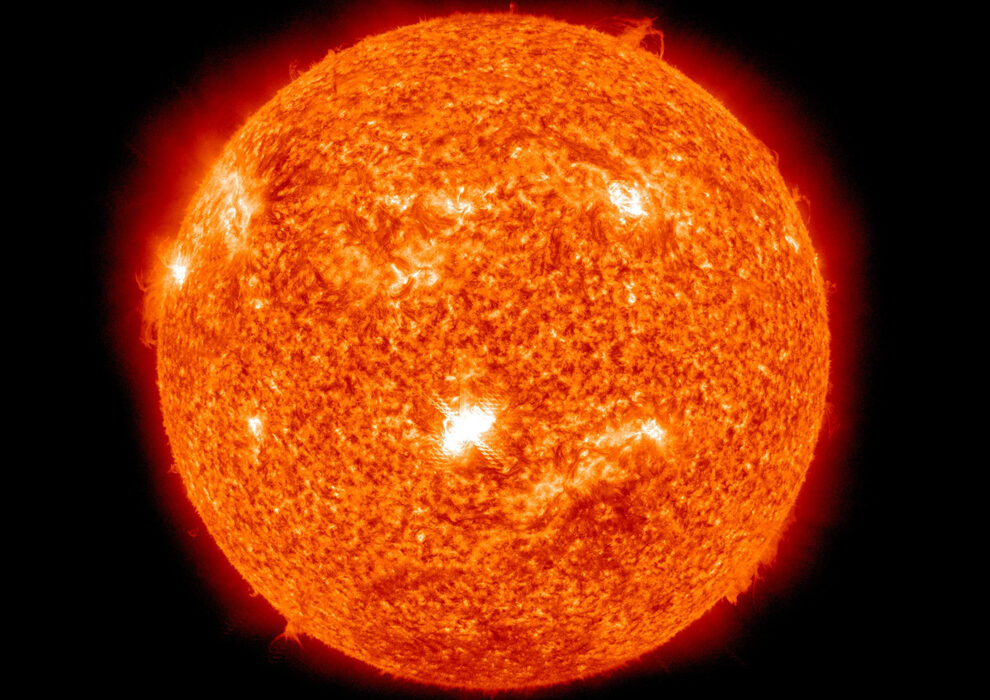
The Sun appears constant, a steady golden disk in the sky. Yet it is a magnetically active star, capable of violent eruptions known as solar flares and coronal mass ejections.
In 1859, a powerful solar storm known as the Carrington Event struck Earth. Telegraph systems failed, sparks flew from equipment, and auroras appeared at unusually low latitudes. If a similar event occurred today, the impact would be far more severe.
Modern civilization depends on electrical grids, satellites, communication networks, and GPS systems. A sufficiently powerful solar storm could induce massive currents in power lines, damaging transformers and triggering widespread blackouts. Satellites could be disabled. Aviation and navigation systems could be disrupted.
Observations of other Sun-like stars suggest that “superflares” far more powerful than typical solar flares are possible, though they appear rare for stars like ours. If the Sun were to unleash such an event, the consequences could cascade through technological infrastructure worldwide.
The Earth itself would survive. But the fabric of modern civilization could unravel in hours.
We live under a star that sustains life—and occasionally reminds us of its power.
3. A Large Asteroid Impact
The extinction of the dinosaurs 66 million years ago was likely triggered by an asteroid roughly 10 kilometers in diameter striking Earth near what is now the Yucatán Peninsula. The impact released energy equivalent to billions of nuclear bombs, ignited wildfires, triggered tsunamis, and altered the climate for years.
Earth’s orbit crosses paths with countless asteroids. Most are small and burn up harmlessly in the atmosphere. But some are large enough to cause regional or global devastation.
An asteroid a few kilometers wide striking a populated region or ocean could cause immediate destruction, massive tsunamis, and climate effects from dust and aerosols injected into the atmosphere. Sunlight could be blocked, temperatures could drop, and agriculture could collapse.
Space agencies track near-Earth objects and have developed early detection systems. Plans for deflection missions are under study and have been tested on small scales. Yet the possibility remains that a previously undetected object could be on a collision course.
Unlike distant cosmic events, asteroid impacts have occurred repeatedly in Earth’s history. They are part of the planet’s natural environment.
The difference today is that billions of human lives and a global civilization hang in the balance.
4. A Nearby Supernova
When massive stars exhaust their nuclear fuel, they explode as supernovae. These explosions outshine entire galaxies for brief periods and scatter heavy elements across space.
If a supernova were to occur within about 30 light-years of Earth, it could significantly affect our atmosphere. High-energy radiation and cosmic rays might damage the ozone layer, increasing surface ultraviolet radiation.
Current astronomical observations suggest no known star within that critical distance is likely to explode imminently. Some candidates exist at greater distances, but they are far enough away that Earth would likely be safe from severe biological harm.
Yet the possibility illustrates how dependent we are on cosmic geography. The placement of stars in our galactic neighborhood influences long-term planetary safety.
We inhabit a region that appears relatively quiet. But quiet in astronomy means “on million-year timescales.”
5. A Sudden Vacuum Decay Event
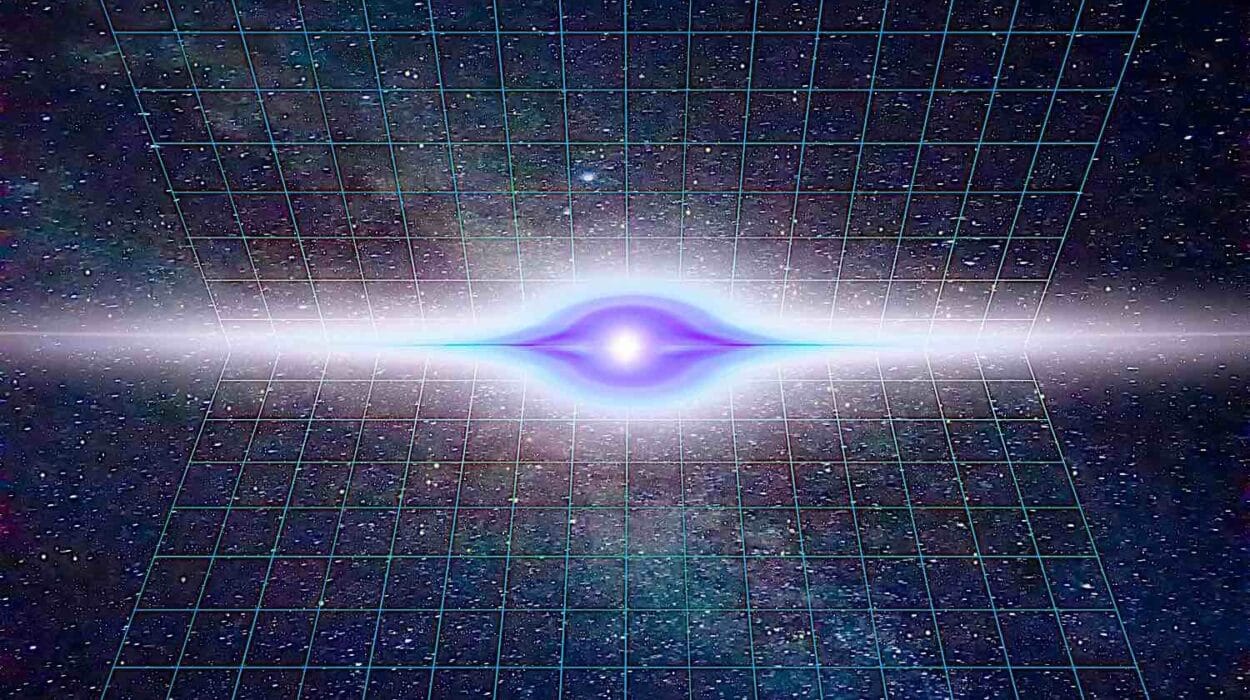
Modern physics describes the vacuum of space not as empty nothingness, but as a quantum field with energy and structure. According to some interpretations of particle physics, our universe may reside in a “metastable” vacuum state—a local minimum of energy that is not the absolute lowest possible state.
If this is true, a transition to a lower energy state could, in principle, occur. Such an event would begin at a single point and expand outward at nearly the speed of light, forming a bubble of new vacuum.
Inside that bubble, the fundamental constants and laws of physics might differ from those we know. Atoms might not form. Chemistry might be impossible. Structures would be destroyed not by fire or radiation, but by the rewriting of physical law itself.
This scenario arises from extrapolations of quantum field theory and measurements of the Higgs boson mass. Current data suggest that our vacuum may be metastable on timescales vastly longer than the age of the universe. There is no evidence that such a decay is imminent.
But the mere possibility is staggering.
Reality itself may not be in its final configuration.
6. A Rogue Black Hole Passing Nearby
Black holes wander the galaxy. Some formed from collapsed stars; others may have originated in the early universe. Most are distant and harmless to us.
If a rogue black hole passed close to the solar system, its gravitational influence could disrupt planetary orbits. Even a stellar-mass black hole passing within a few hundred astronomical units could destabilize outer objects like those in the Oort Cloud, sending comets inward in large numbers.
A direct encounter with Earth is extraordinarily unlikely. The galaxy is vast, and stars—and black holes—are separated by immense distances. But gravitational perturbations could alter long-term orbital stability.
Such an event would not necessarily shatter reality in seconds. Yet a close passage could trigger cascading effects: comet showers, orbital changes, gravitational disruptions.
We are not isolated. We are embedded in a dynamic galactic system.
7. A Global Nuclear Conflict
Unlike cosmic threats, this one originates from human technology. Nuclear weapons harness the energy locked within atomic nuclei, releasing enormous explosive force.
A large-scale nuclear war could devastate cities instantly. Beyond the immediate destruction, widespread fires could inject soot into the upper atmosphere. Climate models suggest that a “nuclear winter” scenario could significantly reduce global temperatures, disrupt agriculture, and threaten food supplies worldwide.
The physics of nuclear fission and fusion is well understood. The climatic effects of massive soot injection are supported by atmospheric science.
This scenario does not require exotic astrophysics. It is grounded in technology already built.
Reality, in this case, would shatter not because the universe turned against us—but because we turned against ourselves.
8. A Massive Pandemic from a Novel Pathogen
Biology operates under the laws of physics and chemistry. Viruses and bacteria evolve through mutation and selection. Most outbreaks are contained. Some are not.
A highly transmissible and highly lethal pathogen could spread globally before containment measures take effect. Modern transportation enables rapid transmission across continents.
While medical science has advanced dramatically, it depends on infrastructure, supply chains, and global coordination. A severe pandemic could overwhelm healthcare systems and destabilize economies.
This is not speculative fiction. History records pandemics that reshaped societies. The difference today lies in population density and global connectivity.
Reality could shift not in an explosion, but in an invisible wave of microscopic particles.
9. A Sudden Geomagnetic Reversal with Severe Consequences
Earth’s magnetic field is generated by motions in its liquid outer core. This field shields the planet from charged particles emitted by the Sun.
The magnetic field has reversed polarity many times in Earth’s history. These reversals occur over thousands of years and are not instantaneous flips. During transitions, the field may weaken significantly.
If the field weakened dramatically, more solar and cosmic radiation could reach the atmosphere and surface. Satellites and power grids would be more vulnerable. Increased radiation exposure at high altitudes could affect aviation.
Past reversals did not trigger mass extinctions, suggesting that life can endure such changes. However, modern technological systems are more sensitive to geomagnetic disturbances.
The invisible shield protecting Earth is dynamic, not permanent.
10. Runaway Climate Feedback Loops
Earth’s climate is regulated by complex feedback mechanisms involving oceans, ice sheets, atmospheric chemistry, and ecosystems.
If certain thresholds are crossed, feedback loops could amplify warming. Melting ice reduces surface reflectivity, causing more solar absorption. Thawing permafrost releases methane, a potent greenhouse gas. Ocean circulation patterns could shift.
Climate change is already measurable. The concern is not instantaneous planetary destruction, but rapid destabilization of ecosystems and human systems.
Reality would not shatter in a flash of light. It would fracture through cascading environmental stress—food shortages, migration, conflict.
The physics of greenhouse gases and radiative forcing is well established. The question is how quickly and how far feedbacks might push the system.
Living on a Knife’s Edge
When we examine these possibilities, it is tempting to feel fear. Gamma-ray bursts. Vacuum decay. Asteroid impacts. Nuclear winter.
But perspective matters.
The universe is vast and ancient. Catastrophic events are rare on human timescales. Earth has endured for over four billion years. Life has survived asteroid impacts, supervolcanoes, ice ages, and magnetic reversals.
What is truly astonishing is not that reality could shatter—but that it has remained stable long enough for consciousness to arise and contemplate these dangers.
Science does not reveal these scenarios to terrify us. It reveals them to understand them. Early detection systems track asteroids. Space weather monitoring predicts solar storms. Climate models guide mitigation strategies. Diplomacy and policy seek to reduce nuclear risks.
Knowledge transforms fear into preparation.
We exist in a universe that is powerful, indifferent, and governed by precise laws. Those laws allow for beauty, complexity, and life. They also allow for catastrophe.
Our task is not to deny the fragility of our situation. It is to recognize it—and to act wisely within it.
Reality may be more delicate than it appears. But it is also resilient, adaptive, and full of possibility.
The fact that we can imagine these scenarios means we understand the universe well enough to anticipate them.
And that understanding may be our greatest shield of all.