For most of human history, the planets were little more than wandering lights in the night sky. They moved differently from the stars, following mysterious paths that inspired myths, religions, and early astronomy. Ancient civilizations named them after gods, believing they were divine beings guiding the fate of humanity.
Today, we know something even more astonishing.
The planets are real worlds—vast, complex, dynamic places shaped by volcanic eruptions, violent storms, hidden oceans, magnetic fields, and geological forces that rival or exceed anything found on Earth. Thanks to powerful telescopes, robotic spacecraft, orbiters, landers, and decades of scientific exploration, our understanding of the Solar System has undergone a revolution.
Each mission has revealed surprises that challenged long-held assumptions. Worlds once thought to be cold, lifeless rocks turned out to possess underground oceans. Giant planets were found to have hurricanes larger than Earth. Tiny moons became some of the most promising places to search for extraterrestrial life.
The more scientists explore, the stranger our planetary neighborhood becomes.
Here are ten of the most incredible discoveries that have transformed our understanding of the planets and continue to reshape planetary science.
1. Mercury Has Water Ice Despite Being the Closest Planet to the Sun
At first glance, Mercury seems like the last place anyone would expect to find ice.
The smallest planet in the Solar System orbits only about 58 million kilometers (36 million miles) from the Sun. Daytime temperatures near its equator can exceed 430°C (800°F), hot enough to melt lead.
For decades, scientists assumed Mercury must be completely dry.
Then radar observations from Earth hinted at something unexpected. Bright radar reflections appeared inside deep polar craters that never receive direct sunlight.
These permanently shadowed regions remain extraordinarily cold because Mercury’s axis is tilted by less than one degree. As a result, sunlight never reaches the floors of some polar craters.
NASA’s MESSENGER spacecraft, which orbited Mercury from 2011 to 2015, confirmed the remarkable discovery.
The spacecraft found substantial deposits of water ice hidden beneath layers of dark organic-rich material.
Some of these ice deposits may be several meters thick.
Scientists believe much of the ice was delivered by comets and water-rich asteroids over billions of years. Because the crater floors remain permanently frozen, the ice survives despite Mercury’s blistering proximity to the Sun.
This discovery completely changed scientists’ understanding of how water can exist throughout the Solar System.
2. Venus Once May Have Been Much More Earth-Like
Today, Venus is often described as Earth’s evil twin.
Its atmosphere consists mainly of carbon dioxide, producing an intense greenhouse effect that raises surface temperatures to approximately 465°C (869°F)—hotter than Mercury despite being farther from the Sun.
Surface pressure is about ninety times greater than Earth’s, enough to crush many spacecraft.
Yet computer climate models suggest that Venus may once have looked dramatically different.
Several studies indicate that early Venus could have possessed shallow oceans, moderate temperatures, and conditions potentially suitable for liquid water for hundreds of millions—or even billions—of years.
The transformation appears to have occurred as increasing solar radiation gradually evaporated surface water.
Water vapor itself is a greenhouse gas. As more entered the atmosphere, warming accelerated.
Eventually, ultraviolet radiation split water molecules apart, allowing lightweight hydrogen to escape into space.
Without oceans to regulate climate, carbon dioxide accumulated unchecked.
The result was a runaway greenhouse effect unlike anything experienced on Earth.
Understanding Venus has become increasingly important because it provides scientists with a natural laboratory for studying planetary climate evolution.
It also offers valuable insight into the long-term future of Earth-like planets around other stars.
3. Mars Once Had Rivers, Lakes, and Possibly Oceans
For centuries, Mars inspired speculation about intelligent civilizations.
Although those ideas proved incorrect, modern exploration revealed something arguably more exciting.
Ancient Mars was once a much wetter world.
Orbiters have photographed enormous dried river valleys, branching drainage systems, sedimentary rock layers, mineral deposits formed in water, and ancient lake basins.
NASA’s rovers have provided direct evidence on the ground.
The Curiosity rover discovered rounded pebbles shaped by flowing water.
It found mudstones formed at the bottoms of long-lived lakes.
The Perseverance rover landed inside Jezero Crater because scientists believe it once contained a river delta feeding an ancient lake.
Orbital observations also suggest that a vast northern ocean may once have covered a significant portion of the planet.
Exactly how long liquid water persisted remains an active area of research.
Mars gradually lost much of its atmosphere, reducing surface pressure until liquid water became unstable under present conditions.
Today, water exists mainly as ice beneath the surface and at the poles.
Yet billions of years ago, Mars may have offered environments where microbial life could potentially have emerged.
That possibility continues to drive one of the greatest scientific searches of our time.
4. Jupiter’s Great Red Spot Is a Storm Larger Than Earth
Few planetary features are as recognizable as Jupiter’s Great Red Spot.
This enormous storm has raged for at least 190 years, and possibly much longer, since astronomers first observed it in the seventeenth century.
Unlike hurricanes on Earth, which weaken after days or weeks, Jupiter’s Great Red Spot has persisted for generations.
The storm is an enormous high-pressure system rotating counterclockwise in Jupiter’s southern hemisphere.
Although it has gradually shrunk over recent decades, it remains wider than Earth.
Wind speeds can exceed 600 kilometers per hour (370 miles per hour).
Scientists continue studying why the storm survives for such extraordinary lengths of time.
Jupiter lacks a solid surface that would weaken atmospheric circulation.
Energy from the planet’s interior also contributes to maintaining powerful weather systems.
NASA’s Juno spacecraft has provided unprecedented measurements of the Great Red Spot.
Its instruments revealed that the storm extends hundreds of kilometers beneath the visible cloud tops.
The Great Red Spot reminds us that weather on giant planets operates according to physical principles both familiar and profoundly different from those on Earth.
5. Saturn Has a Hexagon at Its North Pole
Among all planetary discoveries, few are as visually astonishing as Saturn’s north polar hexagon.
First observed by NASA’s Voyager spacecraft in the early 1980s and later studied extensively by the Cassini mission, the feature is exactly what it appears to be—a giant six-sided atmospheric pattern.
The hexagon measures roughly 30,000 kilometers (18,600 miles) across, large enough for several Earths to fit inside.
It surrounds a powerful polar vortex at Saturn’s north pole.
Scientists now understand that the hexagon is not a solid object.
Instead, it is a stable atmospheric wave generated by powerful eastward winds encircling the pole.
Laboratory experiments have successfully produced similar polygonal patterns in rotating fluids under certain conditions, supporting this explanation.
Nevertheless, the remarkable stability of Saturn’s hexagon remains an active area of research.
Decades after its discovery, it continues rotating with extraordinary persistence.
No comparable feature has been observed elsewhere in the Solar System.
6. Uranus Rotates on Its Side
Nearly every planet spins with its rotational axis pointing roughly upright relative to its orbit.
Uranus is dramatically different.
Its rotational axis is tilted by approximately 98 degrees.
In effect, the planet rolls around the Sun rather than spinning like a traditional top.
This unusual orientation produces some of the most extreme seasons in the Solar System.
Each pole experiences about 42 years of continuous sunlight followed by roughly 42 years of darkness.
Scientists believe this extraordinary tilt likely resulted from one or more massive collisions early in the Solar System’s history.
A giant impact involving an object perhaps twice Earth’s mass could have permanently altered Uranus’s orientation.
Despite decades of study, questions remain.
Some models suggest multiple smaller impacts rather than one enormous collision.
Others explore interactions with ancient moons or gravitational effects during planetary migration.
Whatever its origin, Uranus demonstrates how violent planetary formation can be.
7. Neptune Has the Fastest Winds in the Solar System
Neptune receives only about one nine-hundredth as much sunlight as Earth.
It is incredibly cold, with cloud-top temperatures near –214°C (–353°F).
One might expect such a distant planet to possess relatively calm weather.
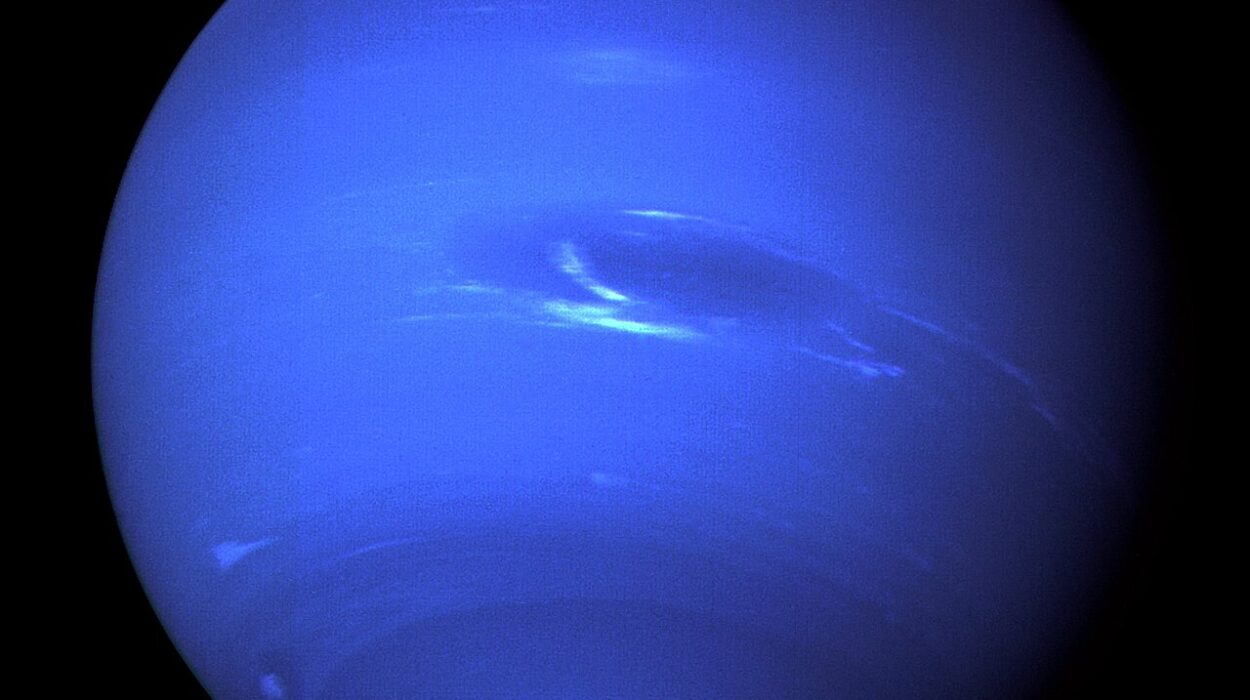
Instead, Neptune hosts the fastest winds known anywhere in the Solar System.
Some atmospheric currents exceed 2,000 kilometers per hour (1,200 miles per hour).
These supersonic winds drive enormous storms across the planet’s deep blue atmosphere.
The discovery puzzled scientists.
Since Neptune receives relatively little solar energy, what powers such violent weather?
The answer appears to involve heat escaping from the planet’s interior.
Neptune radiates significantly more energy than it receives from the Sun.
That internal heat likely helps fuel atmospheric circulation.
The Voyager 2 spacecraft discovered the Great Dark Spot in 1989—a storm resembling Jupiter’s Great Red Spot.
Unlike Jupiter’s storm, however, Neptune’s large dark vortices appear and disappear over time.
Modern observations with the Hubble Space Telescope continue tracking these dynamic weather systems, revealing an atmosphere far more active than anyone once imagined.
8. Earth’s Neighboring Worlds Help Explain Why Our Planet Is Habitable
One of the most profound discoveries in planetary science is not about any single planet.
It is about comparison.
Mercury demonstrates how proximity to the Sun affects planetary evolution.
Venus reveals the devastating consequences of an extreme greenhouse effect.
Mars shows how atmospheric loss can transform a once-habitable world into a frozen desert.
Earth occupies a narrow environmental balance.
It possesses enough gravity to retain a substantial atmosphere.
Its magnetic field shields the surface from much harmful solar radiation.
Its abundant liquid water regulates climate.
Plate tectonics recycle carbon through geological processes.
The Moon stabilizes Earth’s rotational axis, reducing dramatic changes in climate over long timescales.
By studying neighboring planets, scientists increasingly understand that Earth’s habitability results from many interconnected factors rather than a single fortunate circumstance.
This comparative approach now guides the search for habitable exoplanets around distant stars.
9. Planetary Rings Are More Common and More Complex Than Once Thought
For centuries, Saturn appeared unique because of its magnificent rings.
Modern exploration changed that perception completely.
Scientists now know that all four giant planets—Jupiter, Saturn, Uranus, and Neptune—possess ring systems.
Each differs dramatically.
Saturn’s rings consist largely of water ice and contain countless particles ranging from microscopic grains to house-sized blocks.
Jupiter’s faint rings are composed mainly of dust produced by impacts on small moons.
Uranus possesses narrow, dark rings.
Neptune’s rings include unusual clumpy structures called arcs.
Spacecraft observations have shown that rings are dynamic systems.
Particles constantly collide.
Moons sculpt ring edges through gravity.
New material is added while older material gradually disappears.
Scientists now believe planetary rings may be relatively short-lived on astronomical timescales.
Saturn’s spectacular rings, for example, may eventually spiral into the planet over hundreds of millions of years.
Rather than permanent features, rings appear to be evolving structures shaped by ongoing physical processes.
10. Giant Planets May Have Protected Life on Earth
Jupiter is often called the Solar System’s giant guardian.
For many years, scientists believed its enormous gravity shielded Earth by deflecting dangerous comets.
The reality turned out to be more complicated—and even more interesting.
Computer simulations show that Jupiter can both protect and threaten Earth.
Its immense gravity ejects many long-period comets from the Solar System before they reach the inner planets.
At the same time, gravitational interactions can redirect some asteroids and comets toward Earth’s neighborhood.
Saturn also influences the long-term stability of countless small bodies.
Together, the giant planets help shape the architecture of the Solar System.
Their gravitational effects influence asteroid belts, comet reservoirs, planetary orbits, and impact rates over billions of years.
Understanding these interactions has become essential for studying planetary habitability.
Many astronomers now investigate whether giant planets in distant planetary systems similarly affect the likelihood of Earth-like worlds remaining stable long enough for life to evolve.
Why Planetary Exploration Keeps Surprising Scientists
Every major planetary mission has challenged expectations.
Mercury turned out to contain ice.
Venus may once have possessed oceans.
Mars preserved evidence of ancient rivers.
Jupiter’s storms proved deeper than expected.
Saturn displayed impossible-looking geometric weather.
Uranus rotated sideways.
Neptune generated supersonic winds.
Each discovery reminds scientists that nature rarely follows our assumptions.
Planetary science advances because every spacecraft carries instruments capable of revealing something completely unexpected.
The greatest discoveries are often those nobody predicted.
The Future of Planetary Discovery
Humanity’s exploration of the planets is far from complete.
NASA’s Europa Clipper mission is investigating Jupiter’s icy moon Europa, whose hidden global ocean may contain conditions favorable for life.
The JUICE (Jupiter Icy Moons Explorer) mission from the European Space Agency is exploring Jupiter and several of its largest moons in unprecedented detail.
Future missions aim to return samples from Mars, investigate Saturn’s moon Titan, and eventually send spacecraft to Uranus and Neptune once again after decades without dedicated exploration.
Powerful new telescopes are also transforming planetary science.
Ground-based observatories and space telescopes continue discovering exoplanets by the thousands, allowing scientists to compare our Solar System with countless others throughout the Milky Way.
Every new mission has the potential to rewrite textbooks.
A Solar System Full of Wonder
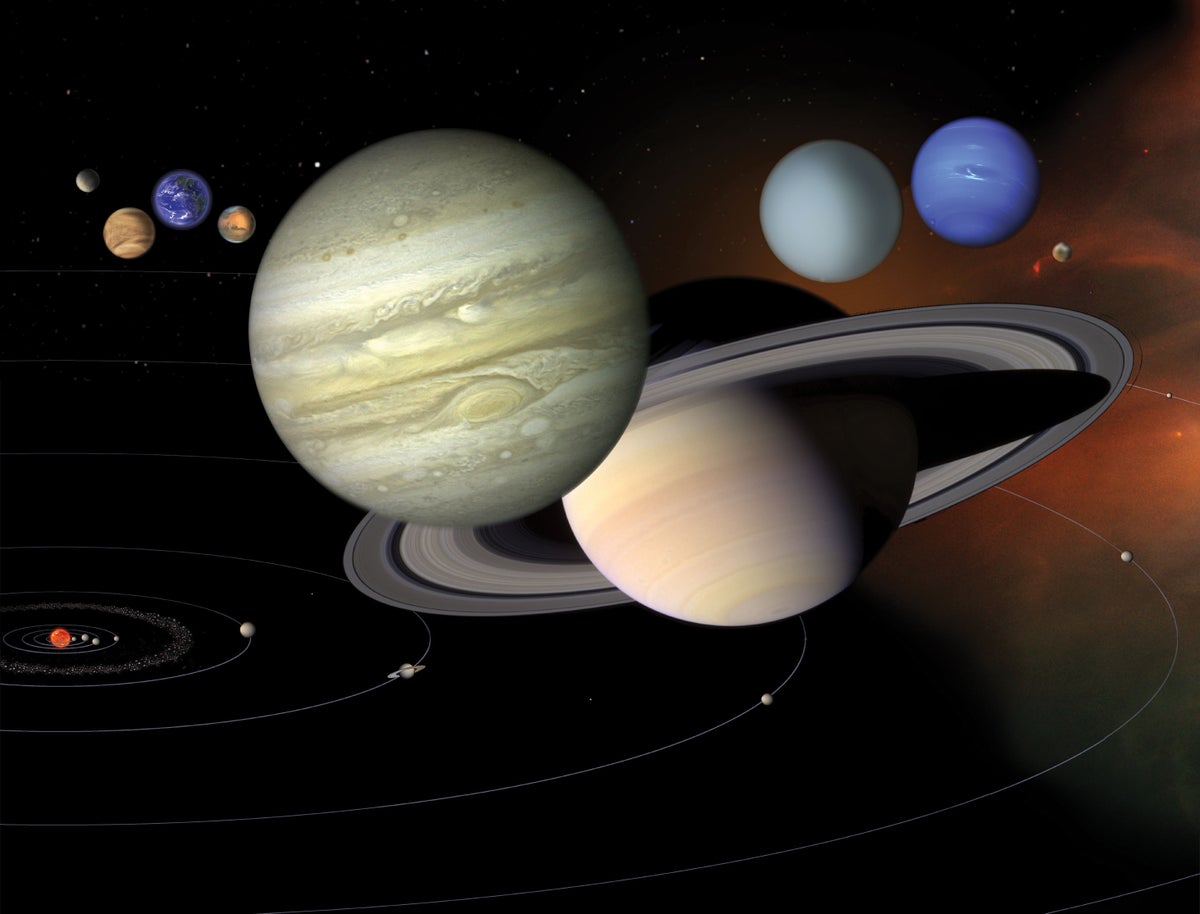
The eight planets are not static worlds frozen in time. They are active, evolving environments shaped by gravity, chemistry, geology, atmospheres, magnetic fields, and billions of years of cosmic history.
Some hide frozen water beneath scorching sunlight.
Others preserve evidence of vanished rivers.
Some produce storms larger than entire planets.
Others rotate in ways that seem almost impossible.
Together, these discoveries reveal a profound truth: the Solar System is far more diverse, dynamic, and surprising than humanity once imagined.
Every breakthrough answers one question while raising many more.
And perhaps that is the greatest discovery of all. The closer we look at the planets, the more we realize that they are not simply distant worlds orbiting the Sun—they are natural laboratories that help us understand the history of our own planet, the processes that shape worlds across the universe, and humanity’s place within an endlessly fascinating cosmos.