A memory can feel like a single thing stored somewhere inside the brain: a name, a childhood birthday, the taste of a favorite meal, or the route you take home from work. It is tempting to imagine the brain as a filing cabinet, with each memory placed in its own neural drawer.
That picture is appealing, but it is not how memory works.
Memories are not stored in one isolated brain structure or in a single set of cells waiting to be retrieved intact. Instead, remembering depends on changing networks of neurons distributed across the brain. Different kinds of memories rely on different systems, and even a single personal experience can involve several brain regions at once. The hippocampus may help establish and retrieve a memory for an event, sensory areas may preserve aspects of what that event looked or sounded like, and regions involved in emotion, movement, language, or decision-making may contribute other parts of the experience.
The result is less like opening a file and more like reconstructing a pattern from a network.
Understanding where memories live therefore requires a slightly different question: not simply where a memory is stored, but how the brain changes when something is learned, how those changes are distributed, and how the brain uses them to reconstruct a past experience.
Memory is not a single ability
Before asking where memories are stored, it helps to recognize that “memory” describes several different abilities.
Remembering what you had for breakfast, knowing that Paris is the capital of France, riding a bicycle, recognizing a familiar face, and feeling a sudden emotional reaction to a particular song all involve memory, but they do not depend on exactly the same neural machinery.
One major distinction is between explicit and implicit forms of memory. Explicit, or declarative, memory involves information that can generally be brought into conscious awareness. It includes memories for personally experienced events, known as episodic memory, as well as general facts and knowledge, known as semantic memory.
Implicit memory refers to learning that can influence behavior without requiring conscious recollection. Skills and habits are important examples. You may be able to type, tie your shoes, or ride a bicycle without consciously recalling the individual practice sessions through which the skill was acquired.
There are also forms of learning involving emotional responses, conditioning, and changes in perceptual or motor performance. These systems overlap, but they are not interchangeable.
This is why there is no single “memory center” in the brain.
The hippocampus is crucial, but it is not a memory warehouse
When people hear about the brain and memory, the hippocampus is often the first structure that comes to mind. That association is justified, but the hippocampus is frequently misunderstood.
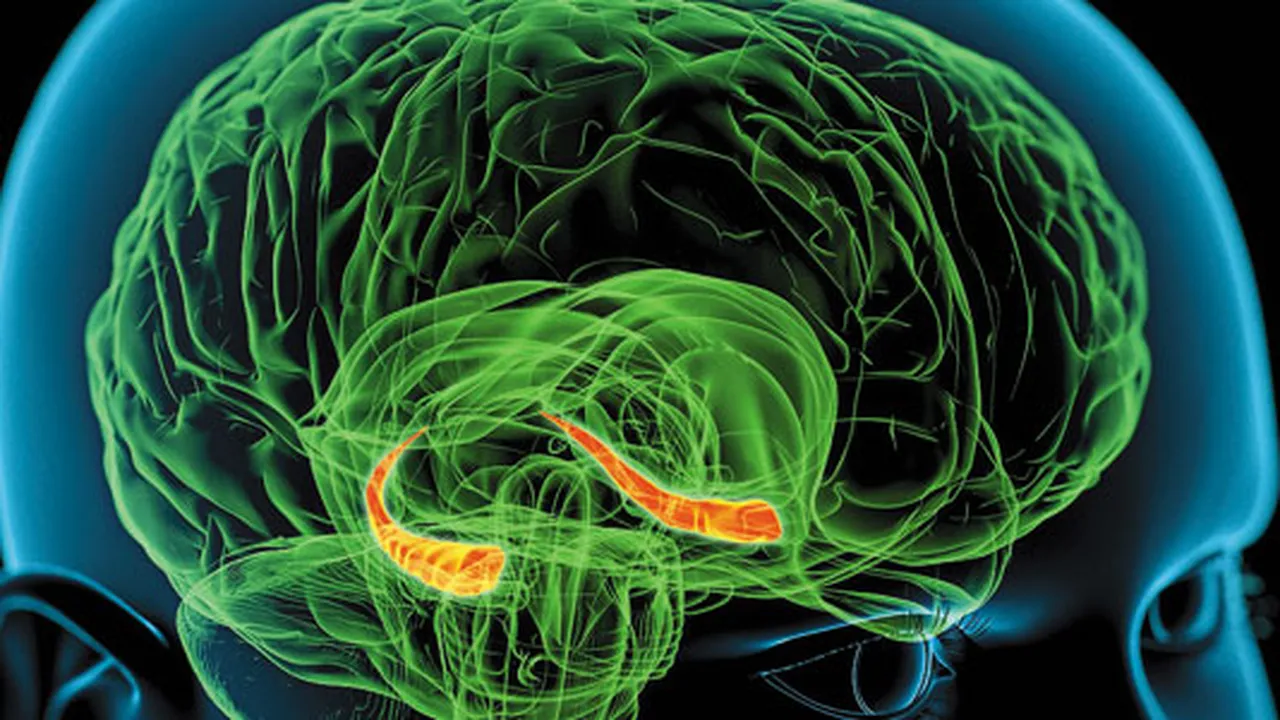
The hippocampus is a seahorse-shaped structure located deep within the temporal lobe of each cerebral hemisphere. It is especially important for forming and retrieving memories of events and experiences, particularly memories that involve relationships among people, places, objects, and events.
Its importance became dramatically clear from studies of people with severe damage to both hippocampi and surrounding medial temporal-lobe structures. The most famous historical case involved a patient commonly known as H.M., who underwent brain surgery to treat severe epilepsy. After much of his medial temporal lobe was removed, he developed profound difficulty forming new long-term declarative memories.
He could carry on a conversation and retain information for short periods, yet after a sufficient interruption he often could not remember what had just happened. At the same time, some abilities remained surprisingly intact. He could acquire certain motor skills even though he did not consciously remember practicing them.
The lesson was profound: memory is not a single system, and the hippocampus is not simply the place where all memories are kept.
Damage to the hippocampus can severely disrupt the formation of new episodic memories without erasing every kind of learning. In addition, memories acquired long before the injury can sometimes remain relatively preserved. This helped scientists distinguish the processes involved in forming memories from the longer-term storage and retrieval of information.
So where is a memory actually stored?
There is no single location.
A useful way to think about memory is that an experience changes patterns of activity and connectivity across many neurons. Those changes can become part of the physical basis of a memory. When the memory is later recalled, the brain reactivates some of the networks involved in the original experience, allowing the experience to be reconstructed.
Suppose you remember standing on a beach during a family vacation. The memory may include the appearance of the water, the sound of waves, the sensation of warm sand, the smell of sunscreen, the people who were present, the words someone said, and the emotions associated with the moment.
Those different components are processed by different neural systems. Visual information involves visual-processing regions. Sound depends on auditory systems. Touch and body sensations involve somatosensory and related regions. Emotional significance can involve structures such as the amygdala. Knowledge about people, places, and events involves broader cortical networks.
The hippocampus helps bind these elements into a coherent memory of the event and helps later reconstruct the relationships among them.
In that sense, a memory is distributed rather than sitting in one anatomical spot.
The cerebral cortex holds much of the information represented in long-term memories
The cerebral cortex is the large, folded outer layer of the brain. It contains many specialized areas that process different kinds of information, and it plays a major role in long-term memory.
Different parts of the cortex represent different aspects of experience. Visual areas process visual information, auditory areas process sound, and regions involved in language, movement, touch, and higher-level association contribute their own information.
When a past event is remembered, portions of these cortical systems can become active again. The pattern does not necessarily reproduce the original experience perfectly, but it can provide components of the reconstructed memory.
This helps explain why memories can feel richly detailed. Remembering a person’s face can involve visual representations; remembering their voice can involve auditory representations; remembering what they said can involve language-related systems; and remembering how you felt can involve networks involved in emotion and bodily states.
The memory is therefore not necessarily stored as one unified object. It is represented through relationships among many neural systems.
What changes in the brain when we form a memory?
At the level of individual neurons, learning can produce lasting changes in how cells communicate.
Neurons communicate at junctions called synapses. When an experience repeatedly or strongly activates particular neural pathways, the strength and structure of connections among neurons can change. This general process is called synaptic plasticity.
One important form of synaptic plasticity is long-term potentiation, or LTP. In simplified terms, certain patterns of activity can make communication between particular neurons more effective for an extended period. Other forms of plasticity can weaken connections.
Memory does not depend on LTP alone, and the biological processes underlying memory are more complicated than a single mechanism. Changes can occur in synaptic strength, receptor activity, gene expression, protein production, dendritic structure, and broader patterns of connectivity.
The important idea is that learning leaves physical traces in the nervous system. A memory is not merely an abstract piece of information floating in the mind; it is associated with biological changes in neural circuits.
Scientists sometimes refer to the physical or biological basis of a particular memory as an engram. The term does not mean there is a tiny, self-contained memory object sitting inside one neuron. Instead, an engram is generally understood as a population of neurons and the lasting changes associated with the information learned.
Could a single memory be stored in individual neurons?
Usually, it is more accurate to think in terms of populations and networks than individual “memory cells.”
Experiments, especially in animals, have shown that particular experiences can preferentially activate certain populations of neurons. Some of those cells can later become active again when the memory is retrieved. Researchers sometimes describe such populations as forming an engram.
But this does not mean that one neuron contains an entire memory.
A single neuron participates in many patterns of activity, and memories can involve overlapping populations. Different memories may share some neurons while recruiting others. The identity and activity of these populations can also change over time.
This distributed organization provides an important advantage. If a memory depended on one isolated neuron, losing that neuron could theoretically erase the memory completely. Distributed representations can be more resilient, although brain injuries can certainly cause profound and specific memory loss.
The hippocampus helps connect the pieces of an experience
One of the hippocampus’s most important functions is binding information together.
Imagine learning that a particular restaurant is where you celebrated a friend’s birthday. The restaurant has a location, appearance, sounds, people, food, conversation, and emotional significance. These elements are processed across different neural systems.
The hippocampus helps encode relationships among them. It can help establish a representation of the event as something that happened at a particular place and time.
This ability is sometimes described in terms of relational memory. The hippocampus is particularly important for remembering relationships among elements rather than merely representing individual pieces of information.
The same principle applies to spatial memory. Animals can learn the layout of an environment, while humans can remember where they parked a car or how different landmarks relate to one another. The hippocampus and surrounding medial temporal structures are deeply involved in this kind of relational and spatial processing.
Place cells and the brain’s internal maps
Research on spatial memory has provided some of the clearest evidence for specialized neural representations.
In the hippocampus, scientists have identified neurons known as place cells. A place cell tends to become especially active when an animal is in a particular location within an environment. Different cells can become active in different locations, creating patterns that correspond to an animal’s position.
Other cells in related brain regions contribute to spatial navigation in complementary ways. Grid cells, for example, show activity patterns related to an animal’s position in space and form a kind of coordinate system.
These discoveries do not mean that the hippocampus is literally a GPS device, nor that every memory is organized around spatial maps. They show something more general: neural populations can encode relationships and structures that help an organism remember and navigate its environment.
The amygdala adds emotional significance
The amygdala is another structure strongly associated with memory, especially memory involving emotional significance.
An emotionally intense event can be remembered unusually well in some respects. Strong emotion can influence attention, learning, and the consolidation of memories. The amygdala interacts with other memory-related systems to help determine the emotional importance of an experience.
This does not mean the amygdala stores an entire emotional memory by itself.
Instead, it contributes to a broader network. During a frightening event, for example, sensory systems process what is happening, the hippocampus can encode contextual information, and the amygdala helps process the emotional significance of the experience.
This interaction helps explain why emotional experiences can leave powerful and persistent memories, while also explaining why emotional memory can sometimes be incomplete or distorted.
The prefrontal cortex helps organize remembering
The prefrontal cortex, located toward the front of the brain, is involved in many aspects of memory, particularly the organization, retrieval, monitoring, and use of information.
Remembering is not simply a matter of activating a stored representation. The brain often has to search among competing memories, determine whether a recollection fits the current situation, hold information in mind, and use remembered information to guide behavior.
The prefrontal cortex contributes to these processes.
For example, if you are trying to remember where you left your keys, your brain may need to distinguish today’s events from similar events on previous days. You may mentally reconstruct your recent movements, evaluate possible locations, and suppress irrelevant memories.
Memory retrieval is therefore an active cognitive process, not merely a passive playback mechanism.
The cerebellum and basal ganglia help support learned skills
Not all memories depend heavily on the hippocampus.
The cerebellum and basal ganglia are particularly important for aspects of motor learning and procedural behavior. The cerebellum is involved in coordinating movement and in forms of motor learning, while the basal ganglia contribute to learning habits, action patterns, and the selection of behaviors.
This helps explain a familiar phenomenon: you can become highly skilled at an activity without being able to describe every movement required to perform it.
A skilled pianist, for example, does not consciously calculate the precise muscle contractions required for every note. Much of the performance becomes automated through practice and changes in neural circuits involved in motor control and learning.
These abilities are forms of memory even when they do not feel like recollections of past events.
Working memory is different from long-term memory
Another important distinction is between working memory and long-term memory.
Working memory allows the brain to temporarily maintain and manipulate information. If you hear a phone number and keep repeating it to yourself until you can write it down, you are using working memory.
Working memory involves a network that includes the prefrontal cortex and other cortical regions. It is not simply a miniature version of long-term memory.
Long-term memory, by contrast, involves more enduring changes in neural systems. Information can remain accessible long after the original experience, sometimes for decades.
The boundary between short-term and long-term memory is more complicated than a simple timer in the brain. Memory persistence depends on attention, rehearsal, meaning, interference, sleep, and biological processes that stabilize newly learned information.
How does a new memory become long-lasting?
The formation of a lasting memory involves several stages and processes.
Immediately after an experience, the relevant neural activity can create temporary changes. Some memories then become more stable through a process broadly known as consolidation.
Consolidation is not a single event. It can occur over different timescales and involve different biological mechanisms.
At the cellular level, consolidation can involve changes in gene expression, protein production, synaptic strength, and neural connectivity. At the systems level, interactions between the hippocampus and the cerebral cortex are thought to play an important role in transforming and stabilizing memories over time.
Sleep is particularly important for many forms of memory. During sleep, patterns of neural activity associated with prior learning can be reactivated, and interactions among memory-related brain regions may help strengthen or reorganize memories.
This does not mean that sleep simply copies memories from the hippocampus into the cortex like moving a computer file. The process is more dynamic. The relative contributions of different brain regions can change as memories become older, and the nature of the representation can change as well.
Do old memories eventually leave the hippocampus?
This question has been central to memory research.
One influential idea, often associated with systems consolidation, proposes that the hippocampus is especially important when memories are initially formed and that, over time, long-term memories become increasingly supported by distributed cortical networks.
There is substantial evidence for changing interactions between the hippocampus and cortex as memories age. However, the idea that every old episodic memory is simply transferred out of the hippocampus and permanently stored in the cortex is too simple.
Some theories propose that the hippocampus can remain important for detailed episodic recollection even after long periods. Other forms of knowledge may become increasingly independent of the hippocampus.
The answer can therefore depend on what kind of memory is being considered, how old it is, how detailed the recollection is, and what exactly “storage” means in the context of distributed neural representations.
Rather than imagining a memory being physically moved from one brain structure to another, it is more accurate to think of the brain’s memory networks changing their organization and patterns of interaction over time.
Why do memories change when we remember them?
One of the most surprising facts about memory is that remembering can alter the memory.
A retrieved memory is not necessarily an untouched recording of the original event. When the brain recalls something, it reconstructs the experience using stored information, current context, expectations, knowledge, and other influences.
During retrieval, a memory can enter a state in which it becomes temporarily susceptible to modification. Researchers refer to this general phenomenon as reconsolidation. After retrieval, the memory can be stabilized again, potentially incorporating new information.
This helps explain why two people can remember the same event differently and why an individual’s own memory of an event can change over the years.
Memory’s reconstructive nature is not simply a flaw. It is part of how a flexible biological system works. The brain needs to use past information in changing circumstances rather than reproduce every past experience as a perfect recording.
Why can a vivid memory still be wrong?
Vividness and accuracy are not the same thing.
A person can have a strong sense of certainty about an event that did not happen exactly as remembered. Memories can acquire details from later conversations, photographs, expectations, imagination, or other experiences.
The brain also fills in missing information. When people remember an event, they do not necessarily retrieve every detail independently. They reconstruct a coherent account from available evidence.
This is one reason eyewitness memory can be imperfect. A confident recollection can still contain errors.
Memory errors do not mean that all memories are unreliable or that the brain cannot preserve accurate information. Everyday memory is often remarkably useful. But biological memory is optimized for adaptive use of information, not for creating a flawless video archive of the past.
Why do we forget?
Forgetting can result from several different processes.
Sometimes information was never encoded strongly in the first place. If you were distracted when someone introduced themselves, the relevant information may not have been established in a durable memory representation.
Other times, a memory may exist but become difficult to retrieve. Similar experiences can interfere with one another, and newer learning can make older information harder to access.
Some memories may also weaken or become less accessible when they are not revisited. Changes in neural representations and the passage of time can alter the accessibility of information.
Forgetting is therefore not necessarily evidence that a memory has been physically erased. In some cases, the information may remain in altered or inaccessible form.
Why does brain injury cause specific kinds of memory loss?
Brain injuries offer some of the strongest evidence that memory depends on distributed but specialized systems.
Damage to medial temporal structures can produce severe difficulty forming new episodic memories. Damage elsewhere can affect different aspects of remembering.
For example, injury to certain cortical regions can interfere with language or semantic knowledge. Damage involving frontal networks can disrupt strategic retrieval and memory organization. Injury affecting motor-learning systems can impair certain forms of procedural learning.
Because memory depends on interconnected networks, the consequences of injury depend heavily on which structures and connections are affected.
Memory loss can also involve different directions in time. Anterograde amnesia refers broadly to difficulty forming new memories after an injury or other neurological event. Retrograde amnesia refers to loss or impairment of memories formed before the event. The pattern can vary considerably from one person to another.
What happens to memories as we age?
Normal aging does not simply cause memories to disappear.
Some memory abilities tend to become less efficient with age, particularly aspects of episodic memory and the ability to quickly encode or retrieve new information. Other forms of knowledge, including accumulated vocabulary and general knowledge, can remain relatively strong.
Part of the reason is that different memory systems depend on different neural processes. Aging can affect brain regions and networks unevenly.
It is also important to distinguish normal age-related changes from neurological diseases that cause pathological memory impairment. Conditions such as Alzheimer’s disease can produce much more substantial and progressive disruption of memory and other cognitive abilities.
What happens to memory in Alzheimer’s disease?
Alzheimer’s disease illustrates how vulnerable memory networks can be when particular brain regions are affected by disease.
Early in the disease, memory problems often involve difficulty learning and retaining newly encountered information. The hippocampus and nearby medial temporal structures are among the regions affected in the disease process, although Alzheimer’s disease eventually involves much broader networks.
As the disease progresses, disruptions can extend into cortical systems involved in language, knowledge, spatial processing, and other cognitive abilities.
The pattern reinforces an important principle: memory is not housed in one place. Different components of remembering depend on interacting networks, and neurodegenerative disease can progressively disrupt those networks.
Can scientists find the exact location of one person’s memory?
Not in the simple sense of pointing to a single spot and saying, “That is where your childhood memory is stored.”
Modern neuroscience can identify brain regions and networks that participate in memory. Researchers can also observe patterns of neural activity associated with particular experiences and, in experimental settings, identify populations of neurons that appear to participate in specific memories.
Brain-imaging techniques such as functional MRI can show changes in blood flow and related signals associated with neural activity. Electroencephalography can track electrical activity with high temporal precision. In some clinical and research settings, electrodes placed directly on or within the brain can provide much more detailed measurements.
These methods can reveal remarkable relationships between neural activity and remembering. But they do not amount to a simple map in which every memory has a permanent address.
A memory is better understood as a dynamic pattern distributed across interacting neural populations.
Is memory physically stored in synapses or in neurons?
Both neurons and their connections matter, and the distinction is somewhat artificial because neurons function through their connections.
Changes at synapses are an important mechanism through which learning can alter neural circuits. But memories can also involve changes in intrinsic neuronal properties, gene expression, dendritic structures, patterns of connectivity, and larger networks.
The brain is continually changing. A memory is therefore not best imagined as one permanent physical object. It is associated with a changing biological configuration that can be strengthened, weakened, reorganized, and incorporated into other knowledge.
Why can one smell bring back an old memory so quickly?
Smell provides an especially striking example of the relationship between sensory processing, emotion, and memory.
Olfactory information has unusually direct connections with brain regions involved in emotion and memory, including areas associated with the limbic system and medial temporal structures.
As a result, a familiar smell can sometimes trigger a surprisingly immediate recollection of a place, person, or period of life. The smell itself does not contain the memory. Rather, it activates neural associations that have become linked through previous experience.
The same general principle applies to music, sights, sounds, tastes, and physical sensations. Sensory cues can serve as retrieval routes into larger memory networks.
Why do memories feel like they belong to us?
Autobiographical memory does more than preserve facts about the past. It contributes to a person’s sense of continuity across time.
Remembering your childhood, previous relationships, major achievements, embarrassing moments, or ordinary experiences can help connect your present self with your past self.
This involves more than the hippocampus alone. Autobiographical memory draws on broad networks that include medial temporal structures, association cortex, and regions involved in self-related thought and internally directed cognition.
Because autobiographical memories are reconstructed, they can also change as a person’s understanding of their own life changes. The same event can acquire a different meaning years later without the underlying event itself changing.
Are memories stored differently in humans and other animals?
The basic principles of neural learning and memory are shared widely across animals, although the specific systems and behaviors differ.
Research in animals has been essential because scientists can examine neural circuits at a level that is often impossible in humans. Experiments involving rodents, for example, have revealed place cells, synaptic plasticity, and neural populations associated with learned experiences.
Humans provide additional evidence through brain imaging, neurological cases, behavioral experiments, and clinical observation.
Together, these approaches support a broad picture in which memories emerge from changes in neural circuits rather than from a single storage location.
The brain does not store memories like a computer stores files
The computer analogy can be useful up to a point, but it breaks down if taken literally.
A computer stores data in physical states that can, in principle, be copied and retrieved in a relatively exact form. The brain is a living biological network that is constantly changing. Its representations are distributed, overlapping, context-dependent, and subject to modification.
When you remember something, the brain does not necessarily retrieve a fixed recording. It reconstructs a pattern using information distributed across neural systems.
This is why memories can be both durable and flexible. You can remember the central events of your childhood for decades while forgetting minor details. You can recognize a familiar place immediately even though you cannot describe every feature of it. You can acquire a motor skill without remembering when you learned it. And you can sincerely remember something incorrectly.
These apparently contradictory properties make sense once memory is understood as a dynamic function of neural networks rather than a collection of files stored in isolated locations.
So where do memories actually live?
The most accurate answer is that memories live in the changing organization of neural networks throughout the brain.
The hippocampus is crucial for many forms of episodic and relational memory, especially during learning and retrieval. The cerebral cortex contains distributed representations of sensory information, knowledge, and other components that contribute to long-term memories. The amygdala helps process emotional significance. The prefrontal cortex helps organize, monitor, and retrieve information. The basal ganglia and cerebellum contribute to learned skills and other forms of procedural memory.
Underneath all of these systems are physical changes in neural circuits, including changes in synaptic strength and connectivity.
So there is no single place where a memory sits waiting to be found. A memory is better understood as a pattern of biological changes spread across connected neural systems, one that can be reactivated and reconstructed when the brain remembers.
That is why asking “Where is this memory stored?” has a different answer from asking where a file is stored on a computer. The memory is not simply somewhere in the brain. It is expressed through the brain’s changing network of connections, activity, and representations.