The solar system is the Sun and all the objects held in orbit around it by gravity, including eight planets, their moons, dwarf planets, asteroids, comets, and countless smaller bodies. It formed about 4.6 billion years ago from a vast cloud of gas and dust and remains a dynamic system in which objects move along predictable paths while interacting through gravity.
The Sun dominates the solar system, containing nearly all its mass and supplying the light and heat that make Earth habitable. The eight planets orbit the Sun in a specific order, from Mercury, the closest planet, to Neptune, the farthest recognized planet. Beyond the planets, the solar system extends into distant regions filled with icy objects and eventually merges with the surrounding space between stars.
Understanding the solar system reveals how planets form, why their environments differ, how Earth fits into the larger universe, and what scientists can learn by exploring other worlds.
What makes up the solar system?
The solar system contains several major types of objects, each with distinct characteristics. Although the planets receive the most attention, they represent only part of a much larger structure.
The Sun is the central star. Its gravity holds the system together, while energy produced by nuclear fusion in its core travels outward as sunlight and other forms of radiation. The planets, dwarf planets, and smaller bodies orbit the Sun, although some objects also orbit planets or other bodies.
The eight planets are the largest objects orbiting the Sun after the Sun itself. Four are relatively small, rocky worlds in the inner solar system. The other four are much larger and lie farther out, with compositions dominated by gases or volatile materials such as water, ammonia, and methane.
Dwarf planets are round objects that orbit the Sun but have not cleared their orbital neighborhoods of other objects. Pluto, Ceres, Eris, Haumea, and Makemake are recognized examples. They differ from the eight major planets in their orbital circumstances, not simply in size.
Moons are natural satellites that orbit planets, dwarf planets, or other small bodies. Some are rocky, while others have thick ice-covered surfaces or substantial atmospheres. A few, including Jupiter’s Europa and Saturn’s Enceladus, are of particular interest because evidence suggests that liquid water exists beneath their icy surfaces.
Asteroids are primarily rocky or metallic objects, while comets contain substantial amounts of ice mixed with dust and rocky material. When a comet approaches the Sun, its ice can vaporize, releasing gas and dust that form a glowing cloud called a coma and, under suitable conditions, a tail.
Smaller objects include meteoroids, fragments of rock or metal traveling through space, and dust particles spread throughout the system. Together, these bodies preserve clues about the solar system’s formation and evolution.
The eight planets in order from the Sun
The planets follow a consistent order based on their average distance from the Sun. Their orbits are slightly elliptical rather than perfectly circular, so their distances change throughout the year.
The correct order is:
Mercury, Venus, Earth, Mars, Jupiter, Saturn, Uranus, Neptune.
The first four planets are terrestrial planets, meaning they have solid, rocky surfaces. Jupiter and Saturn are gas giants, while Uranus and Neptune are ice giants. These categories reflect important differences in composition and internal structure.
Mercury
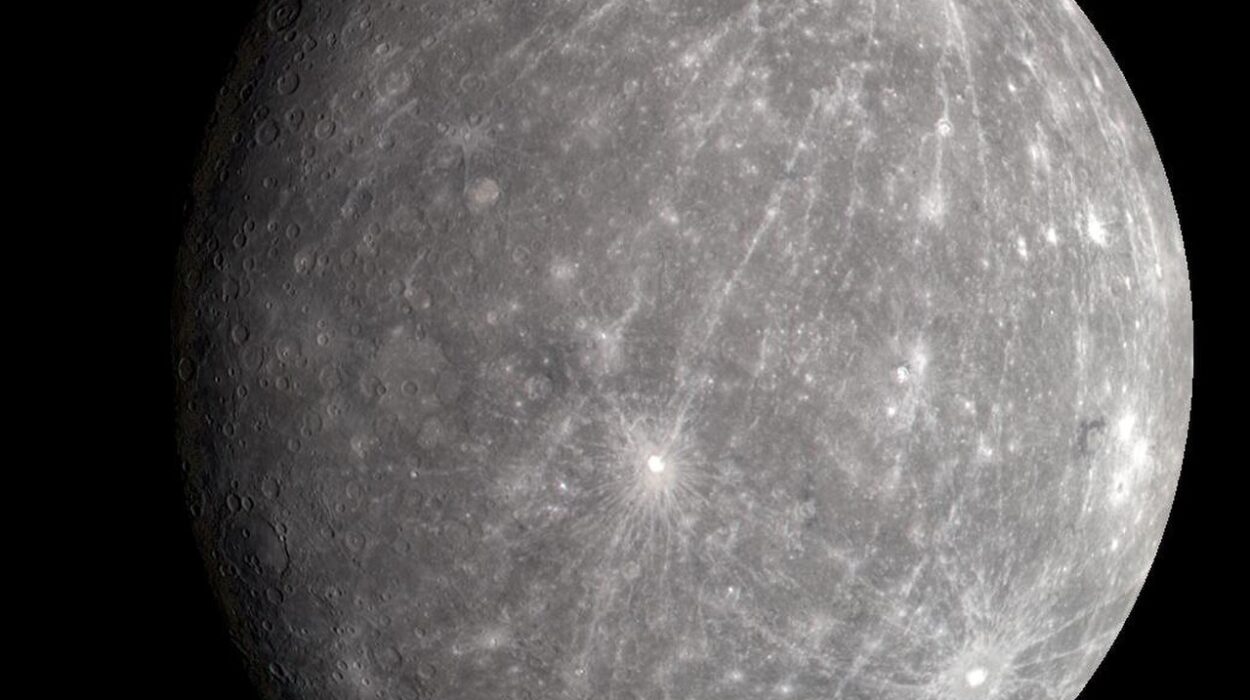
Mercury is the closest planet to the Sun and the smallest of the eight planets. Its surface is covered with craters, resembling the Moon in many respects. Mercury has a large metallic core relative to its size and almost no substantial atmosphere, only an extremely thin exosphere.
Because Mercury lacks an atmosphere capable of distributing heat efficiently, its surface experiences enormous temperature differences between day and night. Despite being closest to the Sun, it is not the hottest planet. Its orbital period is about 88 Earth days, meaning it completes one trip around the Sun in less than three Earth months.
Venus
Venus is the second planet from the Sun and is similar to Earth in size, but its surface conditions are dramatically different. A thick atmosphere composed primarily of carbon dioxide traps heat through an intense greenhouse effect.
Venus is the hottest planet in the solar system, with surface temperatures hot enough to melt lead. Its clouds contain sulfuric acid droplets, and atmospheric pressure at the surface is roughly 90 times that of Earth’s sea-level pressure.
Venus rotates very slowly and in the opposite direction from most planets. One rotation relative to distant stars takes longer than one Venusian year, which lasts about 225 Earth days.
Earth
Earth is the third planet from the Sun and the only world currently known to support life. Its surface contains extensive oceans of liquid water, while its atmosphere provides essential gases, moderates temperatures, and protects life from some harmful radiation and incoming small objects.
Several factors contribute to Earth’s habitability, including its distance from the Sun, the presence of liquid water, its atmosphere, and long-term climate-regulating processes. Earth’s magnetic field also helps shield the planet from charged particles carried by the solar wind.
Earth completes one orbit in about 365.25 days. Its natural satellite, the Moon, influences ocean tides and helps stabilize variations in Earth’s rotational axis over long periods.
Mars
Mars is the fourth planet from the Sun and is often called the Red Planet because iron-rich minerals in its surface material have oxidized, producing a rusty appearance.
Mars has a thin atmosphere dominated by carbon dioxide, a cold climate, polar ice caps, ancient river channels, and enormous geological features. Olympus Mons, a giant shield volcano, is among the largest volcanoes known in the solar system. Valles Marineris is an immense canyon system extending across a large part of the planet.
Evidence indicates that liquid water flowed across parts of Mars in the distant past. Scientists continue to investigate whether the planet once had environments suitable for microbial life and whether any evidence of ancient life survives in its rocks.
Mars takes about 687 Earth days to orbit the Sun and has two small moons, Phobos and Deimos.
Jupiter
Jupiter is the fifth planet from the Sun and the largest planet in the solar system. It is a gas giant composed mainly of hydrogen and helium, with no solid surface like Earth’s.
Its atmosphere contains alternating bands of clouds, powerful winds, and enormous storms. The Great Red Spot is a long-lived storm system larger than Earth, although its size and appearance have changed over time.
Jupiter has a strong magnetic field and an extensive collection of moons. Europa, Ganymede, Callisto, and Io are among its best-known natural satellites. Ganymede is the largest moon in the solar system, while Io is notable for its intense volcanic activity. Europa is especially important in the search for potentially habitable environments because it likely contains a global ocean beneath its icy crust.
Jupiter completes an orbit around the Sun in about 11.9 Earth years.
Saturn
Saturn is the sixth planet from the Sun and the second-largest planet in the solar system. Like Jupiter, it is composed primarily of hydrogen and helium.
Saturn is best known for its spectacular ring system, made mostly of countless particles of water ice mixed with smaller amounts of rocky material. The particles range from tiny grains to much larger chunks, and their collective gravitational interactions help create intricate ring structures.
Saturn has many moons, including Titan, which possesses a dense nitrogen-rich atmosphere and lakes and seas of liquid hydrocarbons on its surface. Enceladus releases water-rich plumes from fractures near its south pole, providing evidence of a subsurface ocean.
Saturn takes about 29.5 Earth years to complete one orbit around the Sun.
Uranus
Uranus is the seventh planet from the Sun and an ice giant. Its interior contains materials such as water, ammonia, and methane under extreme pressure, along with hydrogen and helium in its outer atmosphere.
Methane in the atmosphere absorbs red light, giving Uranus its blue-green color. The planet is unusual because its rotational axis is tilted by about 98 degrees relative to its orbital plane. As a result, Uranus essentially rotates on its side, producing extreme seasonal patterns as it travels around the Sun.
Uranus has a faint ring system and numerous moons. Its atmosphere can reach extremely low temperatures, making it one of the coldest planetary environments in the solar system.
A Uranian year lasts about 84 Earth years.
Neptune
Neptune is the eighth and farthest recognized planet from the Sun. Like Uranus, it is an ice giant with an atmosphere rich in hydrogen, helium, and methane.
Neptune is a cold, distant world with remarkably powerful winds and large storm systems. Despite receiving little sunlight, it emits more energy than it absorbs from the Sun, indicating that internal heat plays an important role in its atmospheric activity.
Neptune has a faint ring system and multiple moons. Its largest moon, Triton, orbits in the direction opposite to Neptune’s rotation, suggesting that it may have been captured from the population of distant icy objects.
Neptune takes about 165 Earth years to orbit the Sun. Since its discovery in 1846, it completed its first full orbit after discovery in 2011.
Why are the planets arranged in this order?
The order of the planets reflects the conditions that existed when the solar system formed. About 4.6 billion years ago, a large cloud of gas and dust collapsed under gravity. As material gathered toward the center, it formed the young Sun. The remaining material flattened into a rotating disk surrounding it.
Within this disk, dust grains collided and stuck together, gradually building larger bodies. Through repeated collisions and gravitational attraction, these bodies grew into planetesimals, the building blocks of planets, and eventually into planets themselves.
Temperature played a major role in determining the planets’ compositions. Near the young Sun, intense heat made it difficult for many volatile substances, including water and methane, to remain frozen. Rocky and metallic materials could survive there, helping produce Mercury, Venus, Earth, and Mars.
Farther from the Sun, temperatures were low enough for water ice and other volatile materials to accumulate. The resulting solid cores could grow larger and, in the case of Jupiter and Saturn, attract enormous amounts of hydrogen and helium from the surrounding disk. Uranus and Neptune formed in the colder outer region but did not accumulate as much hydrogen and helium as the gas giants.
This explanation captures the broad pattern of the solar system, but the details are more complicated. Planetary migration, gravitational interactions, collisions, and changes in the young Sun’s environment influenced the planets’ final locations. Scientists continue to investigate these processes to understand why the system developed as it did.
How does gravity hold the solar system together?
Gravity is the force of attraction between objects that have mass. It governs the motion of planets, moons, asteroids, and comets, keeping them in orbit around larger bodies.
The Sun contains about 99.86 percent of the total mass of the solar system. Its immense mass creates the dominant gravitational influence on the planets. However, the Sun is not completely stationary: it also moves slightly in response to the gravitational pull of the planets and other objects.
An orbit occurs when an object’s forward motion combines with gravitational attraction. A planet continually falls toward the Sun, but its sideways motion carries it around the Sun rather than directly into it. This combination produces a curved path.
An object’s orbital speed depends partly on its distance from the body it orbits. Planets closer to the Sun move faster along their orbits than planets farther away. Mercury, for example, travels around the Sun much more quickly than Neptune.
Gravity also shapes the movements of moons, creates tides, and influences the structure of rings. Over long periods, gravitational interactions can change orbital paths, send comets toward the inner solar system, or eject objects into interstellar space.
Although the Sun dominates the system, gravity does not act in isolation. Collisions, radiation, and streams of charged particles from the Sun also affect the behavior and evolution of smaller bodies.
What is the difference between planets and dwarf planets?
Planets and dwarf planets share two important characteristics: both orbit the Sun, and their gravity is strong enough to make them approximately round. The key distinction is whether they have cleared their orbital neighborhoods of other bodies.
A planet has become gravitationally dominant in its orbital region. This does not mean its orbit is completely empty, but it means the planet has accumulated, scattered, captured, or otherwise become dominant over most comparable material in that region.
A dwarf planet has not achieved the same dominance. It may share its orbital region with many other objects, as Pluto does in the Kuiper Belt, a distant region beyond Neptune containing numerous icy bodies.
Pluto was classified as the ninth planet after its discovery in 1930. In 2006, astronomers adopted a formal definition of a planet that led to Pluto’s reclassification as a dwarf planet. The change reflected a scientific distinction based on orbital characteristics rather than a discovery that Pluto itself had fundamentally changed.
Pluto remains an important world. It has mountains, plains, glaciers made of frozen nitrogen, a thin atmosphere, and several moons. Its complexity demonstrates that small worlds can have surprisingly diverse geology.
Ceres, the largest object in the asteroid belt between Mars and Jupiter, is another dwarf planet. Unlike Pluto, which resides in the outer solar system, Ceres lies between the inner rocky planets and the gas giants.
The solar system may contain many additional dwarf planets, particularly in its distant outer regions. However, objects must be studied sufficiently well to establish their properties and classification.
Where does the solar system end?
The solar system has no single boundary that separates it from interstellar space in every sense. Different boundaries describe different physical influences, so its extent depends on what is being measured.
The planetary region reaches out to Neptune’s orbit, but many smaller objects travel much farther from the Sun. Beyond Neptune lies the Kuiper Belt, a broad region containing Pluto and other icy bodies. Its objects preserve material left over from the solar system’s formation.
Farther out may lie the Oort Cloud, a vast, roughly spherical reservoir of icy objects inferred from the orbits of long-period comets. These comets can take thousands or even millions of years to complete an orbit. The Oort Cloud has not been directly observed as a complete structure, and its size and population remain uncertain.
Another important boundary is the heliopause, where the outward flow of charged particles from the Sun, known as the solar wind, encounters the surrounding interstellar environment. Inside this boundary, the solar wind creates a vast region called the heliosphere.
The heliosphere extends far beyond the planetary orbits, helping shape the space environment through which the planets travel. NASA’s Voyager spacecraft have crossed the heliopause and entered interstellar space, demonstrating that the Sun’s influence through the solar wind has a measurable boundary.
However, crossing the heliopause does not mean leaving the solar system in every sense. The Sun’s gravity can still influence distant objects, including those associated with the Oort Cloud, far beyond the heliosphere.
The solar system therefore has several overlapping boundaries: the region of planets, the zones populated by small bodies, the extent of the Sun’s particle environment, and the much larger region in which the Sun’s gravity remains important.
How do scientists study the solar system?
Scientists investigate the solar system using telescopes, spacecraft, landers, rovers, radar observations, laboratory experiments, and mathematical models. Each method reveals different information.
Telescopes allow astronomers to observe planets and distant objects across visible light and other wavelengths, including infrared, ultraviolet, radio waves, and X-rays. Different wavelengths reveal different physical processes. Infrared observations, for example, can help measure temperatures and identify atmospheric gases.
Spacecraft provide close-up measurements that cannot be obtained from Earth alone. Orbiters map surfaces and study atmospheres, magnetic fields, and gravitational properties. Landers and rovers examine the surfaces of worlds directly, while sample-return missions bring material back to Earth for detailed laboratory analysis.
Scientists also study meteorites, many of which originated from asteroids or other early solar system bodies. Their chemical compositions and ages help reconstruct the conditions under which the solar system formed.
Computer models combine physical laws with observations to test explanations for planetary formation, orbital evolution, climate, and geological activity. These models cannot replace observations, but they help scientists determine which explanations are consistent with the evidence.
Some questions remain unresolved. Scientists are still investigating how giant planets formed and migrated, how common subsurface oceans are, how life might emerge beyond Earth, and how the solar system’s earliest conditions shaped the worlds that exist today. The answers depend on continued observations and exploration.
What makes Earth different from the other planets?
Earth is not the largest planet, the hottest, or the closest to the Sun. Its distinctive feature is the presence of a known, diverse biosphere supported by liquid water, an atmosphere, and a relatively stable supply of solar energy.
Earth’s location allows water to remain liquid over extensive areas of its surface, although distance from the Sun alone does not determine habitability. Atmospheric composition, pressure, planetary geology, and the circulation of heat all influence surface conditions.
The atmosphere contains nitrogen and oxygen, along with smaller amounts of gases such as carbon dioxide and water vapor. These gases help regulate the planet’s temperature. The natural greenhouse effect keeps Earth warmer than it would be without an atmosphere that absorbs and re-emits infrared radiation.
Earth also has an active interior. Heat from its formation and radioactive decay drives geological processes, including plate tectonics, volcanic activity, and the recycling of surface materials. These processes influence the atmosphere and oceans over long periods.
Life itself has transformed the planet. Photosynthetic organisms helped increase atmospheric oxygen, while living systems affect the carbon cycle and many other chemical processes. Earth’s habitability is therefore the result of interacting physical, chemical, and biological systems rather than a single favorable condition.
Scientists cannot yet say whether life exists elsewhere in the solar system. Mars preserves evidence of ancient environments that may have supported microbial life, while several icy moons contain or may contain subsurface oceans. These environments are targets for research because they could help reveal whether life can emerge under conditions different from those on Earth.
Important facts about the solar system
Several basic facts provide a useful overview of the system and its scale.
- Age: The solar system formed about 4.6 billion years ago.
- Central star: The Sun is a star that produces energy through nuclear fusion.
- Number of planets: There are eight recognized planets.
- Planetary order: Mercury, Venus, Earth, Mars, Jupiter, Saturn, Uranus, and Neptune.
- Largest planet: Jupiter.
- Smallest planet: Mercury.
- Hottest planet: Venus, because of its intense greenhouse effect.
- Largest moon: Ganymede, which orbits Jupiter.
- Planet with the most prominent rings: Saturn.
- Dwarf planets: Pluto, Ceres, Eris, Haumea, and Makemake are recognized examples.
- Asteroid belt: The main asteroid belt lies between Mars and Jupiter.
- Distant icy region: The Kuiper Belt lies beyond Neptune.
- Longest planetary year: Neptune takes about 165 Earth years to orbit the Sun.
- Solar system boundary: The heliopause marks the outer boundary of the heliosphere, but the Sun’s gravitational influence extends much farther.
The solar system is both a planetary neighborhood and a record of cosmic history. Its planets, moons, comets, and asteroids preserve evidence of the processes that transformed a cloud of gas and dust into a complex system of worlds. Studying these objects helps scientists understand Earth’s origins, the conditions required for life, and how planetary systems develop throughout the universe.