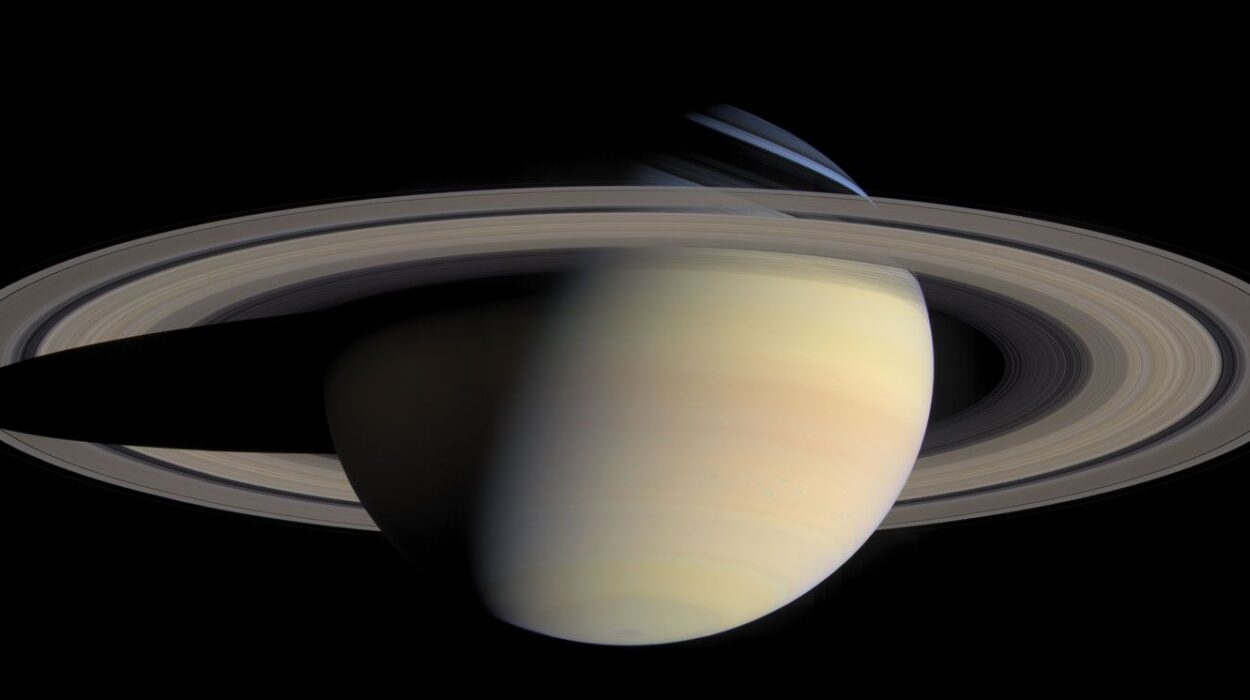
Jupiter is the largest planet in our solar system, dwarfing every other planet in both volume and mass. This enormous gas giant orbits the Sun beyond Mars and the asteroid belt, making it the fifth planet from the Sun. Its immense size, powerful gravity, turbulent atmosphere, and extensive system of moons make Jupiter one of the most remarkable worlds in our planetary neighborhood.
Jupiter is so large that all seven other planets in the solar system could fit inside it by volume, with room to spare. Although it is primarily composed of gas rather than solid rock, it has a complex interior, a powerful magnetic field, and weather systems that can persist for centuries. Understanding Jupiter helps scientists explain how planets form, how planetary atmospheres behave, and how our solar system developed.
How big is Jupiter?
Jupiter’s size is difficult to appreciate without comparing it with Earth. Its diameter at the equator is approximately 143,000 kilometers, or 89,000 miles. Earth’s equatorial diameter is about 12,756 kilometers, making Jupiter roughly 11 times wider than our planet.
The difference becomes even more striking when comparing volume. Jupiter could contain approximately 1,300 Earths by volume, although that comparison describes how much space the planets occupy, not how many Earth-sized planets could be assembled inside Jupiter’s actual structure.
Jupiter is also the most massive planet in the solar system. Its mass is about 318 times Earth’s mass and more than twice the combined mass of all the other planets. Despite its enormous size, Jupiter is not nearly as dense as Earth because its composition is dominated by hydrogen and helium rather than heavier rocky materials.
Jupiter’s equatorial diameter is larger than its diameter from pole to pole. This difference occurs because the planet rotates rapidly, completing one rotation in roughly 9 hours and 56 minutes. Its fast spin causes the equator to bulge outward, giving Jupiter a noticeably flattened shape rather than a perfect sphere.
Why is Jupiter so much larger than the other planets?
Jupiter became enormous because of the conditions that existed when the solar system formed approximately 4.6 billion years ago.
The early solar system consisted of a rotating cloud of gas and dust surrounding the young Sun. Within the disk of material around the Sun, tiny particles collided and gradually accumulated into larger bodies. Over time, some of these bodies grew into planetary cores.
Jupiter formed far enough from the Sun for water and other volatile substances to exist as ice in the surrounding disk. These icy materials helped its developing core accumulate substantial mass. As the core grew, its gravitational pull strengthened, allowing it to capture increasing amounts of the abundant hydrogen and helium gas surrounding it.
This process created a feedback effect: a growing planet attracted more material, and the additional mass strengthened its ability to gather even more. Jupiter ultimately acquired a massive atmosphere and became much larger than the rocky planets closer to the Sun.
The exact sequence of Jupiter’s formation remains an active subject of scientific research. However, scientists broadly agree that its location in the early solar system, the availability of solid building materials, and its ability to capture large quantities of gas were central to its extraordinary size.
Is Jupiter a solid planet?
Jupiter does not have a solid surface like Earth. It is classified as a gas giant because it consists primarily of hydrogen and helium, the same two elements that dominate the Sun.
Its visible surface is actually the upper part of its atmosphere, where clouds form distinctive bands of white, cream, brown, and reddish colors. These clouds contain compounds such as ammonia and other chemicals that produce Jupiter’s varied appearance.
As a spacecraft or other object descended into Jupiter’s atmosphere, it would encounter increasingly dense gas and rising pressure. Hydrogen would gradually transition into a fluid-like state, and deeper inside the planet, the pressure would become so immense that hydrogen could enter an unusual metallic state capable of conducting electricity.
Scientists believe Jupiter has a dense central region containing heavier elements, but its exact structure is not fully settled. Rather than necessarily having a sharply defined solid core, Jupiter may have a more diffuse central region in which heavier materials blend gradually with surrounding hydrogen and helium.
The pressure and temperature increase dramatically toward the interior. There is no clearly defined boundary where an explorer could stand, and a conventional spacecraft could not survive the increasingly extreme conditions deep inside the planet.
What is Jupiter’s atmosphere like?
Jupiter’s atmosphere is one of the most dynamic environments in the solar system. Its familiar stripes are broad bands of clouds moving in alternating directions, shaped by powerful winds, rapid rotation, and differences in atmospheric temperature and pressure.
The lighter-colored bands are called zones, while the darker bands are known as belts. These features form part of a complex circulation system in which gases rise, cool, sink, and move horizontally across the planet. The resulting patterns extend far beyond the visible clouds, reflecting deep atmospheric processes.
Jupiter’s atmosphere is also known for its powerful storms. Unlike Earth’s weather systems, which are strongly influenced by land, oceans, and seasonal temperature changes, Jupiter’s weather develops in a deep atmosphere with no solid surface below its clouds.
Temperatures, cloud chemistry, wind speeds, and atmospheric circulation vary with altitude and location. Lightning occurs in Jupiter’s clouds, and some storms can grow to enormous sizes. The planet receives less sunlight per unit area than Earth because of its greater distance from the Sun, but it also releases heat left over from its formation and ongoing gravitational contraction. This internal heat helps drive atmospheric circulation.
What is the Great Red Spot?
The Great Red Spot is Jupiter’s most famous atmospheric feature: a gigantic, persistent storm in the planet’s southern hemisphere. It is large enough to contain Earth, although its dimensions change over time and it has generally become smaller than it was when earlier observations were made.
The storm is an enormous rotating system of clouds, known as an anticyclone. Its circulation is shaped by Jupiter’s atmospheric winds, and its reddish appearance likely results from chemical reactions involving substances in the upper atmosphere, although the precise compounds responsible for its color remain uncertain.
The Great Red Spot has been observed for centuries, making it one of the most enduring known storms in the solar system. However, scientists cannot establish with complete certainty that the storm observed today is exactly the same structure described in the earliest historical observations.
Its longevity reflects the different conditions governing weather on a giant planet. Without continents and oceans to disrupt it in the same way that Earth’s surface affects storms, and with energy supplied by atmospheric motions and internal heat, a Jovian storm can persist for far longer than most familiar weather systems on Earth.
How strong is Jupiter’s gravity?
Jupiter’s gravity is much stronger than Earth’s when measured near the tops of its visible clouds. Its gravity at the cloud tops is approximately 2.5 times Earth’s surface gravity.
This does not mean Jupiter is proportionally heavier in every sense of everyday experience. Gravity depends on both an object’s mass and the distance from its center. Jupiter’s enormous mass produces strong gravitational attraction, but its large radius also places its visible cloud tops far from its center.
Because Jupiter has no solid surface, its quoted surface gravity refers to a conventional reference level in its atmosphere rather than a place where a person could stand.
Jupiter’s gravity also influences the rest of the solar system. It helps shape the orbits of asteroids, comets, and other small bodies, sometimes redirecting them and sometimes capturing them temporarily or permanently. Its gravitational interaction with the Sun and other planets has also played a role in the solar system’s long-term orbital evolution.
Although Jupiter is sometimes described as Earth’s protective shield against space rocks, the reality is more complicated. Its gravity can redirect some objects away from the inner solar system, but it can also send other objects toward the inner planets. Jupiter’s overall influence depends on the paths and gravitational interactions of the bodies involved.
How many moons does Jupiter have?
Jupiter has a large and varied system of natural satellites. Among its most important are the four Galilean moons, named after the astronomer Galileo Galilei, who observed them in 1610.
These moons are Io, Europa, Ganymede, and Callisto. Each has distinctive characteristics that make it scientifically important.
Io is the most volcanically active world known in the solar system. Its intense volcanic activity is driven by tidal heating, which occurs as Jupiter’s gravity and interactions with neighboring moons repeatedly deform its interior.
Europa has a relatively smooth, icy surface and strong evidence for a global ocean beneath its outer ice shell. That ocean makes Europa a major target in the search for environments that could potentially support life, although no life has been confirmed there.
Ganymede is the largest moon in the solar system, even larger than the planet Mercury by diameter. It also possesses its own magnetic field, an unusual feature for a moon.
Callisto is heavily cratered and preserves evidence of ancient impacts. Its surface provides clues about the long history of collisions in the outer solar system.
Jupiter’s moons range from these large worlds to much smaller bodies with distant, irregular orbits. The number of recognized moons can change as astronomers discover additional objects and confirm their orbits, but the Galilean moons remain the most prominent members of the system.
Does Jupiter have rings?
Jupiter has a ring system, although its rings are much fainter and less visually striking than those of Saturn.
The rings consist primarily of fine dust, much of which is produced when small meteoroids strike Jupiter’s inner moons and eject material into space. Some of this dust enters orbit around the planet, forming a thin and diffuse ring system.
Jupiter’s rings are difficult to observe from Earth using ordinary telescopes because they reflect relatively little sunlight. They became much better known after spacecraft examined the planet and its surrounding environment.
The rings also illustrate how gravitational forces shape material around giant planets. Particles can remain in orbit around Jupiter, but their long-term stability depends on their distance from the planet, their interactions with moons, and the effects of collisions and other forces.
How does Jupiter compare with the other giant planets?
The solar system contains four giant planets: Jupiter, Saturn, Uranus, and Neptune. Jupiter and Saturn are classified as gas giants, while Uranus and Neptune are commonly described as ice giants because their interiors contain larger proportions of substances such as water, ammonia, and methane in addition to hydrogen and helium.
Jupiter is the largest and most massive of all four. Saturn is the second-largest planet and is especially famous for its extensive rings, but it has substantially less mass than Jupiter.
Uranus and Neptune are smaller still. They have different atmospheric and interior properties from Jupiter and Saturn, reflecting differences in their formation and composition.
Although Jupiter is enormous, it is not large enough to become a star. Stars sustain nuclear fusion in their cores, releasing energy through reactions that convert hydrogen into helium. Jupiter does not have sufficient mass to maintain hydrogen fusion.
Even a much more massive object called a brown dwarf, which can fuse deuterium under suitable conditions, requires substantially more mass than Jupiter. The precise threshold depends on the type of fusion involved, but Jupiter is far below the mass needed to become either a star or a brown dwarf.
How do scientists study Jupiter?
Scientists study Jupiter using telescopes and spacecraft that observe the planet across different wavelengths of light. Visible-light observations reveal its cloud bands and storms, while infrared observations help researchers investigate temperature patterns and atmospheric structure. Radio and other measurements provide information about its magnetic field, internal properties, and surrounding environment.
Space missions have transformed our understanding of Jupiter. NASA’s Voyager spacecraft provided close-up observations of the planet, its rings, and its moons. The Galileo mission studied Jupiter and its system in detail, including its atmosphere and major satellites. NASA’s Juno spacecraft has investigated Jupiter’s gravitational field, magnetic field, atmospheric structure, and interior, helping scientists develop better models of how the giant planet is organized.
These investigations are important because Jupiter’s interior cannot be examined directly. Instead, researchers combine measurements of gravity, magnetic fields, atmospheric composition, and planetary motion to infer what lies beneath the clouds.
Jupiter also serves as a natural laboratory for studying fluid dynamics, extreme atmospheric conditions, and the behavior of hydrogen under immense pressure. These findings can help scientists understand giant planets orbiting other stars, many of which are difficult or impossible to observe in comparable detail.
Why Jupiter matters to our understanding of the solar system
Jupiter’s enormous mass makes it a major influence on the solar system’s architecture. Its gravity affects the movement of small bodies and contributes to the orbital behavior of other planets. Its formation and migration may also have influenced where material accumulated during the early history of the solar system.
Studying Jupiter helps researchers investigate a fundamental question: how do planetary systems develop from disks of gas and dust around young stars? The planet preserves clues about the materials available during its formation and the processes that allowed a planetary core to gather a massive atmosphere.
Jupiter also offers an opportunity to examine environments that differ dramatically from Earth. Its deep atmosphere, intense magnetic field, powerful storms, and diverse moons reveal how many different kinds of worlds can emerge from the same planetary system.
The answer to the question of which planet is largest is straightforward: Jupiter is the largest planet in our solar system by both diameter and mass. Yet its importance goes far beyond its size. As a giant world that shapes its surroundings and preserves clues to the solar system’s early history, Jupiter remains essential to understanding how planets form, evolve, and interact.