Space is the vast, three-dimensional expanse in which planets, stars, galaxies, and other celestial objects exist and move. It includes the regions between these objects, from the space surrounding Earth to the immense distances separating galaxies. Although space is often described as empty, it contains matter, radiation, magnetic fields, and other forms of energy.
Space is also the setting for some of the most fundamental processes in nature. Gravity holds planets in orbit, nuclear fusion powers stars, and the expansion of the universe increases the distances between many faraway galaxies. Understanding space helps scientists explain how the universe began, how celestial objects form and evolve, and whether life might exist beyond Earth.
What is space?
In everyday language, space refers to the area beyond Earth’s atmosphere. In astronomy, however, the term has a broader meaning. It describes the expanse in which objects have positions, distances, and directions. In physics, space is closely connected to time, forming a four-dimensional structure called spacetime.
The space familiar from everyday experience is the region around us that appears to be empty. On Earth, air fills this region, allowing sound to travel and providing the gases needed for life. As altitude increases, the atmosphere becomes thinner until it gradually gives way to the near-vacuum of outer space. There is no sharp physical boundary where Earth’s atmosphere suddenly ends, although an altitude of about 100 kilometers, or 62 miles, is commonly used as a conventional boundary.
Outer space is not a perfect vacuum. It contains scattered atoms, charged particles, dust, cosmic rays, electromagnetic radiation, and traces of gas. Its density is generally far lower than that of Earth’s atmosphere, but the amount of matter varies considerably from one region to another. Interstellar clouds can contain enough gas and dust to form new stars, while the spaces between galaxies are usually much more sparsely populated.
Space also differs from a container with fixed dimensions. According to modern cosmology, space itself expands as the universe evolves. This expansion changes the distances between sufficiently distant, unbound galaxies, even when those galaxies are not moving through space in the same way a spacecraft travels from one planet to another.
What is the universe, and how is it different from space?
Space and the universe are related concepts, but they are not interchangeable. Space refers to the expanse in which physical events and objects exist. The universe includes space, time, all matter and energy, and the physical laws governing their behavior.
The universe contains an extraordinary range of structures. At relatively small scales, atoms combine to form molecules, rocks, oceans, and living organisms. Gravity gathers matter into planets, stars, and galaxies. Galaxies can contain billions of stars, along with gas, dust, stellar remnants, and large amounts of dark matter.
On the largest scales, galaxies form groups, clusters, and enormous networks of interconnected filaments separated by vast, relatively empty regions called cosmic voids. These structures developed as gravity amplified small differences in the distribution of matter in the early universe.
The observable universe is the portion of the universe from which light or other signals have had time to reach us since the early universe became transparent enough for light to travel freely. Its observable radius is about 46 billion light-years, even though the universe is about 13.8 billion years old. This is possible because space expanded while the light was traveling.
The entire universe may extend far beyond the observable region. It could be much larger than the part we can see, and it may be infinite. Scientists do not yet know the universe’s total size or whether it has a finite overall extent.
What are the main types of space?
Space can be classified in several ways depending on whether scientists are discussing astronomical locations, the physical conditions of a region, or the mathematical structure of the universe. The following categories describe important regions of space rather than separate kinds of substance.
Outer space
Outer space is the region beyond Earth’s atmosphere where spacecraft, satellites, planets, and other celestial objects travel. It is characterized by extremely low pressure compared with Earth’s surface, although its conditions vary with location.
Spacecraft in low Earth orbit experience microgravity, a condition in which objects appear nearly weightless because they and their surroundings are falling together around Earth. Gravity remains significant at these altitudes; it is the continuous free fall of the spacecraft that produces the sensation of weightlessness.
Outer space includes the regions around planets and moons, the paths followed by asteroids and comets, and the vast distances between stars.
Interplanetary space
Interplanetary space is the region between the Sun and the planets within the solar system. It contains the solar wind, a stream of electrically charged particles flowing outward from the Sun, along with magnetic fields, dust, and other particles.
The solar wind interacts with planetary magnetic fields and atmospheres. Around Earth, the magnetosphere helps deflect many charged particles and influences the formation of auroras. Solar activity can also disturb Earth’s magnetic environment and interfere with satellites, radio communications, and electrical systems.
Interplanetary space is not completely empty, and its conditions change with solar activity and distance from the Sun.
Interstellar space
Interstellar space lies between the stars within a galaxy. It contains gas, dust, magnetic fields, cosmic rays, and radiation from stars and other sources. Although the average density of matter is low, some regions contain dense clouds of gas and dust.
These clouds are important because they provide the raw materials for star formation. Under suitable conditions, gravity causes parts of a cloud to collapse. As the material becomes denser and hotter, a protostar develops and may eventually begin sustained nuclear fusion.
Interstellar space also contains material expelled by aging or exploding stars. This recycled matter contributes to the formation of later generations of stars and planets.
Intergalactic space
Intergalactic space is the region between galaxies. It is generally much less dense than the interior of galaxies, although it contains diffuse gas, radiation, and dark matter.
The gas between galaxies can exist at very high temperatures, especially within galaxy clusters, where gravity compresses and heats the material. This gas emits X-rays that astronomers can detect with specialized instruments.
Intergalactic space is also important for understanding the large-scale structure and evolution of the universe. Matter flows along cosmic filaments, and interactions between galaxies and their surroundings influence how galaxies grow over time.
Cosmic voids
Cosmic voids are enormous regions of the universe with relatively few galaxies. They are not completely empty, but they contain less matter than the dense filaments and clusters surrounding them.
Voids developed because gravity gradually pulled matter toward denser regions. As those regions accumulated more material, the less-dense areas became comparatively emptier.
Studying cosmic voids helps scientists investigate the distribution of matter, the growth of cosmic structures, and the expansion of the universe.
What is space made of?
Space does not have a single, uniform composition. Its contents depend on the region being studied, and the universe includes both ordinary matter and components that scientists understand less completely.
Ordinary matter consists of atoms and the particles that make them up. It forms stars, planets, gas clouds, dust, and living organisms. Although ordinary matter is familiar to us, it represents only a small fraction of the universe’s total mass-energy budget.
Dark matter is a form of matter that does not emit, absorb, or reflect light in the way ordinary matter does. Scientists infer its presence from its gravitational effects on galaxies, galaxy clusters, and the large-scale structure of the universe. Its exact nature remains unknown, and it has not yet been identified through a confirmed direct detection of its constituent particles.
Dark energy is the name given to whatever is responsible for the observed acceleration of the universe’s expansion within the standard cosmological model. Its underlying physical nature is not yet understood. The simplest explanation is a cosmological constant associated with the energy of space itself, but other possibilities remain under investigation.
Measurements in the standard cosmological model indicate that ordinary matter accounts for roughly 5% of the universe’s total mass-energy, dark matter about 27%, and dark energy about 68%. These figures are approximate and depend on the cosmological model used to interpret observations.
Space also contains electromagnetic radiation, including visible light, radio waves, infrared radiation, ultraviolet radiation, X-rays, and gamma rays. These are different forms of the same phenomenon, distinguished by their wavelengths and frequencies. Radiation allows astronomers to study objects that are too distant or faint to examine directly.
How did space begin?
The leading scientific explanation for the early evolution of the universe is the Big Bang model. According to this model, the observable universe developed from an extremely hot, dense early state about 13.8 billion years ago.
The Big Bang was not an explosion of matter into preexisting empty space. Rather, space itself expanded, carrying the evolving universe from its early hot, dense condition toward the much larger and cooler state observed today.
During the earliest stages, the universe underwent rapid expansion, and its contents evolved as temperatures fell. The details of the very earliest moments remain uncertain because scientists do not yet have a complete, experimentally confirmed theory that combines gravity with quantum mechanics under those extreme conditions.
Within the first few minutes, nuclear reactions produced much of the universe’s primordial hydrogen and helium nuclei, along with small quantities of other light nuclei. For hundreds of thousands of years afterward, the universe remained hot enough for matter and radiation to interact frequently.
About 380,000 years after the beginning of the expansion, the universe cooled sufficiently for electrons to combine with atomic nuclei, forming neutral atoms. Light could then travel much more freely through space. That ancient radiation is still observable today as the cosmic microwave background, a faint glow detected in every direction.
Over hundreds of millions of years, gravity drew matter into increasingly dense regions, leading to the formation of the first stars and galaxies. Stars later produced heavier elements through nuclear reactions, and stellar explosions and other processes distributed those elements into space. This enriched material eventually became part of new stars, planets, and, on at least one planet, life.
The Big Bang model describes the early evolution of the observable universe extremely well, but it does not yet provide a complete answer to why the universe exists, what preceded its earliest describable state, or whether the question of a time before the Big Bang has a meaningful physical interpretation.
How does space work?
The behavior of space is described primarily by physics, especially gravity, relativity, quantum theory, and the study of electromagnetic radiation. These theories explain how celestial objects move, how light travels, and how the universe changes over time.
Gravity shapes the universe
Gravity is the attraction associated with mass and energy. It keeps planets in orbit around stars, holds moons around planets, and helps bind stars into galaxies. On cosmic scales, gravity also drives the formation of large structures by pulling matter toward regions of higher density.
According to Isaac Newton’s theory of gravity, objects attract one another with a force that depends on their masses and the distance between them. Newton’s equations remain extremely useful for calculating planetary orbits and many spacecraft trajectories.
Albert Einstein’s general theory of relativity provides a deeper description. In this theory, gravity is understood as the curvature of spacetime caused by matter and energy. Objects follow paths through this curved spacetime, producing effects that can appear as gravitational attraction.
General relativity explains phenomena that Newton’s theory cannot fully describe, including the detailed behavior of gravity near black holes and the bending of light around massive objects.
Space and time are connected
In everyday life, space and time seem like separate things. In relativity, however, they form a unified structure called spacetime.
An object’s motion affects how observers measure time and distance. For example, a clock moving at a very high speed relative to an observer ticks more slowly according to that observer than a clock at rest in the same reference frame. Strong gravitational fields also affect the rate at which clocks tick.
These effects are measurable, not merely theoretical. Satellite navigation systems such as GPS must account for relativistic differences between clocks on satellites and clocks on Earth’s surface to maintain accurate positioning.
Spacetime can also carry gravitational waves, which are ripples produced by accelerating masses under suitable conditions. Collisions between black holes and neutron stars can generate waves that travel across the universe at the speed of light.
Space is expanding
Observations show that the universe is expanding on large scales. Light from many distant galaxies is stretched toward longer wavelengths as it travels through the expanding universe, producing a phenomenon known as cosmological redshift.
This expansion does not mean that every object or every region is growing. Gravity and other forces keep many structures, including solar systems and galaxies, bound together. Instead, the large-scale distances between unbound galaxies increase over time.
Scientists have also found that cosmic expansion is accelerating. Dark energy is the leading name for the cause of this acceleration, although its physical explanation remains uncertain.
Expansion does not require galaxies to move away from a central point into an external space. In the standard cosmological description, the distances between sufficiently separated regions increase as space evolves, and there is no known center of the universe’s expansion.
Light reveals distant regions of space
Light is one of the most important tools for studying space because it carries information across enormous distances. Telescopes detect electromagnetic radiation from stars, galaxies, planets, and other objects, allowing scientists to infer their temperatures, chemical compositions, motions, and distances.
Because light travels at a finite speed, looking farther into space means looking further back in time. Sunlight takes about eight minutes to reach Earth, while light from more distant stars may take years, centuries, or thousands of years to arrive. Light from distant galaxies can have traveled for billions of years.
Astronomers therefore observe celestial objects as they appeared when their light began its journey, not necessarily as they exist at the present moment. Some objects may have changed dramatically during the time their light was traveling toward us.
What are the major objects found in space?
Space contains objects ranging from tiny dust grains to structures spanning billions of light-years. Their formation, interactions, and evolution explain much of what astronomers observe.
Stars
Stars are massive, luminous spheres of hot plasma held together by gravity. Plasma is a state of matter in which atoms have lost some or all of their electrons, leaving electrically charged particles.
Most stars generate energy through nuclear fusion in their cores. In this process, light atomic nuclei combine to form heavier nuclei, releasing energy. For much of a star’s life, the outward pressure associated with its hot interior balances the inward pull of gravity.
Stars differ in mass, temperature, brightness, and lifespan. Massive stars generally burn through their fuel much more quickly than smaller stars. Depending on their initial masses and subsequent evolution, stars may end their lives as white dwarfs, neutron stars, or black holes.
Planets and moons
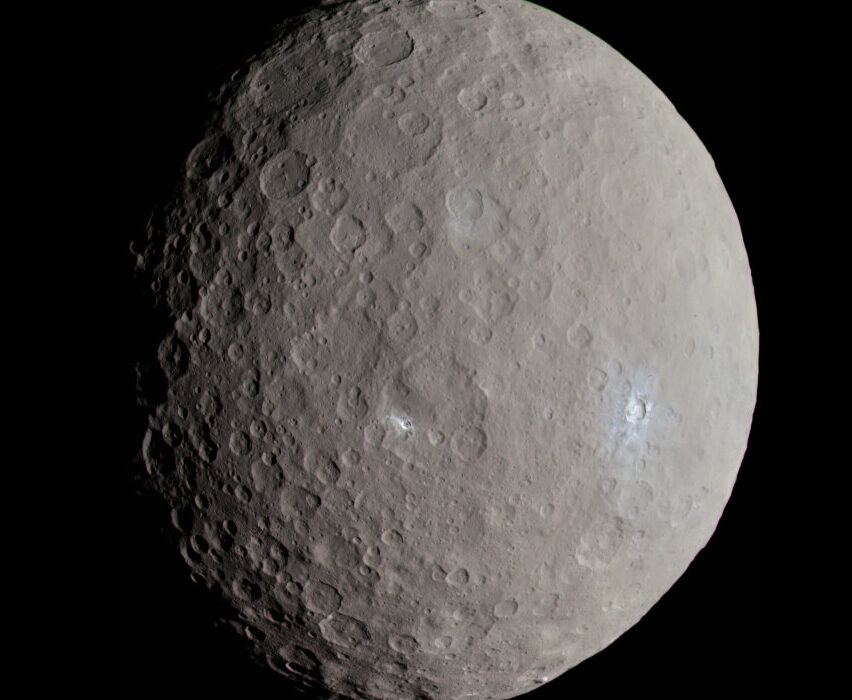
Planets form from material surrounding young stars or through other processes that allow objects to grow large enough to dominate their local orbital regions. In our solar system, planets range from small, rocky worlds to enormous gas and ice giants.
Moons are natural satellites that orbit planets or other larger bodies. Some are rocky, some are icy, and some have subsurface oceans that may provide environments of scientific interest.
Planets outside our solar system are called exoplanets. Thousands have been confirmed, demonstrating that planetary systems are common throughout the galaxy. Their properties vary widely, and some orbit their stars at distances that could permit liquid water under suitable atmospheric conditions.
Galaxies
Galaxies are large gravitationally bound systems containing stars, gas, dust, dark matter, and other components. They occur in several broad forms, including spiral, elliptical, and irregular galaxies.
The Milky Way is the galaxy that contains our solar system. It is a barred spiral galaxy with a central region, spiral arms, and a halo of stars and dark matter. Our Sun lies in a region of the disk away from the galactic center.
Galaxies evolve through star formation, the recycling of stellar material, gravitational interactions, and mergers with other galaxies. Their histories help scientists understand how cosmic structure developed.
Nebulae
Nebulae are clouds of gas and dust in space. Some are regions where stars form, while others consist of material expelled by dying stars or debris left behind by stellar explosions.
Nebulae can glow because their gas is energized by nearby stars, reflect starlight, or appear dark when dense dust blocks light from objects behind them. They are important laboratories for studying the chemistry of space and the life cycles of stars.
Black holes
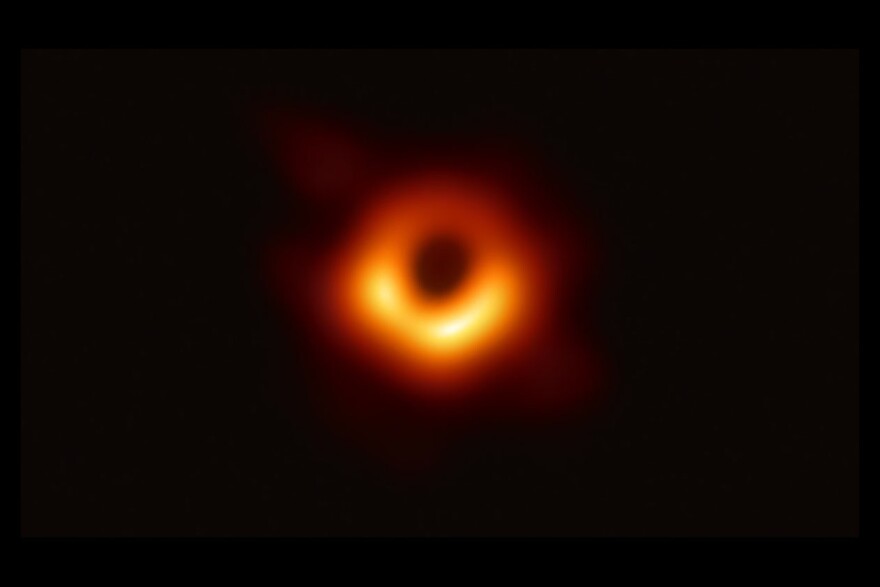
Black holes are regions of spacetime where gravity is so strong that nothing can escape from within a boundary called the event horizon, not even light.
Many black holes form when massive stars collapse at the ends of their lives. Supermassive black holes, containing millions or billions of times the Sun’s mass, exist in the centers of many galaxies.
Although a black hole itself does not emit light from within its event horizon, surrounding material can become extremely hot as it spirals inward. This material may produce intense radiation, making some black holes detectable through their effects on their surroundings.
Asteroids and comets
Asteroids are relatively small rocky or metallic bodies that orbit the Sun. Many occupy the asteroid belt between Mars and Jupiter, although others follow orbits that bring them closer to Earth.
Comets contain substantial amounts of ice mixed with dust and rocky material. When a comet approaches the Sun, its surface heats up, releasing gas and dust that can form a glowing cloud called a coma and one or more tails.
Both asteroids and comets preserve material left over from the formation of the solar system. Studying them helps scientists reconstruct the conditions in which the planets developed.
How do scientists study space?
Scientists study space using telescopes, spacecraft, satellites, landers, rovers, and instruments designed to detect different kinds of signals. No single method can reveal every aspect of the universe, so researchers combine multiple forms of evidence.
Optical telescopes collect visible light, allowing astronomers to observe stars, planets, and galaxies. Radio telescopes detect radio waves, which can reveal cold gas clouds, pulsars, and energetic processes that are difficult to study in visible light. Infrared telescopes can observe relatively cool objects and detect radiation that passes through some dust clouds more readily than visible light.
X-ray and gamma-ray observatories investigate extremely energetic environments, including exploding stars, hot gas, and material near black holes. Some telescopes operate in space because Earth’s atmosphere absorbs or distorts important wavelengths of radiation.
Spacecraft provide another way to investigate the solar system. Orbiters map planets and moons, landers analyze surfaces, and rovers examine terrain directly. Robotic probes have also traveled beyond the major planets, returning information about regions far from Earth.
Scientists additionally study cosmic rays, neutrinos, and gravitational waves. These signals provide information that ordinary light alone cannot supply. By comparing observations with mathematical models and laboratory experiments, researchers test explanations of how the universe works.
Can space support life?
The possibility of life beyond Earth is one of the major unanswered questions in science. Life as we know it requires suitable chemistry and an environment that supports complex chemical processes. Liquid water is especially important for known life, although scientists cannot assume that every possible form of life must have exactly the same requirements.
Researchers search for potentially habitable environments within and beyond the solar system. Mars preserves evidence of ancient water-related environments, while some icy moons of the outer solar system may contain liquid oceans beneath their surfaces. Exoplanet research examines whether distant planets have conditions that could permit liquid water and whether their atmospheres contain possible chemical indicators of biological activity.
A planet’s location within its star’s habitable zone can be useful, but it does not establish that the planet is inhabited. Atmospheric composition, surface conditions, radiation, geological activity, and many other factors influence habitability.
Scientists have not yet confirmed the existence of extraterrestrial life. Finding evidence would require careful investigation to distinguish biological activity from nonbiological processes.
Is space completely silent and empty?
Space is often described as silent because sound waves require a material medium, such as air, water, or solid matter, to carry vibrations from one location to another. In the near-vacuum of outer space, there is generally too little matter to transmit ordinary sound effectively over long distances.
This does not mean that space lacks activity. Stars emit radiation, charged particles stream away from the Sun, magnetic fields interact with plasma, and celestial objects collide or orbit one another. Many of these processes produce signals that instruments can detect.
Scientists sometimes translate data from space into audible sounds for analysis or public communication. Such sonifications may represent variations in radio signals, particle measurements, or other data, but they are not necessarily recordings of sound traveling through empty space.
Space is also not uniformly empty. Its density varies from near-vacuum conditions between galaxies to the dense interiors of stars and planets. Even regions with very little ordinary matter may contain radiation, magnetic fields, and dark matter.
What are some important facts about space?
Several established facts help illustrate the scale and behavior of the universe.
- Space is extremely large. The observable universe extends roughly 46 billion light-years in every direction from Earth, measured in terms of the present-day distance to the most distant observable regions.
- The universe has a finite known age. Evidence from cosmic expansion and the cosmic microwave background indicates an age of about 13.8 billion years.
- Light travels at a finite speed. In a vacuum, light travels at approximately 300,000 kilometers per second, or about 186,000 miles per second.
- The Sun is a star. It produces energy through nuclear fusion and contains nearly all the mass of the solar system.
- Earth is not at the center of the universe. It occupies an ordinary location within the Milky Way, and there is no known special central position in the large-scale universe.
- Space is not gravity-free. Gravity extends throughout space, although its strength varies with the distribution of mass and energy.
- Most of the universe’s mass-energy is not ordinary matter. Dark matter and dark energy dominate the standard cosmological accounting, but their underlying natures remain incompletely understood.
- The universe is expanding. On sufficiently large scales, distances between unbound galaxies increase over time, and observations indicate that this expansion is accelerating.
- The universe is chemically evolving. Many elements heavier than hydrogen and helium were produced through stellar processes and energetic cosmic events, then incorporated into later generations of stars and planets.
- The observable universe is not necessarily the entire universe. Light has had a limited amount of time to reach us, so regions beyond our cosmic horizon may exist without being observable from Earth.
What remains unknown about space?
Despite major advances in astronomy and physics, some of the universe’s deepest questions remain unanswered. Scientists continue to investigate them through observations, experiments, and increasingly precise theories.
One major mystery is dark matter. Its gravitational influence is evident in many astronomical observations, but researchers have not established what particles or physical objects account for it. Determining its nature could change our understanding of how galaxies form and how matter behaves.
Dark energy presents a separate challenge. Scientists observe that cosmic expansion is accelerating, but they do not know whether dark energy is a constant property of space or a more complicated phenomenon that changes over time.
Another open question concerns the earliest moments of the universe. The Big Bang model successfully describes much of cosmic history, but a complete explanation of the initial conditions may require a theory that combines general relativity and quantum mechanics. Scientists also continue to investigate whether cosmic inflation occurred and, if so, what physical mechanism drove it.
The overall size and shape of the universe remain uncertain beyond what observations can establish. Measurements suggest that space is very nearly flat on large scales, but this does not by itself prove that the entire universe is infinite.
Finally, scientists do not know whether life exists elsewhere. The discovery of extraterrestrial life would have profound implications for biology and our understanding of how frequently life emerges under suitable conditions. Until convincing evidence is found, the question remains open.
Space is therefore both a subject of established scientific knowledge and a frontier of discovery. Its physical laws explain the motion of planets, the evolution of stars, and the expansion of the universe, while unanswered questions about dark matter, dark energy, cosmic origins, and life beyond Earth continue to guide scientific research.