Biology is the scientific study of life and living organisms. It explores how living things are structured, how they function, how they grow and reproduce, how they interact with their environments, and how they change over generations. From the microscopic bacteria that live in soil to the complex human brain, biology investigates the processes that make life possible.
Biologists study organisms at many levels, including individual cells, tissues, organs, entire organisms, populations, and ecosystems. Their work helps explain everything from how the body fights infections to how plants convert sunlight into chemical energy and how species evolve over millions of years.
Biology is also closely connected to other sciences. Chemistry explains the reactions that occur inside cells, physics helps describe the forces and energy involved in living systems, and geology and environmental science provide insight into the conditions that support life on Earth. Together, these connections make biology essential for understanding the natural world.
What does biology study?
Biology covers an enormous range of subjects because life exists in many forms and operates through interconnected processes. Although organisms differ in size, appearance, behavior, and habitat, they share fundamental characteristics that scientists can investigate.
One major area of biological study is the structure and function of living organisms. Biologists examine how cells are organized into tissues, how tissues form organs, and how organs work together to sustain life. In humans, for example, the heart pumps blood, the lungs exchange oxygen and carbon dioxide, and the nervous system coordinates responses to internal and external changes.
Biology also investigates the chemical processes that occur within living things. Cells use chemical reactions to obtain energy, build molecules, repair damage, and maintain their internal conditions. These processes allow organisms to grow, respond to their surroundings, and carry out the activities necessary for survival.
Another central focus is heredity, the transmission of biological information from parents to offspring. DNA carries genetic instructions that influence how organisms develop and function. Changes in DNA can introduce variation, helping explain differences among individuals and providing the raw material for evolution.
Biologists also study interactions among organisms and their environments. A plant may compete with other plants for sunlight, a predator may depend on prey for food, and microorganisms may break down dead organic matter, returning nutrients to the environment. These relationships influence the survival of individual organisms and the functioning of entire ecosystems.
What makes something alive?
Defining life precisely is more difficult than it might appear. Most living organisms share several characteristics, but no single characteristic reliably distinguishes every living thing from everything that is not alive. Scientists therefore consider a combination of features when identifying living systems.
Cellular organization is one of the most important characteristics of life. All known cellular organisms consist of one or more cells. A cell is the smallest unit generally recognized as capable of carrying out the basic processes of life. Bacteria and many other microorganisms consist of a single cell, while animals, plants, and fungi are made of many cells that often specialize in different functions.
Living organisms also use energy and matter to sustain themselves. This collection of chemical reactions is called metabolism. Some organisms obtain energy by consuming other organisms or organic material, while plants, algae, and certain bacteria can capture energy from sunlight through photosynthesis. Other microorganisms obtain energy from chemical reactions involving inorganic substances.
Another characteristic is homeostasis, the regulation of internal conditions within ranges that allow biological processes to continue. The human body, for example, regulates its temperature and blood glucose levels through interacting physiological systems. Homeostasis does not mean that internal conditions remain perfectly constant. Instead, organisms continually adjust their activity in response to changing circumstances.
Growth and development are also common features of life. Organisms may increase in size, change shape, and develop specialized structures as they mature. These changes are directed by genetic information and influenced by environmental conditions.
Reproduction allows living organisms to produce offspring, although not every individual must reproduce to remain alive. Some organisms reproduce asexually, producing offspring without the fusion of reproductive cells. Others reproduce sexually, combining genetic material from reproductive cells to produce genetically varied offspring.
Living things can also respond to their environments. A plant may grow toward light, a bacterium may move toward a useful chemical, and a person may withdraw a hand from a hot surface. Such responses help organisms interact with changing conditions.
Finally, populations of living organisms evolve over generations. Inherited variations can affect survival and reproduction, changing the characteristics of populations over time.
Viruses illustrate why defining life is challenging. They contain genetic material and can evolve, but they cannot reproduce independently or carry out their own metabolism. Instead, they depend on host cells to make new viruses. For this reason, viruses are generally distinguished from cellular life, although their biological status remains an important subject of discussion.
The basic levels of biological organization
Life can be studied at different levels, from individual molecules to the global environment. Each level reveals patterns and processes that may be difficult to understand by examining another level alone.
Molecules are among the smallest components relevant to biology. DNA stores hereditary information, proteins perform many structural and chemical functions, and carbohydrates and fats contribute to energy storage and cellular structure. These molecules interact through chemical processes that support life.
Cells organize these molecules into functioning biological systems. A cell contains structures that carry out specific tasks, such as producing proteins, processing energy, and regulating the movement of substances across its boundary. Some cells, including many bacteria, can perform all the functions necessary for independent life. In multicellular organisms, cells often specialize.
Tissues and organs form when specialized cells work together. Muscle tissue generates force, nervous tissue transmits and processes signals, and epithelial tissue covers surfaces and lines internal spaces. Organs combine different tissues to perform larger functions. The stomach, for example, contains tissues that work together to move, mix, and chemically digest food.
Organ systems consist of organs that cooperate to carry out major physiological functions. The digestive system processes food and absorbs nutrients, while the circulatory system transports oxygen, nutrients, hormones, and waste products. These systems depend on one another to keep the organism functioning.
Organisms are individual living things, although some organisms form close associations or colonies. Each organism interacts with its surroundings and must obtain the resources needed to maintain its biological processes.
Populations and communities describe life at broader levels. A population consists of organisms of the same species living in a particular area. A biological community includes populations of different species that interact in that area.
Ecosystems include living communities and the nonliving components of their environments, such as water, soil, air, and sunlight. Energy flows through ecosystems, while matter and nutrients move between organisms and the physical environment.
At the broadest level, the biosphere encompasses the parts of Earth where life exists, including terrestrial environments, oceans, freshwater systems, and portions of the atmosphere. Studying the biosphere helps scientists understand how biological processes influence the planet as a whole.
The cell: The fundamental unit of life
The cell is central to biology because all known cellular organisms are built from cells. Understanding how cells function helps explain how living systems grow, obtain energy, maintain stability, and reproduce.
Every cell is surrounded by a cell membrane, which separates its internal environment from the outside. This membrane regulates the movement of substances into and out of the cell and allows the cell to respond to signals.
Cells contain genetic material, usually DNA, which provides instructions for making proteins and regulating many cellular activities. They also contain molecular machinery that reads genetic information and uses it to produce functional molecules.
Cells are broadly classified as prokaryotic or eukaryotic. Prokaryotic cells, found in bacteria and archaea, lack a membrane-bound nucleus. Their DNA is located in a region of the cell rather than enclosed within a nucleus. Eukaryotic cells, found in animals, plants, fungi, and many single-celled organisms, contain a nucleus that houses most of their DNA.
Eukaryotic cells also contain specialized structures called organelles. Mitochondria help convert energy stored in nutrients into a form that cells can use. Plant cells and some other eukaryotic cells contain chloroplasts, where photosynthesis takes place. Ribosomes build proteins, while the endoplasmic reticulum and Golgi apparatus help produce, process, and transport certain cellular materials.
Not all cells contain the same structures, and their internal organization varies according to their functions. A nerve cell, for example, is adapted to communicate across distances, while a red blood cell in humans is specialized for transporting oxygen.
In multicellular organisms, cells often depend on one another. They exchange chemical signals, transport materials, and coordinate their activities. The survival of the entire organism therefore depends on the combined functioning of its cells.
How living organisms obtain and use energy
Life requires a continuous supply of energy. Organisms use energy to build and repair structures, move substances, maintain internal conditions, grow, reproduce, and respond to their surroundings.
Most ecosystems ultimately depend on sunlight. Plants, algae, and certain bacteria capture light energy and use it to convert carbon dioxide and water into energy-rich organic compounds through photosynthesis. Oxygen is released during the familiar form of photosynthesis used by plants and algae.
These organic compounds provide both energy and building materials. Animals obtain them by eating plants or other organisms, while fungi and many bacteria absorb nutrients from organic material. Some microorganisms rely on chemical energy instead of sunlight, using reactions involving substances such as hydrogen, sulfur compounds, or ammonia.
Cells release usable energy through metabolic pathways. In many organisms, cellular respiration breaks down energy-rich molecules and transfers some of their chemical energy into adenosine triphosphate, commonly known as ATP. ATP supplies energy for numerous cellular activities, including muscle contraction, active transport, and the synthesis of molecules.
In aerobic cellular respiration, oxygen participates in the process of extracting energy from organic molecules. Cells can also obtain energy through metabolic pathways that do not require oxygen, although the amount of usable energy produced may differ.
Energy moves through living systems, while matter is continually recycled. Carbon from the atmosphere can enter plants through photosynthesis, move through food webs, and return to the atmosphere through respiration or decomposition. Nutrients such as nitrogen and phosphorus also circulate between organisms and their environments.
This relationship between energy and matter helps explain why organisms cannot survive without resources and why ecosystems depend on processes that make nutrients available again.
Genetics and the role of DNA
Genetics is the branch of biology concerned with heredity and variation. It explains how biological characteristics are transmitted between generations and how differences arise among individuals.
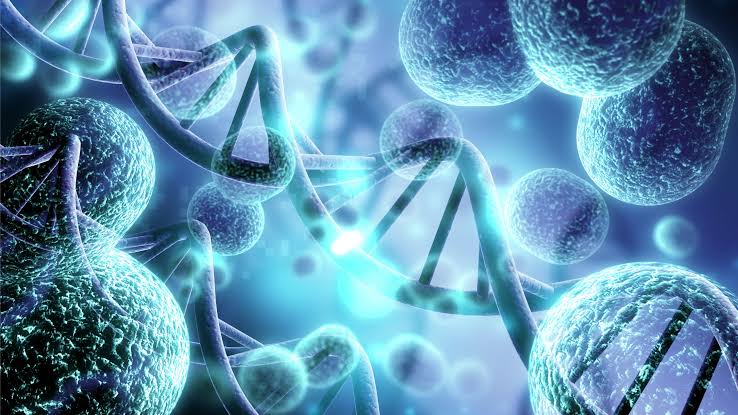
DNA, or deoxyribonucleic acid, is the molecule that carries genetic information in cellular organisms. Its structure consists of two strands arranged in a double helix. The strands contain four types of chemical building blocks, commonly represented by the letters A, T, C, and G. The order of these building blocks stores information that cells use to produce functional RNA molecules and proteins.
A gene is a region of DNA that contributes to a functional product, such as a protein or a functional RNA molecule. Genes influence many biological characteristics, but their effects often depend on interactions with other genes and environmental conditions.
In humans and many other organisms, DNA is organized into chromosomes. During reproduction, genetic information is passed from parents to offspring through reproductive cells or other inheritance mechanisms, depending on the species.
Genetic inheritance does not mean that every characteristic is determined by a single gene. Some traits are strongly influenced by particular genetic variants, while others result from the combined effects of many genes and environmental influences. Height in humans, for example, is affected by numerous genetic factors as well as nutrition and other conditions during development.
Mutations are changes in genetic material. They can arise through errors in DNA replication or exposure to certain environmental agents. Some mutations have little or no detectable effect, while others can alter an organism’s characteristics or affect its health. In populations, inherited mutations can contribute to genetic variation.
Genetics has applications throughout biology. It helps scientists investigate inherited diseases, understand evolutionary relationships, improve crops, study microbial diversity, and explore how organisms develop. However, genetic information must be interpreted carefully because the relationship between genes and observable traits is often complex.
Evolution explains the diversity of life
Evolution is the change in inherited characteristics of populations over successive generations. It provides a scientific framework for understanding both the similarities among organisms and the diversity of life on Earth.
One major mechanism of evolution is natural selection. Individuals within a population differ in their inherited characteristics. When some of those differences affect survival or reproductive success, the characteristics associated with greater reproductive success may become more common over generations.
For example, if a population of insects contains inherited variation in coloration, individuals whose coloration makes them less visible to predators may be more likely to survive and reproduce in a particular environment. Over many generations, the less-visible coloration may become more common. The outcome depends on environmental conditions and can change if those conditions change.
Evolution also occurs through genetic drift, which is the influence of chance on genetic variation, particularly in small populations. Gene flow, the movement of genetic variants between populations, can introduce or redistribute variation. Mutations continually provide new genetic variants, although most evolutionary changes depend on the combined effects of several processes.
Over long periods, populations can diverge and form distinct species. This process, known as speciation, contributes to biodiversity. Evolution also explains why organisms share fundamental biological features. Many species use DNA, rely on similar cellular machinery, and share basic biochemical pathways because these features originated in their evolutionary histories.
Humans are part of this same evolutionary history. Evidence from fossils, comparative anatomy, genetics, and other fields shows that humans share common ancestors with other primates. Evolution does not mean that living species are all moving toward a predetermined goal. Instead, populations change as inherited variation interacts with environmental conditions and chance.
Evolutionary biology also helps scientists understand the spread of infectious diseases, the development of antibiotic resistance, changes in agricultural pests, and the conservation of threatened species.
The major branches of biology
Biology is a broad discipline with many specialized branches. Each focuses on particular organisms, biological processes, or levels of organization, but their findings often overlap.
Botany is the study of plants. Botanists investigate plant structure, growth, reproduction, photosynthesis, classification, and interactions with the environment. Their work contributes to agriculture, forestry, conservation, and our understanding of terrestrial ecosystems.
Zoology focuses on animals, including their anatomy, physiology, behavior, evolution, and ecological relationships. Zoologists study organisms ranging from insects and fish to birds and mammals.
Microbiology examines microscopic organisms and biological agents, including bacteria, archaea, many fungi, microscopic algae, and protozoa. It helps explain infectious diseases, decomposition, food production, and the roles microorganisms play in ecosystems. Viruses are also widely studied in microbiology, although they are not cellular organisms.
Cell biology investigates the structure and activities of cells. It explores how cells grow, divide, communicate, produce energy, and respond to signals. Because cellular processes underlie the functioning of organisms, this branch is closely connected to genetics, medicine, and biochemistry.
Molecular biology studies biological processes at the level of DNA, RNA, proteins, and their interactions. It helps explain how genetic information is stored, expressed, regulated, and transmitted.
Genetics focuses on heredity and variation, while genomics examines the complete genetic material of an organism or other biological system. These fields help researchers investigate the relationships between genetic information, biological traits, and evolutionary history.
Anatomy studies biological structure, and physiology examines how those structures function. In human biology, anatomy describes the organization of the heart and blood vessels, while physiology explains how the cardiovascular system circulates blood and regulates blood pressure.
Ecology explores relationships between organisms and their environments. Ecologists investigate populations, food webs, nutrient cycles, biodiversity, and the effects of environmental change.
Evolutionary biology examines the origins and changes of biological diversity. It draws on genetics, fossils, anatomy, ecology, and other evidence to reconstruct the history of life.
Developmental biology studies how organisms form and change from their earliest stages through maturity. It investigates how cells specialize, tissues develop, and organs take shape.
Other important branches include neuroscience, which studies the nervous system; immunology, which examines the body’s defense mechanisms and related biological processes; marine biology, which focuses on life in ocean environments; and biotechnology, which applies biological knowledge to develop useful products and processes.
These branches are not isolated disciplines. A scientist studying a disease may combine genetics, microbiology, immunology, cell biology, and physiology to understand its causes and effects.
How biology differs from other sciences
Biology shares methods and concepts with chemistry, physics, geology, and other scientific disciplines, but its central focus is living systems.
Chemistry studies matter, its composition, and the reactions that transform it. Biological processes depend on chemistry because cells are made of molecules that interact through chemical reactions. Biochemistry connects these disciplines by investigating the chemical processes that occur in living organisms.
Physics examines matter, energy, forces, motion, and other fundamental properties of the natural world. Biological systems obey physical principles, including the laws of thermodynamics. Biophysics applies physical concepts and methods to biological questions, such as how proteins change shape, how cells generate mechanical forces, and how electrical signals travel through neurons.
Earth science investigates Earth’s materials, structure, history, and physical processes. It helps explain the environments in which organisms live and how geological events, climate, and changes in the planet’s surface influence biological evolution.
Environmental science brings together biology, chemistry, geology, and other disciplines to study environmental systems and the effects of human activities. Questions about air pollution, water quality, climate change, and ecosystem degradation often require evidence from several sciences.
Biology differs from these fields primarily in its emphasis on life, heredity, evolution, and the organization of living systems. Yet biological questions frequently cannot be answered by biology alone. Understanding how a plant responds to drought, for example, may require knowledge of cell signaling, water movement, soil chemistry, and atmospheric conditions.
How scientists study biology
Biology relies on systematic observation, experimentation, measurement, and the evaluation of evidence. The methods scientists use depend on the question being investigated.
Observation is often the starting point. A biologist might notice that a particular species grows more rapidly under certain conditions or that an animal behaves differently when food becomes scarce. Such observations can lead to questions about the underlying mechanisms.
Scientists may then develop hypotheses, which are testable explanations for observations. A hypothesis must be specific enough that evidence can support or challenge it. Researchers design studies to examine its predictions, controlling relevant variables when possible and collecting measurements that can be analyzed.
Experiments are especially useful when scientists want to test whether changing one factor causes a particular outcome. For example, researchers investigating plant growth might compare plants receiving different amounts of light while keeping water, temperature, and other conditions as similar as possible.
Not every biological question can be tested through a controlled experiment. Scientists cannot experimentally recreate every event in evolutionary history or manipulate entire ecosystems without limitations. In such cases, they may compare populations, analyze genetic sequences, examine fossils, track changes over time, or use mathematical models to evaluate explanations.
Modern biology also relies heavily on advanced technologies. Microscopes reveal structures too small to see with the unaided eye. DNA sequencing allows researchers to examine genetic information. Imaging techniques help scientists investigate internal structures and biological activity, while computer-based analyses identify patterns in large datasets.
Scientific conclusions depend on the quality of the evidence, the reliability of the methods, and whether independent observations support the findings. A single experiment may provide useful information, but conclusions often become more convincing when different methods and research groups produce consistent results.
Biological knowledge is continually refined as new evidence emerges. This does not mean that all biological conclusions are equally uncertain. Many fundamental principles, including the cellular basis of life, the role of DNA in heredity, and evolution through natural selection, are supported by extensive and independent evidence.
Why biology matters in everyday life
Biology helps explain many experiences people encounter every day. It reveals how the body maintains its internal environment, why sleep matters, how food supplies energy, and how exercise affects muscles, circulation, and metabolism.
Human health is one of biology’s most important applications. Understanding cells, organs, microorganisms, genetics, and immune responses helps researchers investigate disease and develop ways to prevent, diagnose, and treat medical conditions. Vaccines, for example, use knowledge of the immune system to help prepare the body to recognize specific disease-causing agents. Antibiotics target biological processes in susceptible bacteria, although they do not treat viral infections, and the evolution of antibiotic resistance creates an ongoing challenge.
Biology is equally important in agriculture. Plant biology helps farmers understand photosynthesis, nutrient requirements, reproduction, and responses to pests and environmental stress. Genetics and selective breeding can improve desirable crop characteristics, while ecological knowledge can support soil conservation and more effective pest management.
Food production and safety also depend on biological principles. Microorganisms can transform ingredients during fermentation, spoil food, or cause illness. Understanding their growth and survival helps people develop safe methods of food handling, storage, and preservation.
Environmental conservation relies on knowledge of species, habitats, populations, and ecosystems. Biologists study how pollution, habitat loss, invasive species, and climate change affect biodiversity. Their findings can inform efforts to protect endangered organisms, restore damaged habitats, and maintain the ecological processes on which human societies depend.
Biotechnology applies biological systems and knowledge to practical problems. Scientists and engineers use microorganisms to manufacture substances, develop biological treatments, improve industrial processes, and investigate new approaches to producing materials and fuels. Genetic engineering can introduce or modify genetic characteristics for specific purposes, although its applications require careful consideration of safety, environmental effects, and ethical questions.
Biology also contributes to public health by helping experts understand how infectious diseases spread, how populations respond to health interventions, and how environmental conditions influence disease risk. These applications show that biology is not simply the study of organisms in isolation. It provides knowledge that can guide decisions affecting individuals, communities, economies, and the natural world.
What remains unknown about life?
Despite major advances in biological research, many questions remain unanswered. Scientists continue to investigate how life first emerged on Earth, how complex biological systems developed, and whether life exists elsewhere in the universe.
The origin of life is a particularly challenging problem. Researchers investigate how nonliving chemical substances could have formed increasingly complex systems capable of maintaining themselves, using energy, and eventually reproducing. Several hypotheses propose possible pathways, but the complete sequence of events that led to the first life remains unresolved.
Scientists also continue to explore the complexity of the human brain. Research has revealed much about neurons, electrical signaling, chemical communication, and brain organization, yet many aspects of consciousness, memory, and the emergence of complex thought remain incompletely understood.
Another major challenge is predicting how organisms and ecosystems will respond to environmental changes. Biological systems contain many interacting variables, and their responses can depend on local conditions, evolutionary adaptation, and relationships among species. Better predictions require combining biological observations with models and evidence from other sciences.
Genetics presents further questions about how genes interact with one another and with environmental influences to shape development, behavior, and disease. Even with extensive genetic information, scientists cannot reliably predict every complex characteristic of an individual from DNA alone.
These unanswered questions do not diminish biology’s established findings. Instead, they demonstrate how the study of life combines reliable knowledge with ongoing investigation. Each discovery can reveal new mechanisms, challenge existing explanations, or open additional questions about how living systems work.
Biology provides a framework for understanding life at every level, from the molecules inside a cell to the ecosystems that sustain entire communities of organisms. By examining how living things function, inherit information, interact with their environments, and evolve, biology explains both the shared principles of life and the remarkable diversity of organisms on Earth.