Exoplanetary systems are groups of planets and other celestial objects that orbit stars beyond our Sun. Like our own solar system, they can contain planets, moons, asteroids, comets, and clouds of dust and gas. However, these systems can differ dramatically from ours in the sizes of their planets, the distances between them, their orbital patterns, and the types of stars they surround.
An exoplanet, short for extrasolar planet, is any planet that orbits a star other than the Sun. An exoplanetary system includes one or more of these planets and the other objects gravitationally associated with their host star. Some systems resemble scaled versions of our solar system, while others have arrangements that challenge our understanding of how planets form and evolve.
Studying these distant systems helps astronomers explain how planets develop, why planetary systems differ, and what conditions might allow life to exist beyond Earth.
How exoplanetary systems work
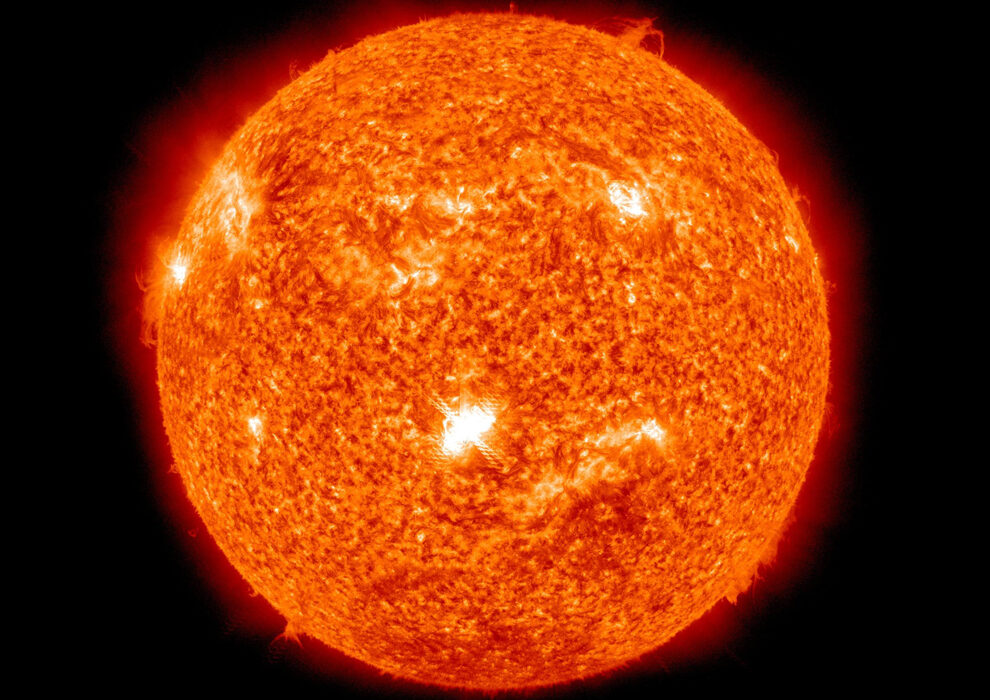
Gravity is the fundamental force that holds an exoplanetary system together. A star contains most of the system’s mass, so its gravitational pull keeps orbiting planets on paths around it. Planets also exert gravitational forces on one another, influencing their motions and sometimes changing their orbits over long periods.
A planet does not simply travel in a circle around its star. Its motion depends on its initial velocity and the star’s gravitational attraction. The combination produces an orbit, usually an ellipse, which is an oval-shaped path. A nearly circular orbit is a special case of an ellipse.
The time a planet takes to complete one orbit is called its orbital period, or its year. Planets farther from a star generally take longer to complete an orbit than planets closer to it. The exact relationship depends on the star’s mass and the planet’s orbital distance. For planets orbiting the same star, increasing orbital distance generally means a longer year.
A planet’s distance from its star also affects its temperature. A planet receiving more stellar energy tends to be warmer than a similar planet receiving less energy, although its atmosphere, reflectivity, rotation, and internal heat can significantly alter its actual temperature.
These factors work together to shape each system. A planet’s orbit influences how much energy it receives, while its atmosphere determines how that energy is absorbed, retained, and redistributed. The gravitational interactions among planets can also influence whether their orbits remain stable over millions or billions of years.
How planetary systems form
Exoplanetary systems begin forming inside enormous clouds of gas and dust in space. When part of a cloud collapses under gravity, material gathers into a denser central region that can become a star. As the cloud contracts, its rotation encourages much of the remaining material to flatten into a spinning disk around the young star.
This structure is called a protoplanetary disk. It contains gas, dust, and small solid particles that provide the raw materials for planets.
Within the disk, tiny dust grains collide and sometimes stick together. Over time, these grains can build larger particles, then kilometer-scale or larger bodies called planetesimals. Through repeated collisions and gravitational attraction, some planetesimals grow into planetary embryos, which can eventually become planets.
The process is not perfectly orderly. Collisions can break objects apart as well as help them grow. Growing planets compete for material, and gravitational interactions can move them away from their original formation locations. Some objects are ejected from the system entirely.
The composition of a developing planet depends partly on where it forms. Close to a young star, temperatures are often too high for many volatile substances, such as water, to remain frozen. Rocky and metallic materials can still condense, providing the ingredients for terrestrial planets. Farther out, cooler temperatures allow water and other substances to freeze, potentially making more solid material available for growing planets.
In some disks, sufficiently massive planetary cores accumulate large amounts of hydrogen and helium before the surrounding gas disappears. These planets can become gas giants. Other planets acquire thick atmospheres rich in heavier gases or develop substantial layers of ice, rock, and volatile compounds.
The result is a wide variety of planetary systems. The final arrangement depends on the disk’s mass and composition, the star’s properties, the timing of planet formation, and the gravitational interactions that occur as the system develops.
Why other solar systems look different from ours
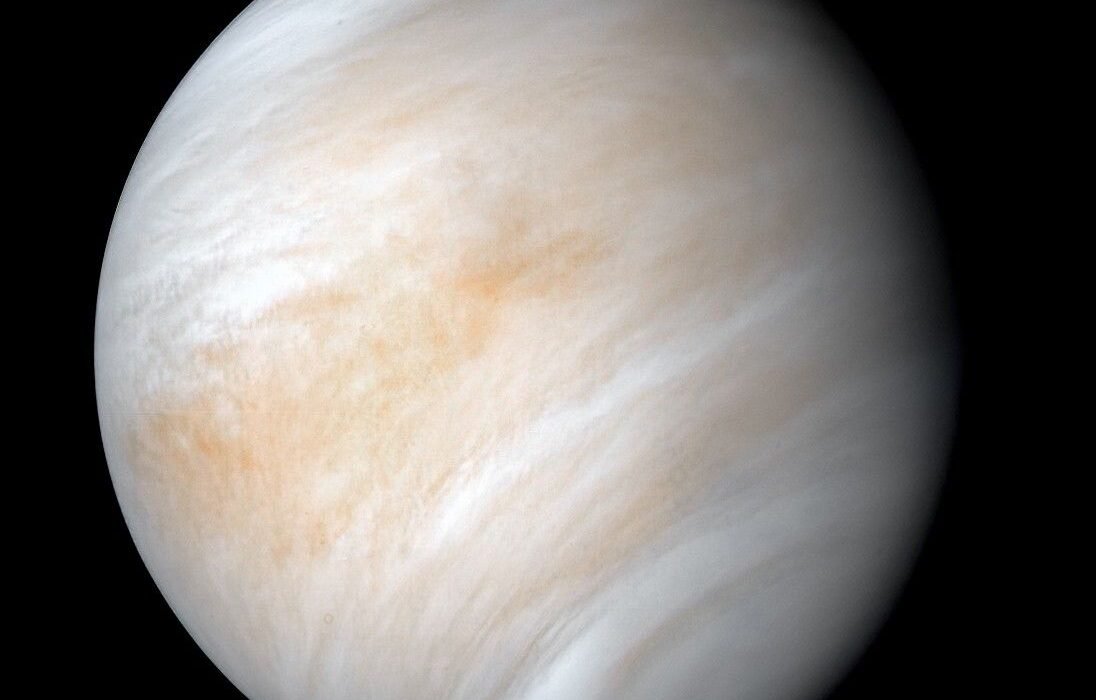
Our solar system has four relatively small rocky planets in the inner region, followed by the giant planets farther out. Mercury, Venus, Earth, and Mars are terrestrial planets, while Jupiter and Saturn are gas giants and Uranus and Neptune are generally classified as ice giants.
Other planetary systems do not necessarily follow this arrangement. Astronomers have discovered systems containing planets larger than Earth that orbit much closer to their stars than Mercury orbits the Sun. Some have several planets packed into compact arrangements, while others contain giant planets on highly elongated orbits.
These differences reflect the complicated processes that shape planetary systems. Planets may form at one distance and later migrate to another. Interactions with the gas in a protoplanetary disk can change a planet’s orbit, while close gravitational encounters between planets can scatter them onto new paths. In some cases, a planet can be thrown out of its original system.
The Sun’s system is therefore one example of planetary architecture, not a universal blueprint. Its structure offers important clues about planet formation, but it cannot account for every arrangement astronomers observe elsewhere.
Hot Jupiters
One of the most striking discoveries in exoplanet science is the existence of hot Jupiters. These are giant planets comparable in general size to Jupiter that orbit extremely close to their host stars.
Their close proximity makes them intensely heated by starlight, and their orbital periods can be only a few days. Jupiter, by contrast, takes nearly 12 Earth years to orbit the Sun.
Hot Jupiters are difficult to explain if giant planets are assumed to form only far from their stars and remain where they originate. Their existence helped establish that planetary migration can play a major role in the evolution of planetary systems.
Astronomers have proposed several routes for this migration. A planet can gradually move inward through interactions with a surrounding disk of gas, or it can enter an elongated orbit through gravitational interactions with other bodies. In the latter case, tidal forces between the planet and its star can gradually alter the orbit, potentially making it more circular.
Not every hot Jupiter necessarily follows the same evolutionary path. Their origins remain an important subject of planetary science.
Super-Earths and mini-Neptunes
Another common type of exoplanet is the super-Earth, generally understood as a planet more massive than Earth but smaller than Neptune. The name describes a broad category rather than a guarantee that a planet resembles Earth in composition, atmosphere, or habitability.
Some super-Earths may be predominantly rocky, while others may contain substantial amounts of water or have thick atmospheres. Their physical characteristics cannot be determined from mass alone.
Mini-Neptunes are planets smaller than Neptune that may possess substantial gas envelopes surrounding rocky or volatile-rich interiors. These planets can have sizes that overlap with those of super-Earths, making the distinction between the categories dependent on evidence about their internal structure and atmospheric composition.
Neither category has a direct counterpart among the major planets in our solar system. Their prevalence in other systems shows that the range of planetary sizes and compositions is broader than the familiar lineup around the Sun might suggest.
What kinds of stars host planetary systems?
Planets can orbit many different kinds of stars. The star’s mass, temperature, brightness, age, and activity influence the conditions under which its planets form and evolve.
Small, cool red dwarfs are particularly important in exoplanet research. They are less massive and less luminous than the Sun, so a planet may need to orbit relatively close to receive an amount of stellar energy comparable to what Earth receives. Their lower luminosity also means that planets can have shorter orbital periods at these distances.
Red dwarfs can remain stable for extremely long periods, but their behavior varies. Some produce powerful flares and release energetic radiation that can affect nearby planetary atmospheres. A planet close to its star may also become tidally locked, meaning that the same side always faces the star because its rotation and orbital motion have become synchronized.
Tidally locked planets are not necessarily uninhabitable. Their climate depends on atmospheric circulation, surface conditions, and other factors that determine how heat moves from one region to another.
More massive stars can host planets as well, but they have shorter lifetimes and generally evolve more quickly than Sun-like stars. Their stronger radiation and the changing conditions around them can influence planetary environments.
Some planets orbit two stars rather than one. In a circumbinary system, a planet travels around both stars as they orbit their shared center of mass. Other configurations can place a planet around one member of a multiple-star system while another star orbits farther away.
These arrangements are governed by the same laws of gravity that operate in our solar system, although the combined gravitational effects can make orbital motion more complicated.
How astronomers discover exoplanets
Most exoplanets are too distant and faint to be seen directly with ordinary telescopes. Their host stars are usually much brighter than the planets themselves, and the planets appear extremely close to those stars from our perspective.
Astronomers therefore use indirect methods that detect how planets affect the light or motion of their host stars. Different techniques reveal different properties, and combining them can provide a much more complete picture of a planetary system.
The transit method
The transit method detects a small decrease in a star’s brightness when a planet passes in front of it from our point of view. The planet blocks some of the star’s light, producing a repeating dip in the measured brightness.
The depth of the dip can help astronomers estimate the planet’s radius relative to the star’s radius. The time between repeated transits reveals the orbital period.
However, a transit can occur only when the planet’s orbit is aligned suitably with our line of sight. Many planets never cross the visible face of their stars from Earth’s perspective, so this method cannot detect every planetary system.
Transits can also reveal information about atmospheres. During a transit, a small portion of the starlight may pass through the planet’s atmosphere before reaching a telescope. Different atmospheric gases absorb different wavelengths of light, leaving patterns that astronomers can analyze.
The radial velocity method
A planet’s gravity pulls on its star as the planet orbits. Although the star is far more massive, it also moves in response to the planet, tracing a small motion around the system’s center of mass.
Astronomers can detect this motion by measuring changes in the star’s spectrum, the pattern of wavelengths produced by its light. As the star moves toward or away from Earth, its spectral lines shift slightly because of the Doppler effect.
The pattern of these shifts reveals the presence of an orbiting companion and helps constrain its orbital period and mass. In practice, the method usually provides a planet’s minimum mass unless additional information is available about the orbit’s inclination, or tilt relative to our line of sight.
When transit and radial velocity measurements are combined, astronomers can estimate both a planet’s radius and its mass. These values make it possible to calculate its average density, which helps constrain whether the planet is predominantly rocky, gas-rich, or composed of a mixture of materials.
Direct imaging and other techniques
Direct imaging attempts to detect a planet’s own light rather than infer its presence from its effects on a star. This is difficult because starlight can overwhelm the much fainter planet. Astronomers use specialized instruments and observing techniques to suppress the star’s glare.
The method is especially useful for certain young, hot planets that are relatively far from their stars. Such planets can emit detectable infrared radiation as they release heat from their formation.
Another technique, gravitational microlensing, relies on the gravitational bending of light. When a foreground star passes nearly in front of a more distant background star, the foreground star’s gravity can magnify the background star’s light. A planet orbiting the foreground star can produce an additional feature in this magnification pattern.
Microlensing can reveal planets at distances and orbital separations that are difficult to investigate with other methods, although the alignment needed for an event is temporary. The event usually cannot be repeated, which can make follow-up measurements challenging.
Astrometry offers another approach by measuring a star’s position on the sky with exceptional precision. A planet’s gravitational pull can cause the star to wobble around the system’s center of mass, producing a small change in its apparent position.
Together, these methods allow astronomers to investigate planets with a broad range of sizes, temperatures, orbital distances, and host-star types.
How astronomers determine what exoplanets are made of
Discovering a planet is only the beginning. To understand how an exoplanetary system works, astronomers need to learn about the planets’ physical properties, including their sizes, masses, densities, atmospheres, and temperatures.
Mass and radius provide an important starting point. A planet with a high density is more likely to contain a substantial amount of rock or metal, while a lower-density planet may contain more gas or other low-density materials. These are general clues rather than definitive classifications because internal composition, pressure, and atmospheric thickness can complicate the interpretation.
Spectroscopy provides another source of information. This technique separates light into its component wavelengths and examines how the light changes as it interacts with matter. Atoms and molecules absorb or emit light at characteristic wavelengths, producing identifiable patterns.
When starlight passes through an exoplanet’s atmosphere during a transit, certain wavelengths may be absorbed by atmospheric gases. Comparing the observed spectrum with physical models can help researchers identify possible atmospheric constituents.
Observations may provide evidence for water vapor, carbon dioxide, methane, sodium, and other substances, depending on the planet and the quality of the data. Detecting a particular molecule does not automatically establish that the planet has Earth-like conditions, and interpreting atmospheric spectra can be difficult when signals are weak or multiple explanations fit the observations.
Temperature estimates also require care. The amount of energy a planet receives from its star is only one part of its climate. Atmospheric composition, cloud cover, reflectivity, rotation, and heat circulation can all influence surface or atmospheric temperatures. For planets with thick atmospheres, the conditions at the visible cloud tops may differ greatly from those deeper down.
As observational methods improve, astronomers can test increasingly detailed models of how these planets work. Even so, many planets remain poorly characterized, and some of their most important properties cannot yet be measured directly.
How planets influence one another
An exoplanetary system is not simply a collection of independent worlds orbiting the same star. Each planet exerts gravity on the others, and these interactions can influence orbital shapes, distances, and long-term stability.
When planets repeatedly approach particular relative positions, their gravitational effects can accumulate. In some systems, planets become locked in an orbital resonance, meaning their orbital periods are related by a ratio of small whole numbers or another simple relationship. For example, one planet might complete two orbits while another completes one.
Resonance does not necessarily mean that planets are physically close or that their orbits are identical. Instead, their repeating orbital timing can produce a predictable pattern of gravitational interactions. Depending on the arrangement, resonance can help maintain an organized orbital configuration or contribute to changes in orbital motion.
Planetary migration and gravitational scattering can also rearrange a system. A massive planet moving through a disk may alter the orbits of smaller bodies. A close encounter between planets can transfer orbital energy, leaving one planet on a wider or more elongated orbit and another on a different trajectory.
If gravitational disturbances become strong enough, a planet may be ejected into interstellar space. Such a planet would no longer orbit its original star and would be considered a rogue planet.
The architecture of a mature system therefore preserves clues about its history. Orbital spacing, eccentricities, resonances, and the presence or absence of certain planets can help scientists reconstruct the processes that shaped it.
What makes a planet potentially habitable?
One of the major goals of exoplanet research is to determine whether planets beyond our solar system could support life. Scientists begin by identifying environments that might allow liquid water to exist, because water is essential to all known life on Earth.
The habitable zone is the range of distances around a star where a planet with suitable atmospheric conditions could maintain liquid water on its surface. Its location depends primarily on the star’s luminosity and the planet’s ability to absorb and retain heat.
The habitable zone is a useful starting point, not a guarantee of habitability. A planet can orbit within this region and still be too hot, too cold, airless, or otherwise unsuitable for life as we know it. Conversely, some environments outside the conventional habitable zone may contain liquid water beneath ice or in other protected settings.
A planet’s atmosphere is especially important. Greenhouse gases absorb some of the infrared radiation emitted by the surface and re-emit energy, helping determine the planet’s temperature. Without an appropriate atmosphere, a world in the habitable zone might not retain liquid water at its surface.
Atmospheric pressure matters, too. Water’s ability to remain liquid depends on both temperature and pressure. A planet with too little atmospheric pressure may not support stable surface liquid water even if its average temperature seems suitable.
Other factors include radiation from the host star, the planet’s magnetic environment, its geological activity, and the long-term stability of its climate. The ability to maintain an atmosphere over geological time can be particularly important, because intense stellar radiation and energetic particles may gradually remove atmospheric gases under some conditions.
Life also requires more than liquid water alone. It needs suitable chemistry, usable energy, and conditions that allow biological processes to persist. Scientists do not yet know how frequently life arises when those conditions are present.
For this reason, identifying a potentially habitable exoplanet is not the same as finding an inhabited one. It means that some of the planet’s known properties are compatible with conditions that could support life, while many other factors may remain uncertain.
How exoplanetary systems evolve over time
Planetary systems change throughout their lifetimes. During their early development, the surrounding disk influences planet formation, migration, and the distribution of material. As the star grows older, the disk dissipates, leaving planets and smaller bodies to evolve under gravity and other physical processes.
A young planet may remain hot from the energy released during its formation. Over time, it loses heat to space, although the rate of cooling depends on its composition, mass, atmosphere, and internal structure.
Atmospheres can also change. Stellar radiation may heat the upper atmosphere and allow gas to escape into space. Impacts can deliver volatile substances or remove existing material. Chemical reactions, internal activity, and interactions with a star can further alter a planet’s environment.
Orbital systems may continue to change long after their planets form. Gravitational interactions can gradually alter orbital eccentricities and inclinations, while tidal forces can affect the rotation of planets and the shapes of their orbits. These processes can influence the amount of energy a planet receives and the way that energy varies over time.
The host star’s own evolution can have profound consequences. As a star ages, its brightness and activity can change. When a Sun-like star eventually expands into a red giant, its inner planetary system will be transformed. Some nearby planets may be engulfed, while others may experience severe changes in temperature and orbital conditions. The eventual fate of each planet depends on its distance, mass, orbital evolution, and the details of the star’s transformation.
Understanding these changes helps scientists distinguish between a planet’s present-day appearance and the conditions under which it formed. A planet that seems unusual today may be the result of billions of years of migration, atmospheric loss, collisions, and gravitational interactions.
What exoplanetary systems reveal about our own solar system
Our solar system provides the best-studied example of a planetary system, but it is not necessarily representative of all planetary systems. The discovery of hot Jupiters, super-Earths, mini-Neptunes, and compact multi-planet systems has shown that planets can form and evolve into arrangements unlike the one around the Sun.
These discoveries help scientists test competing explanations for planetary formation. If a model can explain the Sun’s planets but cannot account for the diversity observed elsewhere, it needs to be refined. Conversely, patterns shared by many systems can reveal physical processes that operate broadly across the galaxy.
Comparisons also clarify which features of Earth are common and which may be unusual. Rocky planets exist beyond the solar system, but having the right size, atmospheric composition, surface temperature, and long-term environmental stability involves many factors. No single measurement can establish that another world is a close equivalent of Earth.
Exoplanet research also connects astronomy with geology, chemistry, physics, and biology. Understanding a distant planet requires knowledge of how matter behaves under pressure, how atmospheres absorb radiation, how gravity shapes orbits, and how planetary interiors evolve.
The central lesson is that planetary systems are products of shared physical laws acting under different initial conditions. Gravity, chemistry, radiation, and the evolution of stars govern them all, but the details can produce remarkably different worlds.
By studying those differences, scientists are building a broader understanding of how planets form, how their environments change, and which conditions might allow life to emerge. Each exoplanetary system offers another opportunity to examine the processes that shaped our own solar system and to understand how many different kinds of worlds the universe can produce.