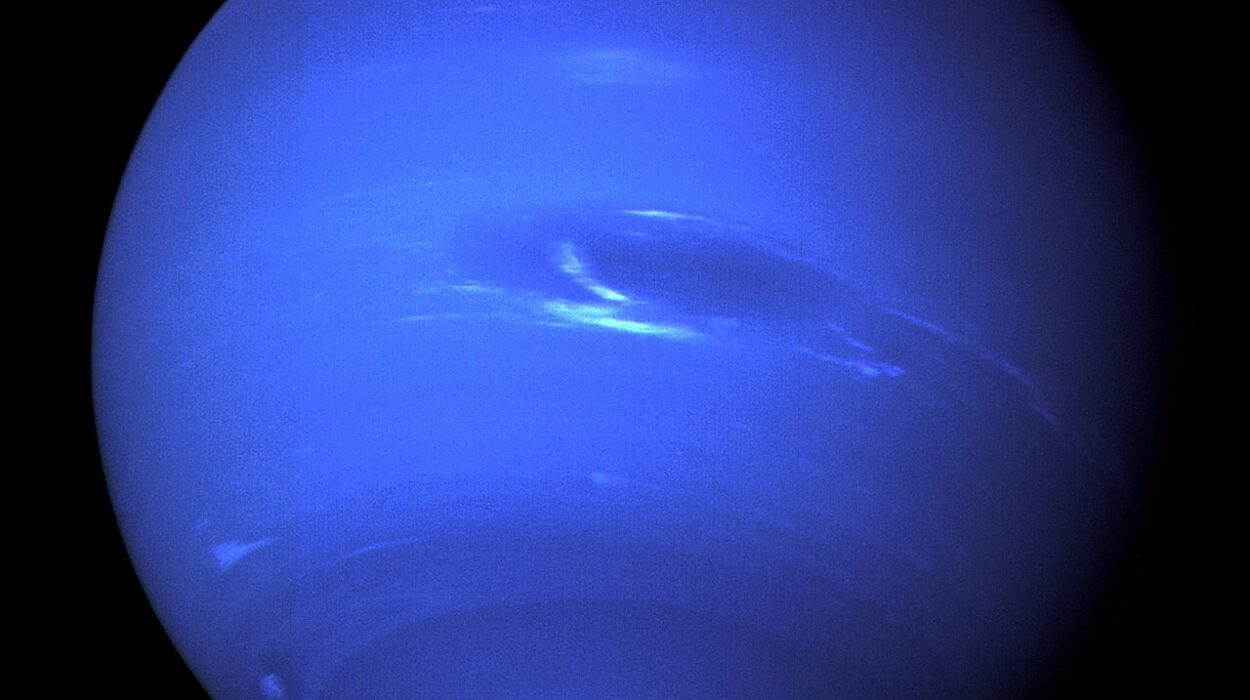
TOI-700 e is a small, rocky planet orbiting a cool red dwarf star about 100 light-years from Earth. Its orbit places it within the star’s habitable zone, the region where temperatures could allow liquid water to exist on a planet’s surface under the right atmospheric conditions. That makes TOI-700 e an intriguing candidate in the search for worlds that might support life.
But being in the habitable zone does not mean a planet has oceans, a breathable atmosphere, or living organisms. Scientists know important details about TOI-700 e’s size and orbit, yet many of the conditions that determine whether its surface could support life remain unknown. The planet is best understood as a promising place to investigate, not a confirmed second Earth.
What makes TOI-700 e unusual?
TOI-700 e belongs to a growing group of small exoplanets, worlds that orbit stars beyond our Sun. Astronomers discovered it using NASA’s Transiting Exoplanet Survey Satellite, or TESS, which searches for planets by measuring tiny changes in a star’s brightness.
The planet was announced in 2023 and became the fourth known planet in the TOI-700 system. Its discovery added another potentially rocky world to a system already attracting interest because several of its planets orbit within or near the star’s habitable zone.
TOI-700 e is about 95 percent of Earth’s radius, making it close to Earth in size. This is important because a planet’s size can offer clues about its likely composition. Small planets are more likely than much larger worlds to have a substantial rocky component, although size alone cannot establish their exact composition.
Unlike gas giants, which are dominated by thick envelopes of hydrogen and helium, a rocky planet can have a solid surface. That surface provides a potential setting for familiar forms of chemistry involving rocks, water, and an atmosphere.
However, a planet’s size does not tell scientists whether it actually has surface water or an atmosphere. Those properties depend on its formation, geological history, temperature, and ability to retain gases over time.
Where is TOI-700 e’s habitable zone?
The habitable zone is the range of distances from a star where a planet could, in principle, maintain liquid water on its surface. Its boundaries depend primarily on how much energy the star emits and how the planet and its atmosphere respond to that energy.
TOI-700 e orbits a small, relatively cool red dwarf star. Because this type of star emits less energy than the Sun, its habitable zone lies much closer to the star than Earth’s orbit lies to the Sun.
TOI-700 e completes an orbit in about 28 days. Despite this short year, it receives roughly 1.27 times as much stellar energy as Earth receives from the Sun. Its relatively close orbit does not automatically make it too hot for liquid water, because the star itself is much cooler and less luminous than the Sun.
The amount of energy a planet receives is only part of the climate equation. Its atmosphere can absorb and redistribute heat, while clouds, surface reflectivity, and the composition of the atmosphere influence how much energy escapes into space.
For example, a planet with a suitable atmosphere could retain enough heat to keep water liquid even when its surface receives less sunlight than Earth does. Conversely, a planet receiving abundant stellar energy could become too hot for stable surface water if its atmospheric conditions favor excessive heating.
The habitable zone therefore identifies a useful starting point for assessing a planet’s potential. It does not establish that the planet is habitable, and it certainly does not establish that life exists there.
Why liquid water matters for habitability
On Earth, liquid water provides a medium in which essential chemical reactions can occur. It dissolves many substances, transports nutrients, and allows molecules to interact in ways that are important for known forms of life.
This makes the possibility of surface water a central consideration in the search for habitable worlds. If TOI-700 e has the right combination of temperature, pressure, and atmospheric composition, liquid water might be stable on parts of its surface.
Yet water requires more than a favorable average temperature. Pressure matters, too. Under extremely low atmospheric pressure, liquid water cannot remain stable across a broad range of ordinary surface temperatures. Under other conditions, water could freeze, evaporate, or remain trapped beneath a surface.
A planet could also contain water without having a globally temperate climate. Ice might dominate its surface, or liquid water might exist only in limited regions. Water could potentially be present underground, where it would be shielded from some of the environmental stresses found at the surface.
Scientists do not yet know whether TOI-700 e has oceans, lakes, extensive ice deposits, or any accessible liquid water. Its position in the habitable zone establishes that surface water is physically plausible under some conditions, not that it is present.
Could TOI-700 e have an atmosphere?
An atmosphere would be one of the most important factors in determining whether TOI-700 e could support life as we know it.
Earth’s atmosphere helps regulate the planet’s temperature through the greenhouse effect. Certain gases absorb some of the infrared radiation emitted by the surface and re-emit energy in different directions, including back toward the ground. This slows the rate at which heat escapes to space and helps maintain temperatures compatible with liquid water.
An atmosphere also affects surface pressure, shields the ground from some incoming radiation, and influences weather and the movement of water. The specific gases present matter as much as the atmosphere’s overall thickness.
Carbon dioxide, water vapor, and other greenhouse gases can contribute to atmospheric warming. But the effect depends on their concentrations and on feedbacks involving clouds, ice, and surface conditions. An atmosphere that is too thin may provide insufficient warming, while a sufficiently strong greenhouse effect could produce temperatures that are hostile to surface life.
TOI-700 e’s atmosphere has not been established. Astronomers cannot simply assume that a planet similar in size to Earth has an Earth-like mixture of nitrogen, oxygen, and other gases.
A rocky planet can lose much of its original atmosphere through heating, chemical processes, or the effects of radiation and charged particles from its star. It may also acquire or replenish atmospheric gases through volcanic activity and other geological processes. Whether these mechanisms have produced a stable atmosphere on TOI-700 e remains an open question.
Even if an atmosphere exists, its composition would need to be investigated before scientists could make strong claims about surface conditions.
How its red dwarf star could affect habitability
Red dwarf stars are attractive targets in the search for habitable planets because they are common and relatively faint. Their habitable zones are close enough that planets can complete orbits in days or weeks, making repeated observations easier than they would be for planets in comparable zones around brighter stars.
But red dwarfs also present challenges for planetary habitability.
Some red dwarfs produce powerful flares, sudden increases in brightness and energy that can expose orbiting planets to intense radiation. Their activity can also involve streams of charged particles that interact with planetary atmospheres. Depending on the strength and frequency of this activity, a planet could experience atmospheric erosion or surface conditions that make life more difficult.
TOI-700 is considered a relatively quiet red dwarf compared with many highly active stars. That is encouraging, because a less active host star may expose its planets to fewer severe episodes of stellar activity. However, a relatively quiet star does not guarantee that an orbiting planet has retained its atmosphere or developed a life-friendly environment.
Another important possibility is tidal locking. Because TOI-700 e orbits close to its star, gravitational interactions may have caused it to rotate in a way that keeps approximately the same hemisphere facing the star. If so, one side would experience persistent daylight while the other would remain in darkness.
Tidal locking does not automatically make a planet uninhabitable. An atmosphere could transport heat from the illuminated hemisphere to the dark hemisphere, helping prevent extreme temperature differences. An ocean could also redistribute heat. The resulting climate would depend on the planet’s atmospheric pressure, circulation, surface properties, and other factors.
If TOI-700 e is tidally locked and has little or no atmosphere, its surface temperatures could vary dramatically between the two hemispheres. With a suitable atmosphere, however, the climate might be much more moderate.
Scientists need more information about the planet’s physical and atmospheric properties to determine which possibilities are realistic.
What do scientists know about the other planets in the TOI-700 system?
TOI-700 e is part of a planetary system that includes several other known worlds. Studying these planets together helps astronomers understand how planetary systems form and how different worlds can develop under similar stellar conditions.
TOI-700 b is the innermost known planet in the system. It is also approximately Earth-sized and completes an orbit in about 10 days. Farther out, TOI-700 c is larger than Earth and orbits its star in about 16 days.
TOI-700 d, another small planet, completes an orbit in about 37 days and was identified before TOI-700 e. It also lies in the star’s habitable zone, making the system particularly interesting for studying potentially temperate rocky planets.
TOI-700 e orbits between TOI-700 c and TOI-700 d. Its presence shows that more than one small planet in the same system can occupy a region where surface liquid water might be possible under suitable conditions.
Having several planets around the same star creates valuable opportunities for comparative research. The planets formed within the same general environment and receive radiation from the same star, yet differences in their orbits, sizes, atmospheres, and histories could lead to very different outcomes.
One planet might retain an atmosphere while another loses most of its gases. One might experience a strong greenhouse effect, while another remains relatively cold. Comparing such worlds could help scientists identify the factors that determine whether rocky planets remain habitable over long periods.
However, the existence of multiple planets in a habitable zone does not mean that all of them are habitable. Each world must be evaluated on its own physical and chemical properties.
How astronomers could investigate TOI-700 e
Finding a small planet is only the first step in understanding it. Astronomers must then determine its mass, composition, atmospheric properties, and potential climate.
TESS detected TOI-700 e using the transit method. When a planet passes in front of its star from our perspective, it blocks a small fraction of the star’s light. By measuring the repeated dimming, astronomers can estimate the planet’s radius and orbital period.
The transit method is powerful, but it does not reveal everything. A planet’s radius helps constrain its size, while its mass provides additional information about its composition.
Mass measurements can be obtained through the radial velocity method, which detects the small gravitational tug a planet exerts on its star. As the star moves slightly toward and away from Earth, its light shifts in wavelength. Measuring these changes can help estimate the planet’s mass.
When both mass and radius are known, scientists can calculate a planet’s average density. A relatively high density may indicate a substantial rocky and metallic interior, while a lower density could suggest a greater proportion of lighter materials or a significant volatile component. Density is informative, but it does not uniquely determine a planet’s internal structure.
Studying an atmosphere is more challenging. During a transit, some starlight may pass through the planet’s atmospheric edge before reaching a telescope. Atmospheric gases absorb light at particular wavelengths, leaving patterns that can reveal their presence. This technique is called transmission spectroscopy.
For a small planet orbiting a relatively faint star, these measurements can be difficult. The atmospheric signal may be extremely weak compared with the star’s light, and clouds or hazes could obscure important features.
Astronomers could also investigate how the planet emits or reflects light as it moves around its star. Such observations may eventually provide information about its temperature distribution, clouds, and other atmospheric properties.
The central challenge is that TOI-700 e is small and its atmosphere, if it has one, may be difficult to characterize. Determining whether it possesses conditions compatible with life will require evidence beyond its orbital location and radius.
Could TOI-700 e support life?
At present, there is no confirmed evidence that TOI-700 e hosts life. Scientists have not established that it has liquid water, a suitable atmosphere, or the environmental stability that life might require.
Nevertheless, its size and orbital position make it scientifically valuable. It offers an opportunity to study a nearly Earth-sized planet receiving an amount of stellar energy that could permit liquid water under the right conditions.
Habitability also involves more than temperature. Life as we know it depends on chemical building blocks, an available source of energy, and an environment in which complex chemical processes can continue. On Earth, these conditions developed through a long interaction among the atmosphere, oceans, rocks, and living organisms.
A potentially habitable planet might lack one or more of these features. It could have liquid water but insufficient chemical nutrients. It could possess an atmosphere but experience severe radiation at the surface. It could have favorable temperatures for a period but fail to maintain them over geological timescales.
There is also an important distinction between habitability and inhabited status. A planet may have conditions suitable for life without ever developing living organisms. Conversely, life could potentially exist in environments that differ considerably from Earth’s surface, including protected subsurface settings.
Scientists therefore cannot determine whether TOI-700 e is inhabited simply by identifying it as a rocky world in the habitable zone. The search for life requires a much stronger chain of evidence.
If astronomers eventually detect gases that could be associated with biological processes, they would need to investigate whether those gases could also be produced through nonbiological chemistry. A single atmospheric measurement would rarely settle the question. Reliable conclusions would require multiple lines of evidence and a careful assessment of alternative explanations.
How TOI-700 e compares with Earth
TOI-700 e is similar to Earth in one important respect: its radius is close to our planet’s. It also receives a broadly comparable amount of stellar energy, placing it in a region where liquid water might be possible.
But those similarities do not establish that the two worlds share the same climate or surface conditions.
Earth orbits a Sun-like star at a distance that allows a balance between incoming solar energy and outgoing heat. Its atmosphere, oceans, magnetic environment, geology, and water cycle all contribute to the conditions found at the surface.
TOI-700 e orbits a cooler star much closer than Earth orbits the Sun. Its rotation, atmosphere, geological activity, and surface composition may differ substantially from those of our planet.
Even if the planet has a rocky surface and liquid water, its environment might resemble neither modern Earth nor any other familiar world. It could have extensive cloud cover, a thick atmosphere, a cold surface, or large temperature differences between regions.
Earth itself demonstrates why planetary habitability cannot be reduced to a single measurement. The presence of liquid water depends on the combined effects of stellar energy, atmospheric pressure, greenhouse gases, and climate feedbacks. A planet’s long-term ability to maintain these conditions matters as well.
TOI-700 e should therefore be considered an Earth-sized candidate for further study, not an Earth twin.
Why TOI-700 e matters for the search for habitable worlds
TOI-700 e illustrates an important principle in modern astronomy: the search for potentially habitable planets begins by identifying promising candidates, then gradually tests whether those candidates possess the properties that make life possible.
Its discovery demonstrates that relatively small planets can exist in the habitable zones of red dwarf stars. The wider TOI-700 system also provides an opportunity to compare several planets around one star, helping scientists investigate why some worlds might preserve favorable conditions while others do not.
These comparisons can improve our understanding of planetary evolution. They can help explain how a planet’s starting materials, distance from its star, atmospheric history, and geological processes influence its climate over time.
The same knowledge is relevant well beyond this single system. Rocky planets are common throughout the galaxy, but their sizes and orbital positions alone cannot reveal how frequently they develop stable environments suitable for life.
TOI-700 e is not known to have oceans, an Earth-like atmosphere, or any living organisms. What makes it interesting is that its measurable properties leave open the possibility of a temperate environment, giving astronomers a concrete world to investigate.
Whether that possibility translates into genuine habitability remains unanswered. Future measurements of its mass, atmosphere, and thermal conditions could narrow the range of plausible environments and reveal how closely this distant rocky planet approaches the conditions that support life on Earth.