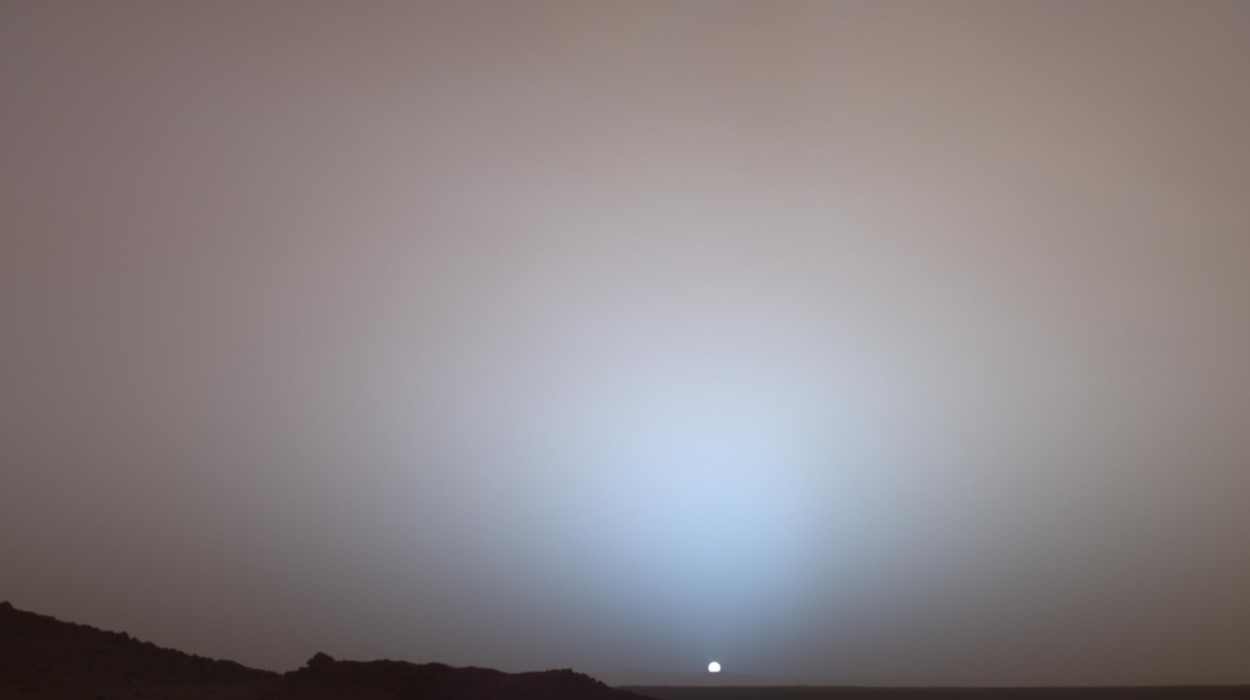
LHS 1140 b is a promising candidate in the search for planets beyond our solar system that might harbor liquid water. Located about 49 light-years from Earth, this world orbits a small, cool star and receives far less stellar energy than Earth does. Yet its size, mass, and orbit make it an intriguing place to investigate whether water could exist on another world’s surface.
LHS 1140 b could have a liquid-water ocean, but scientists have not confirmed that such an ocean exists. One possibility is that the planet has retained a substantial amount of water beneath a thick atmosphere, potentially allowing liquid water to persist on part of its surface. Another is that it is a rocky world with little accessible water or an icy planet with conditions unsuitable for a surface ocean. Distinguishing among these possibilities requires better knowledge of its atmosphere, composition, and climate.
The planet matters because it offers astronomers an opportunity to study the conditions under which potentially habitable environments can develop around stars very different from the Sun.
What makes LHS 1140 b an unusual planet?
LHS 1140 b orbits a red dwarf, a small and relatively cool type of star. Red dwarfs are the most common stars in the Milky Way, making planets around them important targets in the search for habitable environments.
The planet was discovered in 2017 and attracted attention because it is a super-Earth, a planet larger and more massive than Earth but smaller than the ice giants in our solar system. The term describes a size category, not necessarily a world with Earth’s surface conditions. A super-Earth might be rocky, water-rich, or covered by a thick atmosphere, depending on how it formed and evolved.
LHS 1140 b is estimated to have a radius roughly 1.7 times Earth’s and a mass several times greater than Earth’s. These properties make it too large to be considered a straightforward Earth twin, but they do not rule out a rocky composition or the presence of water.
Its distance is also significant. At about 49 light-years away, LHS 1140 b is relatively close in astronomical terms. Although that distance makes direct exploration impossible with current spacecraft technology, it allows powerful telescopes to investigate the planet by observing the light from its host star.
Astronomers cannot currently see an ocean on LHS 1140 b directly. Instead, they infer the planet’s properties from measurements of its mass, size, orbit, and the light passing through or around its atmosphere.
Why the planet’s location matters for liquid water
A planet’s ability to support liquid water depends partly on how much energy it receives from its star. Too much energy can cause surface water to evaporate and, under some circumstances, trigger a runaway greenhouse effect. Too little energy can leave water frozen over large areas.
The region around a star where surface liquid water could exist under suitable atmospheric conditions is called the habitable zone. Its boundaries depend on factors including the star’s brightness, the planet’s atmosphere, and the reflectivity of its surface.
LHS 1140 b orbits within the habitable zone of its red dwarf star. That makes its location encouraging, but the habitable zone is not a guarantee of habitability. It identifies a range of stellar energy levels compatible with liquid water under certain conditions, not a region where every planet necessarily has oceans.
Earth provides a useful comparison. Our planet maintains liquid water partly because its atmosphere traps some outgoing heat, while its distance from the Sun allows a balance between incoming energy and energy radiated back into space.
A planet receiving less stellar energy than Earth can still maintain liquid water if its atmosphere supplies sufficient warming. Conversely, a planet receiving a favorable amount of energy may remain frozen if its atmosphere is too thin or its surface reflects much of the incoming light.
For LHS 1140 b, the critical question is whether its atmospheric conditions could maintain temperatures that allow liquid water to persist.
How a thick atmosphere could help create an ocean
An atmosphere influences a planet’s temperature by controlling how energy moves between its surface and space. Greenhouse gases, including carbon dioxide and water vapor, absorb some of the infrared radiation emitted by a planet’s surface. They then emit radiation in different directions, including back toward the surface, reducing the rate at which heat escapes directly into space.
This greenhouse effect is a natural process. On Earth, it helps keep the surface warm enough for liquid water. On another planet, the strength of the effect depends on atmospheric composition, pressure, cloud cover, and the amount of incoming stellar energy.
If LHS 1140 b has a sufficiently substantial atmosphere, greenhouse warming could allow liquid water to exist despite its relatively modest supply of stellar energy. The atmosphere might also redistribute heat from the star-facing side to regions receiving less direct illumination.
That possibility becomes especially interesting if the planet is tidally locked. Tidal locking occurs when a planet’s rotation period matches its orbital period, causing the same hemisphere to face its star throughout its orbit. This arrangement is common among planets orbiting close to small stars.
If LHS 1140 b is tidally locked, one side would experience permanent daylight while the opposite side would remain in darkness. Without an atmosphere or another effective means of transporting heat, the temperature difference between these hemispheres could be substantial.
A sufficiently dense atmosphere could carry heat from the dayside to the nightside, moderating those differences. Depending on the atmosphere and the planet’s surface properties, liquid water might be more likely to persist in some regions than in others.
However, the existence of a thick atmosphere and its ability to sustain suitable temperatures remain questions that observations must resolve. An atmosphere can make a cold planet warmer, but it does not guarantee an ocean.
Could LHS 1140 b be an icy world?
One of the most intriguing possibilities is that LHS 1140 b contains a large amount of water and has an icy surface, potentially with liquid water beneath it or in warmer regions.
A planet’s mass and radius provide clues to its internal composition. Mass measures how much matter the planet contains, while radius measures its size. Together, they yield an estimate of its average density, which helps astronomers assess whether the planet is predominantly rocky, contains substantial amounts of water, or has a significant gaseous envelope.
These measurements do not provide a unique answer. Different mixtures of rock, water, and gas can produce similar overall densities, particularly when the planet’s internal structure and atmospheric properties are uncertain.
If LHS 1140 b contains a large proportion of water, some of that water could exist as ice. Depending on its internal heat, pressure, and atmospheric conditions, liquid water might also exist below the surface or in areas where temperatures are sufficiently high.
A water-rich planet does not necessarily resemble Earth. It could have a deep global ocean, a frozen exterior, layers of high-pressure ice, or a mixture of rocky and water-rich regions. Under extreme pressures, water ice can form phases that do not occur naturally at Earth’s surface. Such layers could affect how heat moves between the planet’s interior and its outer water layers.
These possibilities matter because a world can contain enormous quantities of water without offering a surface environment suitable for life. The presence of water is only one part of the broader question of habitability.
Why the planet might not have an ocean
Several factors could prevent LHS 1140 b from supporting a stable liquid-water ocean.
The first is its actual composition. Its measured size and mass do not establish how much water it contains. If it is primarily rocky, with limited surface water, there may be no substantial ocean to discover. If it has a thick envelope of hydrogen and helium, its environment could be very different from that of an Earth-like ocean world.
The second factor is atmospheric pressure. Liquid water is stable only under particular combinations of temperature and pressure. At sufficiently low pressure, liquid water cannot persist under ordinary surface conditions and instead transitions between ice and vapor through sublimation. A planet with an atmosphere too thin to maintain liquid water could have difficulty supporting an exposed ocean even if water were present.
The third factor is temperature. If the planet’s surface remains too cold, water could be frozen. If greenhouse warming is too strong, water could evaporate, and a sufficiently intense greenhouse effect could make stable surface oceans impossible.
The fourth factor is the planet’s history. Water can be lost to space over time, particularly if a planet’s atmosphere is heated or eroded by radiation and particles from its star. A planet might begin with abundant water but retain only a fraction of it over billions of years.
Red dwarfs introduce additional complications. These stars can produce powerful flares and emit high-energy radiation, especially during active stages of their evolution. Such activity can influence a planet’s upper atmosphere and contribute to atmospheric escape. The extent of the effect depends on the star’s behavior, the planet’s magnetic environment, its gravity, and the properties of its atmosphere.
LHS 1140 b’s relatively substantial mass could help it retain an atmosphere, but gravity alone cannot determine whether it has kept the gases and water necessary for an ocean.
How astronomers can search for signs of water
Astronomers investigate distant planets by studying how they affect the light from their host stars. One particularly useful technique is transit spectroscopy.
A transit occurs when a planet passes in front of its star as viewed from Earth. During the passage, the planet blocks a small fraction of the star’s light. If the planet has an atmosphere, some starlight also passes through the atmospheric gases along the edge of the planet.
Different gases absorb light at particular wavelengths. By measuring how the transit changes across a range of wavelengths, astronomers can search for the chemical fingerprints of atmospheric constituents, including water vapor, carbon dioxide, and methane.
This technique can help determine whether LHS 1140 b has an atmosphere and provide clues about its composition. A sufficiently informative atmospheric spectrum could also help distinguish between competing models of the planet’s structure.
However, detecting water vapor in an atmosphere would not establish that liquid water exists on the surface. Water vapor can be present above an icy landscape, in a hot atmosphere, or over a liquid ocean. The same molecule can occur in environments with very different temperatures and pressures.
Clouds, atmospheric hazes, and other gases can also obscure or imitate parts of a spectrum, making interpretation difficult. Astronomers must compare observations with physical models to determine which atmospheric explanations best fit the evidence.
Even if a planet’s atmosphere appears rich in water vapor, scientists would still need to establish whether its pressure and temperature permit a stable surface ocean.
What telescopes can reveal about its atmosphere
The James Webb Space Telescope is particularly useful for studying the atmospheres of planets beyond our solar system. Its sensitivity to infrared light allows it to examine wavelengths at which many atmospheric gases absorb radiation.
For LHS 1140 b, atmospheric observations can test whether the planet has a substantial gaseous envelope and whether its atmosphere is more consistent with a hydrogen-rich composition or a heavier mixture of gases.
This distinction matters because a thick hydrogen-rich envelope could imply a very different planet from one with a secondary atmosphere dominated by heavier molecules. A substantial gaseous envelope might also mean that the observable environment lies far above any underlying water-rich or rocky surface.
A relatively heavy atmosphere containing gases such as nitrogen, carbon dioxide, and water vapor could be more compatible with some ocean scenarios, although its actual climate would depend on the proportions of those gases and other factors.
The absence of an obvious atmospheric signal does not necessarily mean a planet has no atmosphere. Clouds, hazes, limited observational precision, or the properties of the atmosphere itself can make its composition difficult to determine.
As a result, researchers need multiple lines of evidence rather than a single measurement. Atmospheric spectra, planetary mass and radius, the star’s properties, and climate modeling can together narrow the range of plausible explanations.
Could an ocean on LHS 1140 b support life?
Liquid water is considered an important ingredient for life as we know it because it provides a medium in which chemical reactions can occur and dissolved substances can move between different parts of an environment.
On Earth, life depends on much more than water alone. It also relies on accessible chemical elements, usable energy sources, and environmental conditions that allow biological systems to persist. The presence of liquid water on another planet would therefore make it scientifically interesting without demonstrating that life exists there.
If LHS 1140 b has an ocean, its potential habitability would depend on factors such as the ocean’s temperature, depth, chemistry, and contact with the rocky interior. Water interacting with rock can release chemical compounds and provide energy sources that may be useful to microorganisms.
An ocean beneath an icy surface could be biologically interesting, too. Earth’s own subsurface environments show that life can survive without direct sunlight when chemical reactions provide energy. But whether similar conditions exist on LHS 1140 b is unknown.
A deep ocean separated from its rocky interior by thick layers of high-pressure ice might have limited access to certain nutrients. A surface ocean exposed to a harsh atmosphere could face different obstacles, including intense radiation or unfavorable chemistry.
Scientists also cannot assume that life would necessarily produce atmospheric gases detectable across light-years. Any biological signal would have to be sufficiently abundant, distinguishable from nonbiological processes, and observable with available instruments.
For now, the most useful question is not whether LHS 1140 b is inhabited, but whether it has the physical conditions that could make a habitable environment possible.
What remains uncertain about LHS 1140 b
The planet’s proximity, size, mass, and orbit make it a valuable target for further study. Yet its most important characteristics remain incompletely understood.
Astronomers need to determine the nature of its atmosphere, establish stronger constraints on its composition, and assess whether its surface or interior could contain substantial amounts of liquid water. Climate models can then explore whether plausible combinations of atmospheric pressure, greenhouse gases, and heat transport would permit an ocean to survive.
Each possible result would help clarify the planet’s nature. Evidence for a substantial atmosphere could strengthen some ocean scenarios, while a strongly hydrogen-rich envelope might favor a different interpretation. Better constraints on the planet’s density could also help distinguish between rocky and water-rich compositions, although density alone would not settle every question.
The planet’s stellar environment adds another layer of uncertainty. Understanding how its red dwarf has evolved and how much radiation the planet has received over time could help scientists estimate whether an atmosphere and any initial water supply might have survived.
These are not merely technical details. They determine whether LHS 1140 b is a cold, largely frozen world, a planet with a substantial atmosphere and possible liquid water, or an environment unlike any found in our solar system.
Why LHS 1140 b matters in the search for habitable worlds
The search for life beyond Earth requires scientists to distinguish between planets that are merely located in a habitable zone and those that actually possess habitable environments. LHS 1140 b offers a useful case study because several important properties can be measured, while other crucial characteristics remain uncertain.
It also illustrates why planetary size alone cannot tell us whether a world resembles Earth. A planet larger than Earth may be rocky, water-rich, or surrounded by a deep atmosphere. Its climate depends on the relationship among its star, atmosphere, interior, and surface.
Studying planets like LHS 1140 b can help scientists understand how frequently water-rich worlds form, how atmospheres evolve around red dwarfs, and how much stellar energy is needed to maintain liquid water under different conditions.
The broader significance extends beyond a single planet. If liquid-water environments prove possible on worlds that differ substantially from Earth, the range of places worth investigating for life could be wider than a simple search for Earth-sized planets suggests.
LHS 1140 b remains a credible candidate for a world that could contain liquid water, but an ocean has not been confirmed. Its true nature depends on evidence about its composition, atmosphere, and climate. Future observations may reveal whether this distant planet is a frozen world, a water-rich planet, or a place where liquid water can persist under conditions that make it one of the more compelling targets in the search for potentially habitable worlds.