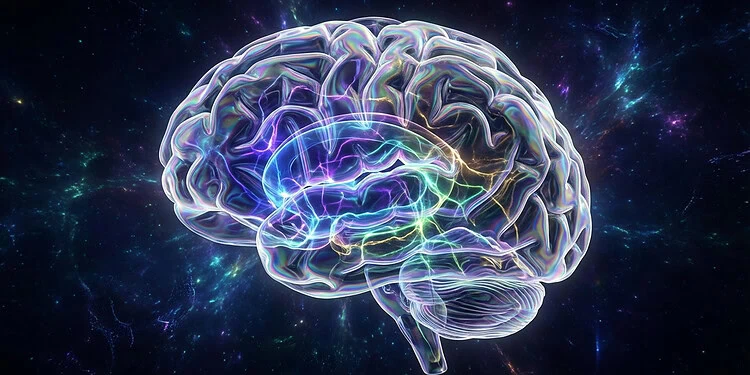
For much of modern history, scientists viewed the adult brain as relatively fixed. The prevailing idea was that the brain developed during childhood, reached maturity, and then largely settled into its established structure. Experience could affect what a person knew or remembered, but the underlying machinery of the brain was thought to be far less changeable.
That picture has changed dramatically.
The brain is not a static organ. Throughout life, experience, learning, behavior, sleep, stress, injury, and the environment can alter how its networks are organized and how efficiently they communicate. This capacity to change is known as neuroplasticity, or brain plasticity. It helps explain how people learn languages, develop skills, form memories, adapt to changing circumstances, and sometimes recover abilities after brain injury.
Neuroplasticity does not mean that the brain can be reshaped without limits, nor does it mean that every thought or behavior permanently changes its physical structure. Brain change is more specific, gradual, and biologically constrained than popular descriptions of a brain that can simply “rewire itself” suggest. Understanding what neuroplasticity actually means reveals something more interesting: the brain is a living system that continuously adjusts its connections and activity in response to the demands placed on it.
What does it mean for the brain to rewire itself?
“Rewiring” is a useful metaphor, but it is not a literal description of what happens inside the brain.
The brain contains billions of neurons that communicate through specialized junctions called synapses. Neurons can receive signals from many other cells, integrate those signals, and transmit information onward. These connections form enormously complicated networks rather than a simple set of fixed circuits.
When a person learns or repeatedly practices something, the activity within relevant networks can change. Some connections become more effective, while others become less influential. Existing connections can be strengthened or weakened, and in some circumstances new synaptic connections can form. The structure of individual neurons can also change, including the branching patterns of their dendrites, which receive signals from other neurons.
At the same time, plasticity is not restricted to individual synapses. Larger networks can alter how different brain regions communicate. Brain activity can become reorganized as a person acquires a new skill, adapts to a changed sensory environment, or compensates for damage.
In this sense, the brain is continually adjusting the strength, organization, and use of its connections.
Why can the brain change at all?
The brain’s ability to change is built into its biology.
Neurons communicate through electrical and chemical signals. When particular neurons repeatedly become active together, the connections between them can undergo lasting changes. One of the best-studied mechanisms is called long-term potentiation, or LTP. In broad terms, repeated patterns of activity can increase the strength of communication between neurons.
The opposite can also occur. Long-term depression, or LTD, can reduce the effectiveness of particular synaptic connections under certain patterns of activity.
These mechanisms are part of a broader principle sometimes summarized as “neurons that fire together, wire together.” The phrase captures an important idea: patterns of coordinated neural activity can influence how strongly neurons are connected. But real neural plasticity is considerably more complicated than that slogan implies. Timing, molecular signals, inhibitory neurons, neuromodulators, previous experience, and the broader state of the brain all influence whether a connection strengthens or weakens.
Plasticity therefore is not simply the brain adding more connections whenever something is practiced. Healthy learning involves both strengthening useful pathways and reducing or refining less useful ones.
How learning physically changes the brain
Learning is not merely the accumulation of information in an abstract mental space. It can produce measurable biological changes.
When someone repeatedly practices a demanding skill, the neural networks involved in that skill can become more efficient and better coordinated. Changes can occur at the level of synapses, dendritic branches, neural activity, and communication between brain regions.
Early in learning, a task often requires considerable conscious attention. Movements may feel awkward, and mistakes are frequent. With practice, performance generally becomes smoother and more automatic. This change reflects more than familiarity. Neural systems involved in performing the task are being modified by repeated experience.
Consider learning to play a musical instrument. At first, the brain must coordinate unfamiliar movements while simultaneously processing visual, auditory, and tactile information. With sustained practice, these processes become increasingly integrated. Motor networks, sensory systems, attention mechanisms, and memory systems all contribute to the developing skill.
The resulting ability is not stored in one isolated location. It emerges from changes across interconnected networks.
Synapses are central to neuroplasticity
A synapse is the point where one neuron communicates with another cell. Synapses can differ greatly in strength, and their effectiveness can change over time.
When a neural pathway is repeatedly engaged, molecular processes can make communication across certain synapses more effective. Receptors on the receiving neuron can change in number or behavior, signaling pathways inside the cell can be altered, and changes in gene expression can help stabilize longer-lasting modifications.
Other connections can become weaker when they are rarely used or when particular patterns of activity promote their reduction.
This flexibility is essential because the brain must continually adapt without becoming overwhelmed by every passing experience. A person encounters enormous amounts of sensory information every day. If every moment produced equally strong, permanent changes, the brain would have difficulty maintaining stable and useful networks.
Plasticity therefore operates alongside mechanisms that preserve stability. The brain is constantly balancing change with regulation.
The brain changes at different levels
Neuroplasticity is not one single process. It occurs across several levels of organization.
At the smallest scale, molecular changes can alter how neurons respond to signals. At the synaptic level, individual connections can strengthen or weaken. At the cellular level, neurons can alter their structure and connectivity. At the network level, patterns of communication among brain regions can change.
There can also be changes in the brain’s functional organization. A region that normally participates in one task may become involved in another task under some circumstances, particularly when the brain must adapt to unusual demands or compensate for damage.
Structural and functional plasticity are closely related but not identical. A change in brain activity does not necessarily mean that new physical connections have formed, and a structural change does not always translate directly into improved performance.
Modern neuroscience therefore treats brain plasticity as a collection of interacting biological processes rather than a single mechanism.
Neuroplasticity begins before birth and continues throughout life
Plasticity is especially prominent during development.
Before birth and throughout childhood, the brain undergoes enormous changes. Neurons grow, migrate, establish connections, and become organized into functional networks. The developing brain produces an abundance of connections, many of which are later refined.
This process allows experience to influence the development of neural systems. A child’s sensory experiences, interactions, movements, language exposure, and learning all occur while the brain is undergoing substantial structural and functional reorganization.
Plasticity does not stop when childhood ends.
The adult brain remains capable of significant change, although the nature and degree of plasticity differ from those of a developing brain. Adults can learn new skills, acquire new knowledge, adapt to altered environments, and modify established patterns of behavior.
The important distinction is that plasticity is lifelong, but it is not identical across the lifespan.
Why childhood is a particularly sensitive period
Some forms of learning are easier during particular stages of development because the brain passes through periods of heightened sensitivity to certain experiences.
These are often called sensitive periods. During such periods, particular neural systems are especially responsive to environmental input.
Language provides a familiar example. Young children generally acquire aspects of pronunciation and grammar with remarkable ease when exposed to language naturally. Adults can certainly learn new languages, sometimes to a very high level, but some aspects of language learning tend to become more difficult with age.
This does not mean that the adult brain has lost the ability to learn. Instead, developmental changes alter the conditions under which particular neural systems are most readily shaped.
Sensitive periods are influenced by both biology and experience. They are not rigid windows that suddenly close forever. Their boundaries and characteristics vary across different abilities and brain systems.
What role does experience play?
Experience is one of the major forces shaping the nervous system.
The brain continually receives information from the senses and from the body’s internal state. It also generates activity associated with thoughts, emotions, movement, imagination, and memory. Repeated experiences can influence which neural pathways become more strongly represented.
This is one reason practice matters.
Someone who repeatedly performs a particular movement gives the nervous system repeated opportunities to refine the relevant motor commands and sensory feedback. Someone who repeatedly studies a subject repeatedly activates networks involved in attention, memory, and conceptual processing.
But repetition alone is not enough to guarantee useful change. The brain also responds to attention, motivation, feedback, difficulty, context, and whether the activity is meaningful to the learner.
Practice that challenges the brain appropriately tends to provide stronger learning signals than passive exposure.
Why practice can make skills feel automatic
One of the most familiar effects of plasticity is the transition from effortful performance to greater automaticity.
When a skill is new, performing it may require conscious attention. As the skill becomes more practiced, some of the processing becomes more efficient and less consciously demanding.
This does not mean that the brain stops working on the task. Rather, the relevant networks have become better organized through experience.
Driving offers a familiar illustration. A beginning driver must consciously coordinate steering, braking, acceleration, visual scanning, and attention to traffic. With experience, many of these actions become increasingly automatic, leaving more mental capacity available for interpreting the road environment.
Automaticity is not always beneficial, however. Repeated practice can also strengthen inefficient or unwanted patterns. This is one reason that deliberate, accurate practice matters when learning complex skills.
Can the brain unlearn something?
Yes, although “unlearning” is not usually as simple as deleting a memory.
When a learned behavior becomes less relevant, its underlying neural pathways can weaken or become less dominant. New learning can also compete with or modify older patterns.
For example, someone who changes the technique used to perform a physical skill may initially struggle because the old movement pattern remains strongly established. With repeated practice of the new technique, neural control can shift.
This principle is important in rehabilitation. A person recovering from an injury may need to repeatedly practice movements that have become difficult. The goal is not simply to erase the old neural organization but to develop and reinforce useful patterns.
Memories work similarly. Forgetting can involve changes in how easily information is retrieved, competition from newer memories, alterations in the connections supporting a memory, and changes in the context in which the memory is accessed.
Neuroplasticity and memory
Memory provides some of the clearest evidence that experience can produce lasting changes in the brain.
When a new experience is encoded, patterns of neural activity are altered. If the information is retained, changes in neural connections and network activity help support its later retrieval.
The hippocampus, a structure deep within the brain, plays an especially important role in forming and organizing many kinds of new memories. Other brain regions participate depending on the type of information and memory involved.
Memory is not a recording stored in one location like a file on a computer. It is distributed across interacting neural systems.
Each time a memory is retrieved, it can also be modified. This process, often discussed in terms of memory reconsolidation, means that remembering is not necessarily a simple act of replaying an unchanged neural record. Under appropriate conditions, retrieved memories can become temporarily modifiable before being stabilized again.
This flexibility helps explain both the adaptability and the fallibility of human memory.
Does using the brain make it physically stronger?
The answer depends on what “stronger” means.
The brain does not become generally stronger in the same way a muscle can become stronger through resistance training. Instead, particular neural systems can become more efficient or better adapted to particular demands.
A person who practices a particular skill may develop changes in brain regions and networks involved in that skill. But those changes do not automatically transfer to every other kind of cognitive ability.
This distinction is important when evaluating claims about “brain training.” Improving at a specific mental exercise does not necessarily mean that a person will experience broad improvements in intelligence, memory, or everyday reasoning.
Some training effects can generalize to related abilities, but transfer is often more limited than popular advertising suggests.
The brain can reorganize after injury
Neuroplasticity is particularly important after damage to the nervous system.
A stroke, traumatic brain injury, tumor, infection, or other neurological condition can disrupt networks that previously supported movement, speech, sensation, memory, or other functions. Recovery may involve several processes, including the restoration of partially damaged neural systems, changes in network activity, and recruitment of other regions.
In some cases, brain regions that were not previously central to a function can contribute more strongly after injury. Nearby areas may become involved, and communication among surviving regions can be reorganized.
This does not mean that the brain can always replace damaged tissue or restore any lost ability. The outcome depends heavily on factors such as the location and severity of the injury, the systems affected, the person’s overall health, and the rehabilitation received.
Plasticity provides opportunities for adaptation, but it does not eliminate the biological limits imposed by brain damage.
Why rehabilitation depends on plasticity
Many forms of neurological rehabilitation are designed around the principle that repeated, meaningful practice can encourage useful neural adaptation.
After a stroke, for example, a person may repeatedly practice reaching, walking, speaking, or performing everyday tasks. This training provides repeated opportunities for the nervous system to strengthen useful pathways and develop alternative strategies.
The brain does not simply “heal itself” through thought or willpower. Rehabilitation works through structured interaction among the injured nervous system, behavior, sensory feedback, motivation, and the person’s environment.
The timing of rehabilitation can matter, but there is no single universal recovery schedule. Different injuries and different individuals show different patterns of recovery.
Can one part of the brain take over another part’s job?
Sometimes, but the popular idea of complete functional reassignment is too simplistic.
Brain functions are often distributed across networks rather than confined to isolated locations. Because these networks are interconnected, changes in one region can affect activity elsewhere.
After injury, surviving portions of a network may contribute more strongly, and other brain regions may become involved. This can allow partial recovery or the development of alternative strategies.
However, there are limits. Some functions depend heavily on specialized structures and pathways. The brain cannot necessarily reproduce every lost function by simply assigning another area to do the job.
Neuroplasticity is therefore better understood as reorganization within a complex network than as one brain region casually taking over another’s territory.
Can the brain rewire itself through thought alone?
Thoughts are themselves forms of brain activity, so mental activity can influence neural processes. But claims that simply thinking positively can dramatically restructure the brain are often overstated.
Repeated mental practice can engage neural systems and, under some circumstances, produce learning-related changes. Imagining a movement, for example, can activate portions of the neural systems involved in performing it, although mental practice is not identical to physical practice.
Likewise, attention, expectations, and emotional experiences influence brain activity.
But meaningful long-term changes generally arise from patterns of activity and experience rather than from a single thought. Neuroplasticity is a biological process, not a supernatural property of intention.
How emotions influence plasticity
Emotional experiences can strongly affect learning and memory.
The brain gives greater priority to information associated with significant emotional events. Systems involving the amygdala and stress-related signaling can influence how memories are formed and retained.
Moderate levels of arousal can sometimes improve attention and learning, while excessive or prolonged stress can interfere with memory, attention, sleep, and other cognitive processes.
Stress hormones influence neural systems involved in learning and adaptation. Persistent high stress can alter the functioning of several brain circuits, including those involved in memory and emotion regulation.
This does not mean that stress permanently “damages” the brain in every case. The brain remains dynamic, and its responses depend on the intensity, duration, timing, and context of the stress as well as individual differences.
Sleep is essential for plasticity
Learning does not end when practice stops.
Sleep plays a major role in memory consolidation and neural recovery. During sleep, recently acquired information can be processed and integrated with existing knowledge. Neural activity associated with previous learning can be replayed or reorganized, helping stabilize some memories.
Sleep also supports normal regulation of neural activity and many biological processes necessary for healthy brain function.
This helps explain why studying or practicing something and then getting adequate sleep can be more effective than trying to learn continuously without rest.
The brain needs periods of reduced external demand to perform its own forms of processing.
Physical activity and brain plasticity
Physical activity affects the brain as well as the rest of the body.
Regular exercise is associated with changes in blood flow, metabolic health, and several biological processes relevant to brain function. Exercise can influence growth-related signaling molecules and has been associated with changes in structures and networks involved in learning and memory.
One molecule that has received substantial attention is brain-derived neurotrophic factor, or BDNF. BDNF supports the survival and function of neurons and plays an important role in synaptic plasticity.
Exercise is not a magic switch for neuroplasticity, but physical activity provides biological conditions that can support healthy brain function and learning.
What happens to plasticity with aging?
The aging brain remains plastic.
Older adults can learn new information, develop new skills, and adapt to changing circumstances. At the same time, aging can affect the speed and efficiency of some forms of learning and can alter the brain’s structural and functional reserve.
Some neural systems become less flexible with age, while other forms of adaptation remain robust. Older adults may also rely on different patterns of brain activity when performing cognitive tasks.
Continued intellectual, social, and physical engagement is associated with maintaining cognitive function, although no single activity guarantees protection from age-related neurological disease.
An important distinction is that normal aging is not the same thing as dementia. Cognitive changes can occur with normal aging, while neurodegenerative diseases involve pathological processes that go beyond ordinary aging.
What is cognitive reserve?
People with similar amounts of brain pathology can sometimes show very different levels of cognitive functioning. Researchers use the concept of cognitive reserve to describe aspects of brain resilience that may help a person cope with age-related changes or neurological damage.
Education, intellectually demanding activities, occupational experiences, social engagement, and other forms of lifelong mental activity have been associated with cognitive reserve.
The concept does not mean that a person can guarantee protection against dementia simply by keeping the brain busy. Instead, it helps explain why individuals with comparable neurological changes may not show identical cognitive effects.
Reserve can be thought of as the brain’s capacity to use existing networks efficiently or recruit alternative strategies when normal functioning becomes more difficult.
Does meditation change the brain?
Research has found associations between meditation and changes in brain activity and, in some studies, measures of brain structure. Meditation can also affect attention, emotional regulation, and the experience of stress.
However, this area is frequently exaggerated.
Brain imaging studies can identify differences in activity or structure associated with meditation, but such findings do not automatically establish that meditation produced a particular structural change or that the change produces a major improvement in everyday functioning.
Meditation can be a useful behavioral practice for some people, particularly for attention and stress management, but claims that it dramatically rewires the brain should be treated cautiously.
What about psychotherapy?
Psychotherapy provides another example of experience-dependent brain change.
Changing habitual patterns of thinking, emotion, attention, and behavior involves repeated activity in neural systems. Successful therapy can therefore be accompanied by changes in brain function.
For example, learning to respond differently to fear can involve changes in interactions among systems involved in threat detection, memory, attention, and emotional regulation.
This does not mean that therapy simply “rewires the brain” in one identifiable location. Psychological change is supported by changes across interconnected neural and behavioral systems.
The relationship also works in the other direction: changes in brain function can influence thoughts and behavior, while changes in behavior and experience can influence the brain.
Can harmful habits rewire the brain?
Yes. Plasticity is not inherently good.
The same mechanisms that help establish useful skills can reinforce behaviors that are harmful when they are repeated frequently and become strongly associated with rewards or cues.
Addiction provides a particularly important example. Repeated exposure to addictive substances or behaviors can alter neural systems involved in reward, motivation, learning, stress, and decision-making.
Environmental cues can become associated with rewarding experiences, making those cues powerful triggers for future behavior.
This is one reason changing an established habit can be difficult. The brain has learned a pattern. Changing the pattern requires new learning and repeated exposure to situations in which the old response is no longer reinforced.
Plasticity is therefore neutral: it allows the nervous system to adapt to whatever patterns of experience are repeatedly reinforced.
Why breaking a habit can be so difficult
Habits become easier to perform because repeated behavior can strengthen associations among cues, actions, and outcomes.
Suppose a particular situation repeatedly triggers a familiar response. Over time, the cue itself can begin to activate expectations and behavioral tendencies before conscious deliberation occurs.
Changing the habit requires more than knowing intellectually that the behavior is undesirable. The brain must learn a different response.
This is one reason replacement behaviors can be useful. A new response provides an alternative pathway that can be practiced and strengthened over time.
The old pattern does not necessarily disappear completely. Under stress or in a familiar environment, previously learned responses can sometimes re-emerge.
Plasticity has biological limits
The brain is remarkably adaptable, but it is not infinitely malleable.
Genes influence the development and function of neural systems. Age, health, sleep, nutrition, hormones, disease, medications, injury, and the environment can all affect plasticity.
Different brain systems also have different capacities for change. Some connections are highly dynamic, while others are relatively stable.
Plasticity also has costs. Building and maintaining neural connections requires energy. Excessive or poorly organized plasticity could interfere with stable functioning, which is why the brain has mechanisms that constrain change.
The goal of a healthy nervous system is not maximum change. It is appropriate adaptation.
Why repetition matters so much
A single experience can sometimes produce a powerful and lasting memory, particularly when it is emotionally significant. But many skills depend on repetition.
Repeated practice gives the nervous system multiple opportunities to refine the relevant pathways. Errors provide information that can be used to adjust performance. Feedback helps distinguish effective actions from ineffective ones.
This is why learning often follows a gradual pattern. Early improvements can be rapid because the learner is acquiring basic strategies. Later improvements may become slower as performance approaches a higher level and increasingly subtle adjustments are required.
The amount of practice needed varies enormously among people and tasks.
Is there a limit to how much we can learn?
The brain can learn throughout life, but learning capacity is not unlimited.
Attention is limited. Sleep is limited. Neural and metabolic resources are limited. New information also competes with existing knowledge.
Learning is often easier when new information can be connected to something already understood. A person with extensive knowledge in a field may learn new concepts within that field more efficiently because they have an established network of related knowledge.
This is another important feature of plasticity: the brain does not rebuild itself from scratch every time it learns. New learning is incorporated into an existing structure.
Why prior knowledge changes learning
The brain’s existing connections influence how readily new information is understood.
A beginner encountering a complicated scientific concept may need to learn many underlying ideas before the new concept makes sense. An expert can often recognize patterns immediately because relevant knowledge is already organized.
This is sometimes described as the difference between recognizing isolated facts and having a meaningful mental framework.
Expertise therefore involves more than storing more information. It involves reorganizing knowledge so that related concepts, patterns, and procedures become efficiently connected.
That organization itself is a product of long-term learning and plasticity.
What does “use it or lose it” really mean?
The phrase captures part of the truth but can be misleading if taken literally.
Neural systems that are repeatedly used can be maintained and strengthened. Connections that are rarely used may become weaker or less accessible.
But the brain does not simply erase unused abilities on a fixed schedule. Some skills and memories can remain available after long periods without practice, particularly when they were strongly learned.
When a skill has declined, relearning may also be faster than learning it from scratch because some underlying neural and behavioral adaptations remain.
This is one reason people can sometimes regain old abilities surprisingly quickly after returning to a previously practiced activity.
Can adults create new neurons?
For a long time, scientists believed that adult humans could not produce new neurons at all. Research has since shown that adult neurogenesis occurs in at least some mammalian brain regions, particularly the hippocampus.
However, the extent and functional significance of adult neurogenesis in humans remain subjects of scientific investigation. Evidence from human studies is more difficult to interpret than evidence from laboratory animals, and researchers continue to examine how much new-neuron production occurs in different circumstances.
Importantly, neuroplasticity does not depend primarily on making new neurons. Much of adult learning and adaptation occurs through changes in existing neurons and their connections.
The brain can therefore change substantially without needing to replace its entire population of nerve cells.
What role do glial cells play?
Neurons are not the only cells involved in plasticity.
The brain also contains large populations of glial cells, including astrocytes, oligodendrocytes, and microglia. These cells support neurons, regulate their environment, contribute to signaling, participate in immune processes, and influence how neural circuits function.
Oligodendrocytes produce myelin, the insulating material surrounding many axons. Changes in myelination can influence how quickly and efficiently signals travel through neural pathways.
This means that learning-related changes can involve more than synapses between neurons. The broader cellular environment of the nervous system also participates in adaptation.
Can technology see the brain rewiring itself?
Scientists can observe some consequences of plasticity using techniques such as magnetic resonance imaging, functional MRI, electroencephalography, and other methods.
Structural imaging can detect changes in aspects of brain anatomy. Functional imaging can show changes in patterns of activity or connectivity. Electrophysiological techniques can provide information about the timing of neural activity.
But these technologies do not provide a simple live video of individual neurons forming and breaking connections throughout the human brain.
Much of what scientists know about the cellular mechanisms of plasticity comes from laboratory research, including studies using animal models and cellular preparations. Human imaging complements that work by revealing how changes appear at larger scales.
Interpreting brain scans therefore requires care. A difference in brain activity or structure does not automatically reveal its cause or explain precisely what happened at the level of individual synapses.
Does every experience permanently change the brain?
No.
The brain is continuously active, but not every moment leaves a lasting structural imprint.
Many experiences produce temporary changes in neural activity that fade. Other experiences produce stronger or longer-lasting modifications, particularly when they are repeated, emotionally significant, relevant to existing knowledge, or reinforced through later use.
This distinction is crucial because “the brain changes” can sound as though every thought creates a permanent physical alteration. The reality is more selective.
The nervous system must constantly filter experience and decide, in effect, what information is worth incorporating into longer-lasting patterns.
Why attention matters for plasticity
Attention helps determine which information receives deeper processing.
If someone is distracted while learning a new skill, the brain may not process the relevant information as effectively as it would under focused conditions. Attention influences which neural signals receive priority and how information is encoded.
This is one reason deliberate practice is generally more productive than simply spending time around an activity.
Being exposed to information is not the same thing as learning it.
Why feedback improves learning
Feedback helps the brain compare an intended action or prediction with what actually happened.
When a person attempts a movement and misses the target, sensory information reveals the error. The nervous system can then adjust subsequent attempts.
Similar processes occur in intellectual learning. A student makes an inference, receives feedback, discovers an error, and modifies the underlying understanding.
This relationship between prediction, error, and adjustment is fundamental to learning across many domains.
Can the brain change too much?
Plasticity can sometimes contribute to maladaptive outcomes.
After certain injuries, for example, neural reorganization may not always produce optimal recovery. Some pathways may become stronger in ways that interfere with desired movement or function.
Chronic pain provides another example of altered neural processing. Persistent pain can involve changes in sensory and emotional networks that influence how pain signals are interpreted and maintained.
The broader lesson is that plasticity does not guarantee a beneficial result. The nervous system adapts to repeated signals and demands, but the resulting adaptation can be useful, neutral, or harmful depending on the circumstances.
Why the environment matters
The brain is highly responsive to its surroundings.
A stimulating environment provides opportunities for learning, movement, sensory exploration, and social interaction. A deprived or chronically stressful environment can provide a very different set of signals.
Animal research has demonstrated that environmental enrichment can influence neural structure and behavior. Human development also shows how profoundly experience and social context shape neural systems.
At the same time, individual differences matter. People exposed to similar environments do not necessarily develop identical brains or abilities.
Plasticity arises from the interaction between biology and experience, not from either one operating independently.
What neuroplasticity means for everyday learning
The practical lesson is not that people can transform their brains instantly. It is that sustained experience matters.
Learning a language, practicing an instrument, developing athletic skills, studying mathematics, improving handwriting, or acquiring a professional skill all provide repeated opportunities for neural adaptation.
Progress can feel slow because many changes are incremental. A person may not notice the underlying biological adjustments from day to day, yet months of consistent practice can produce substantial differences in performance.
The brain’s adaptability is therefore most useful when understood as a capacity for gradual, experience-dependent change rather than as an unlimited ability to reshape itself at will.