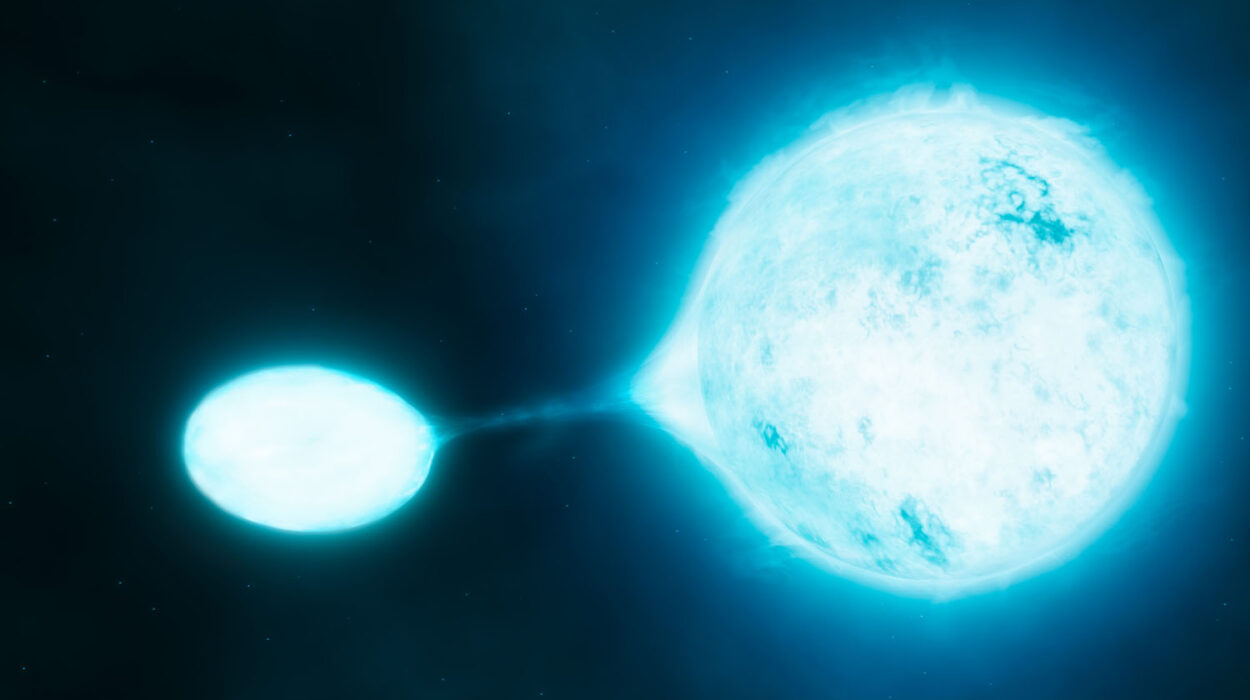
Kepler-22b is one of the most intriguing planets discovered beyond our solar system because it orbits a star at a distance where temperatures might permit liquid water. Located roughly 600 light-years from Earth, this distant world is larger than our planet and circles a star similar to the Sun. Its position within the star’s habitable zone makes it an important target in the search for potentially life-supporting environments beyond Earth.
Could Kepler-22b have liquid water? Yes, it is possible, but scientists do not know whether the planet has oceans, a solid surface, or conditions suitable for life. Its orbit makes liquid water conceivable under the right atmospheric conditions, yet its size and unknown composition leave open several very different possibilities. Kepler-22b could be a world with a substantial atmosphere and a water-rich interior, or it could be a planet whose environment bears little resemblance to Earth’s.
Understanding its potential requires looking beyond its distance from its star. A planet’s temperature, atmosphere, internal structure, and ability to retain water all influence whether liquid water can exist on its surface.
What makes Kepler-22b interesting?
NASA’s Kepler space telescope discovered Kepler-22b in 2011, making it one of the early confirmed planets found orbiting within the habitable zone of a Sun-like star. The discovery helped demonstrate that planets potentially capable of supporting liquid water could exist around stars beyond our solar system.
Kepler-22b orbits a star known as Kepler-22, which resembles the Sun but is somewhat smaller and cooler. The planet completes one orbit in about 290 days, placing its year somewhat shorter than Earth’s. Its orbit brings it into a region where the energy it receives from its star could, under suitable conditions, allow liquid water to persist.
The planet is significantly larger than Earth, with a radius roughly 2.1 times Earth’s radius. That difference is important because a planet’s size influences its gravity, internal pressure, atmospheric behavior, and likely composition.
Despite these measurements, Kepler-22b remains poorly understood compared with the planets in our own solar system. Astronomers can estimate its size and orbital characteristics, but those measurements do not reveal exactly what its surface looks like or whether water exists there.
Its importance lies in that distinction. Kepler-22b is a useful example of how astronomers can identify a potentially habitable world without knowing whether it is actually habitable.
What is the habitable zone, and why does it matter?
The habitable zone is the range of distances from a star where a planet could maintain liquid water on its surface, assuming it has suitable atmospheric conditions. It is sometimes called the Goldilocks zone because the amount of stellar energy received must be neither too great nor too small for surface liquid water to remain stable.
If a planet orbits too close to its star, intense heating can cause water to evaporate. Under some conditions, water vapor accumulates in the atmosphere, trapping additional heat and potentially triggering a runaway greenhouse effect. In this process, the planet becomes so warm that its surface oceans can evaporate, while water vapor in the upper atmosphere may eventually be broken apart by stellar radiation. Hydrogen can escape into space, gradually depleting the planet’s water supply.
A planet that receives too little energy faces a different challenge. Its surface water may freeze, leaving a world covered in ice. However, a frozen surface does not necessarily mean that liquid water is absent from the planet. Internal heat, pressure, or an atmosphere that traps enough energy can sometimes maintain liquid water beneath ice or at the surface.
The habitable zone describes where liquid water might be possible, not where it must exist. Earth’s atmosphere helps maintain temperatures that allow water to remain liquid across much of the surface. Without its natural greenhouse effect, Earth would be considerably colder.
Kepler-22b’s orbit places it in the habitable zone of its star, but its actual climate depends on factors that remain uncertain. The composition and thickness of its atmosphere, the reflectivity of its clouds and surface, and the amount of heat retained by the planet could all influence its temperature.
Consequently, the habitable zone is best understood as a starting point for investigating a planet’s potential habitability rather than a guarantee of Earth-like conditions.
How warm might Kepler-22b be?
The amount of energy a planet receives from its star provides an initial clue to its climate. Astronomers can estimate this energy using the star’s brightness and the planet’s orbital distance. They can then calculate an approximate equilibrium temperature, which represents a simplified thermal balance between absorbed stellar energy and energy radiated into space.
This estimate is useful, but it is not necessarily the planet’s actual surface temperature.
A planet’s equilibrium temperature depends partly on its albedo, the fraction of incoming light it reflects back into space. A bright planet that reflects much of its star’s light absorbs less energy than a darker planet at the same distance. Its atmosphere can also redistribute heat and trap outgoing infrared radiation, changing the temperatures at the surface and throughout the atmosphere.
Kepler-22b receives enough stellar energy to make a temperate environment conceivable. However, scientists cannot confidently assign it an Earth-like surface temperature without knowing more about its atmospheric and physical properties.
A dense atmosphere containing gases that absorb infrared radiation could produce substantial warming. Depending on its composition and circulation, that atmosphere might allow liquid water to persist, or it might create temperatures and pressures far beyond those compatible with familiar surface oceans.
Conversely, a highly reflective atmosphere or cloud layer could reduce the energy absorbed by the planet. The resulting climate might be much colder than a simple estimate suggests.
These competing possibilities illustrate why stellar distance alone cannot determine whether a planet has liquid water. The same amount of incoming energy can produce very different climates on worlds with different atmospheres and surfaces.
Could Kepler-22b be an ocean planet?
One possibility is that Kepler-22b contains a large amount of water. Water-rich planets are scientifically plausible, and some exoplanets may contain much more water than Earth does. Such worlds could have extensive oceans, deep water layers, or thick ice mantles.
However, the available evidence does not establish that Kepler-22b is an ocean planet.
Its radius makes its internal composition especially important. Earth is a rocky planet with a relatively thin atmosphere and a solid surface. A world more than twice Earth’s radius could have a different structure, potentially including a substantial atmosphere rich in hydrogen and helium, a large volatile-rich envelope, or a deep interior containing water and other materials.
The term volatile refers to substances that can exist as gases under suitable conditions, including water vapor and several common atmospheric compounds. Planets that retain substantial volatile material can develop structures very different from those of the rocky planets in our solar system.
If Kepler-22b has a deep global ocean, the environment at the top of that ocean could differ dramatically from conditions near its bottom. As pressure increases with depth, water can enter unfamiliar physical states. Under sufficiently high pressures, water may form high-pressure ice phases even at temperatures above the freezing point familiar from Earth’s surface.
Such a layer of high-pressure ice could separate a deep ocean from the rocky interior. That separation might limit the exchange of minerals and other chemicals between the ocean and the planet’s rocky mantle.
On Earth, interactions between liquid water and rock help supply chemical ingredients that support ecosystems. If Kepler-22b has a deep ocean isolated from its rocky interior, its potential habitability could depend on whether other sources of energy and nutrients are available.
An ocean planet, therefore, would not automatically be a habitable planet. Its water distribution, temperature, pressure, chemical composition, and internal structure would all matter.
Could Kepler-22b have a thick atmosphere instead?
Another possibility is that Kepler-22b belongs to a class of planets known as sub-Neptunes. These planets are larger than Earth but smaller than Neptune, and many appear to possess substantial gaseous envelopes.
The classification is based on size and does not, by itself, reveal a planet’s exact composition. Some planets in this size range may have rocky interiors surrounded by hydrogen-rich atmospheres, while others may contain substantial quantities of water and other volatile materials.
If Kepler-22b has a thick atmosphere, its apparent surface conditions could be very different from Earth’s. There might be no clearly defined solid surface at the atmospheric level where temperatures and pressures would otherwise seem comfortable for liquid water.
Instead, the planet could have a deep atmosphere in which pressure and temperature rise continuously with depth. Water might exist as vapor, in clouds, or in a dense, hot fluid beneath the visible atmospheric layers, depending on the planet’s composition and thermal structure.
In that case, describing Kepler-22b as a world with oceans would require caution. The presence of water somewhere inside the planet would not necessarily mean that liquid water exists on an accessible surface.
A thick atmosphere could also have a major effect on climate. Hydrogen-rich atmospheres can influence planetary temperatures through processes that differ from the familiar greenhouse effect in Earth’s nitrogen-rich atmosphere. The outcome depends on the gases present, their pressure, and how the atmosphere absorbs and emits energy.
Determining whether Kepler-22b has a substantial hydrogen-rich envelope would therefore help scientists assess its structure and the likelihood of an Earth-like surface environment.
What would liquid water mean for the possibility of life?
Liquid water is considered a key ingredient for life as we know it because it provides a medium in which molecules can move, dissolve, and participate in chemical reactions. On Earth, water supports the complex chemistry that enables cells to function.
However, water alone is not enough.
Life requires suitable chemical ingredients and a source of energy that organisms can use. It also needs environmental conditions that allow essential molecules and processes to remain stable. Temperature, pressure, acidity, salinity, and the availability of nutrients can all influence whether a watery environment is biologically suitable.
Earth provides examples of how flexible life can be. Microorganisms survive in environments with intense pressure, high salinity, extreme acidity, or little sunlight. Some ecosystems rely on chemical energy rather than sunlight, including communities associated with hydrothermal vents on the ocean floor.
These discoveries broaden the range of environments scientists consider potentially habitable. A planet does not necessarily need a climate identical to Earth’s to support microbial life.
Nevertheless, Earth’s organisms evolved within a particular range of chemical and physical conditions. There is no evidence that life can thrive under every set of conditions in which liquid water exists.
For Kepler-22b, the central questions would include whether water is present in a liquid state, whether it can interact with suitable chemical compounds, and whether the environment provides a persistent energy source. A deep ocean beneath an atmosphere could be scientifically interesting, but its biological potential would depend on details that astronomers have not established.
Even if Kepler-22b has liquid water, that would not demonstrate that it contains life. Habitability and inhabited status are separate questions.
How can astronomers investigate a planet so far away?
Kepler-22b is too distant for astronomers to photograph its surface in detail using current observational methods. Instead, scientists study it indirectly by measuring how it affects the light from its host star.
The Kepler telescope discovered the planet through the transit method. When a planet passes in front of its star from our perspective, it blocks a small fraction of the star’s light. By measuring the resulting dip in brightness, astronomers can estimate the planet’s size and orbital period.
Repeated transits reveal how long the planet takes to orbit its star. Combined with observations of the star itself, these measurements help establish the planet’s orbital characteristics and the amount of stellar energy it receives.
Determining a planet’s mass is more difficult. One approach is the radial velocity method, which measures the small movements of a star caused by the gravitational pull of an orbiting planet. Those movements produce subtle shifts in the star’s spectrum, the pattern of light separated into its component wavelengths.
When a planet’s mass and radius are both known, scientists can calculate its average density. Density provides an important clue to composition because a low-density planet may contain substantial amounts of gas or other low-density material, while a denser planet is more likely to have a larger proportion of rock and metal.
However, density alone cannot uniquely identify a planet’s interior structure. Different combinations of rock, water, and gas can produce similar overall densities, especially when uncertainties in mass and radius are taken into account.
Astronomers can also investigate planetary atmospheres through transmission spectroscopy. During a transit, some starlight passes through the planet’s atmosphere before reaching telescopes. Atmospheric gases absorb particular wavelengths, leaving patterns that can reveal which molecules may be present.
This technique can help scientists identify atmospheric constituents and investigate whether a planet has clouds or atmospheric haze. Yet it is challenging, particularly for small planets orbiting relatively faint stars. Detecting a molecule also requires careful interpretation because different atmospheric compositions and physical conditions can produce overlapping signals.
For Kepler-22b, more detailed information about its mass, density, and atmosphere would help distinguish among competing models of its structure. Those measurements would narrow the range of possible environments in which liquid water could exist.
Why Kepler-22b may not resemble Earth
The phrase Earth-like planet can be misleading because it may refer to several different characteristics. A planet could be similar to Earth in size, receive a comparable amount of stellar energy, or occupy a similar orbit without sharing Earth’s surface conditions.
Kepler-22b illustrates this distinction. Its position in the habitable zone makes it an interesting candidate for studying potentially temperate environments, but its larger size raises questions about its composition and atmospheric structure.
Earth’s relatively small size allowed it to develop a rocky surface with an atmosphere that interacts with oceans, continents, and an active interior. A larger planet may retain more primordial gas from its formation, creating an atmosphere that changes how heat moves and where liquid water could exist.
Its gravity also differs from Earth’s, affecting atmospheric retention and the behavior of material within the planet. These differences can influence climate over long periods.
The star itself matters, too. A planet’s habitability depends not only on its present-day energy supply but also on how its star changes over time. Stellar brightness, radiation, and the history of a planet’s atmosphere can determine whether water remains stable for billions of years or is gradually lost.
For Kepler-22b, scientists would need a clearer understanding of these factors before deciding whether its environment is comparable to Earth’s or belongs to an entirely different category of planetary world.
What scientists still need to learn
The biggest uncertainty surrounding Kepler-22b is not simply whether its orbit allows liquid water. It is what kind of planet occupies that orbit.
A more precise mass measurement would help constrain its average density and distinguish between some possible internal structures. Atmospheric observations could reveal whether the planet has a thick hydrogen-rich envelope, a more complex atmosphere, or evidence of water vapor and other molecules.
Scientists would also benefit from better constraints on its reflectivity and heat distribution. These properties influence how much energy the planet absorbs and how its atmosphere responds to that energy.
Even with improved observations, some questions may remain difficult to answer. A planet’s atmosphere can conceal its deeper layers, and different combinations of materials can produce similar observable properties. Models of planetary interiors and climates are therefore essential for interpreting the measurements.
Future advances in telescope sensitivity and atmospheric analysis may help narrow the possibilities, although detecting life would require much stronger evidence than identifying water or a potentially temperate climate.
The goal is not merely to establish whether Kepler-22b falls within a particular orbital range. It is to determine whether its physical and chemical conditions could support liquid water over long periods.
Could Kepler-22b have liquid water?
Kepler-22b could have liquid water, but its existence and distribution remain unknown. The planet receives an amount of stellar energy compatible with the possibility of a temperate environment, placing it among the scientifically interesting worlds identified in the search for potentially habitable planets.
Yet its relatively large size leaves open several possibilities. It could contain abundant water, possess a deep atmosphere with no familiar solid surface, or have an internal structure that makes its surface conditions very different from those of Earth.
The decisive factors are its composition, atmospheric pressure, temperature, and long-term ability to retain water. Until astronomers can constrain those properties more precisely, the planet’s potential oceans remain a hypothesis rather than an established feature.
Kepler-22b demonstrates an important principle in planetary science: a world can occupy the right orbital region for liquid water without necessarily possessing an environment suitable for life. Finding planets in habitable zones is an essential first step, but understanding their atmospheres and interiors is what allows scientists to assess whether those distant worlds might truly be habitable.