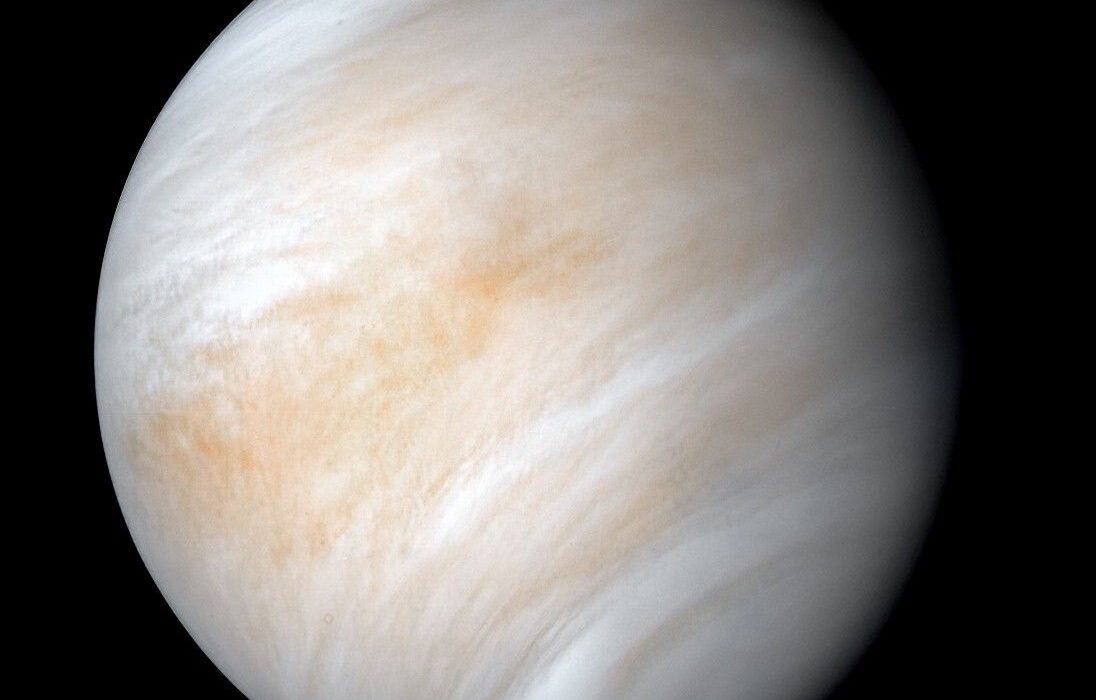
Kepler-186f is important because it was the first confirmed Earth-sized planet discovered orbiting within the habitable zone of another star. Announced in 2014, this distant world demonstrated that planets similar in size to Earth can exist at distances where liquid water might be possible on their surfaces. Although scientists do not know whether Kepler-186f has liquid water, an atmosphere, or life, its discovery marked a significant step in the search for potentially habitable worlds beyond our solar system.
Located about 500 light-years from Earth in the constellation Cygnus, Kepler-186f orbits a small, cool star known as a red dwarf. Its discovery helped establish that the search for Earth-like planets need not be limited to stars resembling the Sun. It also raised important questions about how planets form, how they maintain habitable conditions, and whether environments suitable for life might be common throughout the galaxy.
What makes Kepler-186f different from other exoplanets?
An exoplanet is a planet that orbits a star beyond our solar system. Thousands of exoplanets have been identified, but they vary enormously in size, composition, temperature, and orbital distance. Some are massive gas giants that circle close to their stars, while others are rocky worlds or planets with characteristics unlike anything in our own solar system.
Kepler-186f stands out because of its size and location. Its radius is approximately 1.1 times that of Earth, making it one of the early discoveries that showed planets close to Earth’s size could exist in potentially temperate orbits around other stars. Its relatively small size makes a rocky composition plausible, although its actual surface and interior structure have not been directly measured.
The planet also occupies the outer portion of its star’s habitable zone. This is the region around a star where a planet could potentially maintain liquid water on its surface, provided its atmosphere and other environmental conditions are suitable.
These characteristics make Kepler-186f a valuable target for understanding planetary diversity. It offers a concrete example of a world that is broadly comparable to Earth in size while existing in a different stellar environment.
However, being Earth-sized does not mean being Earth-like in every respect. A planet’s diameter alone cannot establish whether it has oceans, continents, breathable air, a magnetic field, or living organisms. Kepler-186f is a promising subject for habitability research, not a confirmed second Earth.
How scientists discovered Kepler-186f
Kepler-186f was discovered using NASA’s Kepler space telescope, which searched for planets by monitoring the brightness of distant stars. The telescope relied on a technique called the transit method.
When a planet passes between its star and the observer, it blocks a small fraction of the star’s light. This produces a slight, temporary dip in the star’s measured brightness. By detecting repeated dips and studying their timing and depth, astronomers can identify possible planets and estimate important properties.
The interval between repeated transits reveals a planet’s orbital period, or the time it takes to complete one revolution around its star. The amount of starlight blocked during a transit helps researchers estimate the planet’s radius relative to the star’s radius.
In the case of Kepler-186f, the transit observations revealed a planet orbiting Kepler-186, a red dwarf star. The planet’s orbital period is approximately 130 days. Because the star is much smaller and cooler than the Sun, this orbit places the planet in a region where temperatures could permit surface liquid water under the right conditions.
The transit method has an important limitation: it reveals only part of a planet’s properties. It does not directly show the planet’s surface, determine its atmospheric composition, or establish whether life exists there. Those questions require additional observations and, in some cases, techniques that are difficult to apply to small, distant planets.
Even with these limitations, the Kepler mission transformed planetary astronomy. It showed that planets are widespread and that relatively small worlds deserve a central place in the search for potentially habitable environments.
Why the habitable zone matters
The habitable zone is often described as the region around a star where liquid water could exist on a planet’s surface. Water is central to life as we understand it because it provides a medium for chemical reactions, transports dissolved substances, and helps support complex biological processes.
A planet’s position within this zone depends primarily on how much energy it receives from its star. Too close, and intense heating could contribute to the loss of surface water. Too far away, and temperatures could remain low enough for water to freeze. The boundaries are not fixed for every planet, however, because atmospheric composition and other planetary properties affect surface conditions.
Kepler-186f receives less stellar energy per unit area than Earth receives from the Sun. This is consistent with its position toward the cooler, outer portion of its star’s habitable zone. If the planet has an atmosphere capable of trapping sufficient heat, its surface could potentially support liquid water.
An atmosphere influences planetary temperature through the greenhouse effect. Certain gases, including carbon dioxide and water vapor, absorb and re-emit infrared radiation, slowing the loss of heat to space. The strength of this effect depends on atmospheric pressure, composition, cloud cover, and other factors.
A planet without an effective atmosphere might remain frozen even inside the habitable zone. Conversely, a sufficiently dense atmosphere could allow liquid water under conditions that would otherwise be too cold.
For this reason, the habitable zone should be understood as a starting point for evaluating habitability, not a guarantee of it. Kepler-186f’s orbit makes liquid water conceivable, but the planet’s actual climate remains unknown.
Why orbiting a red dwarf star is significant
Kepler-186f orbits a red dwarf, a type of star that is smaller and cooler than the Sun. Red dwarfs are among the most common stars in the Milky Way, making them particularly important in the search for planets that might support life.
Because red dwarfs emit less energy than Sun-like stars, their habitable zones lie much closer to them. A planet does not need to orbit at Earth’s distance from the Sun to receive an amount of energy that could permit temperate conditions. The appropriate distance depends on the star’s luminosity, or total energy output.
This relationship broadens the range of planetary systems worth investigating. If potentially habitable planets exist around red dwarfs, then the search for life may extend to an enormous number of stars throughout the galaxy.
Red dwarfs also present challenges. Some produce powerful flares and bursts of radiation that can affect the atmospheres of nearby planets. Over long periods, stellar activity may contribute to atmospheric erosion, although the degree of impact depends on factors such as the star’s activity history, the planet’s atmosphere, and its magnetic environment.
Another consideration is tidal locking. Because a planet in a close orbit can experience strong gravitational interactions with its star, it may eventually rotate in such a way that the same hemisphere always faces the star. In that situation, one side experiences perpetual daylight while the other remains in darkness.
Kepler-186f’s relatively long orbital period compared with many planets in red dwarf habitable zones means tidal locking should not be assumed solely from the fact that it orbits a red dwarf. Its rotational state has not been established. More generally, even tidally locked planets could potentially maintain habitable regions if atmospheric circulation or oceans redistribute heat effectively.
The significance of Kepler-186f is therefore twofold: it demonstrates that an Earth-sized planet can occupy a potentially temperate orbit around a common type of star, while highlighting the environmental questions that must be answered before habitability can be assessed.
Could Kepler-186f have liquid water?
Liquid water is possible on Kepler-186f, but its existence has not been confirmed. Scientists know enough about the planet’s size and orbit to identify it as a candidate for further habitability research, yet they lack direct evidence of oceans, lakes, or other surface water.
The planet’s climate would depend on several interacting factors. Atmospheric pressure would influence the temperatures and pressures at which water can remain liquid. Greenhouse gases could warm the surface, while clouds and reflective surfaces could send some incoming stellar energy back into space. The distribution of land and water, if either exists, would also affect how heat moves around the planet.
The planet’s initial water supply would matter as well. Some worlds may form with substantial water reserves, while others may lose much of their water during their early evolution. The history of a planet’s atmosphere, its interior, and its interactions with its star can all influence whether water remains available at the surface.
Earth provides a useful comparison, but not a complete model. Earth’s oceans, atmosphere, and climate emerged through a long and complex history involving geological activity, solar energy, and interactions between the atmosphere and surface. A similarly sized planet around a different star could follow a very different path.
Kepler-186f might possess conditions that permit surface water, but it could also be frozen, airless, or otherwise unsuitable for life as we know it. Without better information about its atmosphere and climate, scientists cannot confidently determine which possibility is correct.
Does Kepler-186f have an atmosphere or life?
There is no confirmed evidence that Kepler-186f has an atmosphere or supports life. Its discovery established important orbital and size characteristics, not its biological status.
An atmosphere would be particularly important because it could regulate surface temperature, redistribute heat, and shield the surface from some forms of radiation. Its composition would also help scientists understand the planet’s chemistry and environmental history.
Detecting an atmosphere around a small planet at such a great distance is difficult. One possible technique is transmission spectroscopy, which examines starlight passing through a planet’s atmosphere during a transit. Atmospheric gases absorb light at characteristic wavelengths, potentially leaving detectable patterns in the observed spectrum.
For a relatively small planet orbiting a distant star, however, the atmospheric signal can be extremely faint. The size of the star, the planet’s atmosphere, the brightness of the system, and the capabilities of available instruments all influence whether such measurements are feasible.
Even if scientists eventually identify an atmosphere, determining whether it contains signs of life would require additional evidence. Researchers might investigate gases that could be produced by biological processes, but no single gas automatically proves that life exists. Many substances can arise through nonbiological chemical reactions, geological processes, or interactions between a planet and its star.
A credible search for life would therefore examine several lines of evidence together. Scientists would need to understand the planet’s environmental conditions, evaluate possible nonbiological explanations, and determine whether observed signals are reliable.
Kepler-186f has not been shown to possess any biosignature, a measurable feature that could indicate biological activity. Its importance lies in identifying a plausible place to ask these questions, not in providing evidence that life has already been found.
How Kepler-186f compares with Earth
Kepler-186f and Earth share one notable characteristic: their sizes are similar. This makes Kepler-186f particularly interesting because planets close to Earth’s size are more likely to be rocky than much larger worlds, although size alone cannot establish composition with certainty.
Their stellar environments differ substantially. Earth orbits the Sun, a relatively bright star, at an average distance of about 150 million kilometers. Kepler-186f orbits a much cooler red dwarf and completes a revolution in roughly 130 days.
The two planets also receive different amounts of stellar energy. Earth receives enough solar energy to sustain its present climate through a combination of atmospheric greenhouse warming, oceans, and other planetary processes. Kepler-186f receives less energy from its star, so its surface conditions would depend strongly on the atmosphere and other factors that remain unknown.
Earth’s habitability is supported by extensive evidence: liquid oceans, a stable atmosphere, active geology, and an established biosphere. For Kepler-186f, these characteristics have not been confirmed.
The comparison illustrates an important principle in planetary science. Similar size does not guarantee similar environments. A planet’s habitability emerges from the interaction of its star, atmosphere, surface, interior, and evolutionary history.
Kepler-186f is valuable precisely because it allows scientists to examine how far a world can differ from Earth while still occupying an orbit that might permit some of the same basic conditions.
What its discovery revealed about planets in the galaxy
Before Kepler-186f was announced, astronomers had already found many exoplanets, including some with potentially favorable conditions. However, identifying a planet close to Earth’s size in the habitable zone was a particularly important milestone.
The discovery strengthened the case that small planets in potentially temperate orbits are not merely theoretical possibilities. They occur in real planetary systems and can be identified with astronomical instruments.
It also helped expand the search beyond Sun-like stars. Since red dwarfs are common, understanding their planetary systems is essential to estimating how frequently potentially habitable worlds occur in the Milky Way.
Still, one discovery cannot establish how common Earth-like planets are, how many support life, or how frequently life emerges. Those questions require observations of many planetary systems, careful comparisons, and a better understanding of how planets form and evolve.
Scientists also distinguish between finding a planet in the habitable zone and finding a truly Earth-like environment. A planet can occupy the appropriate orbital region yet lack liquid water, lose its atmosphere, or develop surface conditions that are hostile to known life.
Kepler-186f helped demonstrate that the first step in the search for life beyond Earth is achievable: finding small planets in orbits worth investigating. The harder task is determining what those planets are actually like.
What scientists can learn from future observations
Future progress in the study of Kepler-186f depends on obtaining more information about the planet and its environment. Measurements that constrain its mass, density, atmospheric properties, and climate would help researchers determine whether it is rocky and whether its surface could plausibly support liquid water.
Mass and radius together can provide clues about composition. Radius estimates the planet’s size, while mass measures the amount of matter it contains. Combining these quantities allows scientists to calculate average density, which can help distinguish among broad possibilities such as a rocky planet, a water-rich world, or a planet with a substantial gaseous envelope.
Atmospheric observations would provide a different kind of insight. Detecting gases and measuring their relative abundances could help researchers evaluate greenhouse warming, atmospheric chemistry, and the planet’s potential to retain water. Such measurements are challenging for a small, distant world, so important questions may remain unresolved for a long time.
Scientists can also study the star itself. Understanding its energy output, flare activity, and evolutionary history would help clarify the radiation environment experienced by the planet and the potential for long-term atmospheric survival.
No single measurement is likely to settle every question. A more complete assessment would combine observations with models of planetary climate, atmospheric chemistry, geological evolution, and stellar behavior.
The broader goal is not simply to label planets as habitable or uninhabitable. It is to understand which physical and chemical conditions make long-lasting surface water possible and which environments could support life.
Why Kepler-186f remains important
Kepler-186f remains an important milestone because it connected the search for Earth-sized planets with the scientific investigation of habitability. Its discovery showed that a planet similar to Earth in radius can orbit within the habitable zone of a star beyond our solar system.
That finding does not mean Kepler-186f is a second Earth, and it does not establish that life exists there. The planet’s atmosphere, surface conditions, and biological potential remain uncertain. Its importance comes from the questions it makes possible to investigate and from what it reveals about the diversity of planetary systems.
The search for habitable worlds requires more than finding planets at the right distance from their stars. Scientists must also understand their atmospheres, climates, compositions, and histories. Kepler-186f provides a valuable example of why each of those factors matters.
Ultimately, its discovery helped shift the search for life beyond Earth from a question about whether Earth-sized planets might exist in potentially favorable orbits to a more detailed scientific challenge: determining how often those worlds develop the conditions necessary for life.