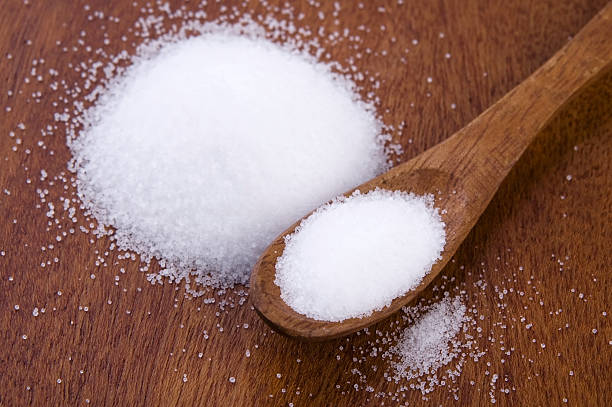
Desiccants keep products dry by removing water vapor from the air inside a package or container. These moisture-controlling materials either attract water molecules to their surfaces or absorb water into their internal structure. By reducing the amount of moisture available, they help protect products from corrosion, mold, chemical changes, clumping, and other forms of moisture damage.
Desiccants are commonly found in small packets inside shoe boxes, electronics packaging, vitamin bottles, and bags of dried food. They also play important roles in industrial storage, pharmaceutical manufacturing, laboratory equipment, and shipping. Although these materials may look like ordinary beads, granules, or powders, their ability to control moisture comes from their chemical composition and microscopic structure.
Understanding how desiccants work begins with a basic property of water: even when a surface looks completely dry, the surrounding air can contain enough water vapor to affect the materials it touches.
How moisture enters products and causes damage
Water exists in air as an invisible gas called water vapor. The amount of water vapor in the air changes with temperature and humidity, and many materials interact with it even when no liquid water is visible.
Relative humidity describes how close the air is to holding as much water vapor as it can at a given temperature. At 50% relative humidity, for example, the air contains about half the water vapor needed to reach saturation under those conditions. When relative humidity rises, many materials absorb more moisture from the surrounding air.
This exchange can occur through packaging, tiny openings, seals, or direct exposure during manufacturing and handling. Some packaging materials allow water vapor to pass through slowly, while others provide much stronger barriers. Even a well-sealed container may trap moisture that was already present when the product was packaged.
Excess moisture can cause several kinds of damage. Iron and steel may corrode more readily when water forms a thin film on their surfaces. Electronic components can suffer from corrosion, electrical leakage, or other moisture-related failures. Powdered foods and chemicals may absorb water and become sticky or form hard clumps. Dried foods can lose their texture, while moisture-sensitive medicines may deteriorate or become less stable.
Water can also support the growth of mold and other microorganisms when temperature, available water, and other conditions are suitable. Desiccants help reduce these risks by limiting the moisture available inside a package, although they cannot eliminate every source of damage or guarantee that a product will remain safe indefinitely.
How desiccants capture water vapor
Desiccants work through two principal mechanisms: adsorption and absorption. The terms sound similar, but they describe different processes.
Adsorption occurs when molecules collect on the surface of a material. A desiccant with a highly porous structure can provide an enormous internal surface area, allowing many water molecules to attach to its surfaces.
Absorption occurs when a substance takes another substance into its interior. Depending on the material, water may enter the desiccant’s structure or dissolve in it. Some desiccants also react chemically with water, changing into a hydrated substance or producing a solution.
These processes reduce the amount of water vapor remaining in the surrounding air. As the vapor concentration falls, moisture can leave nearby materials and enter the desiccant, provided the conditions favor that transfer.
The process continues until the desiccant approaches equilibrium with its surroundings, reaches its practical moisture capacity, or can no longer take up water fast enough to maintain the desired humidity. A desiccant does not necessarily remove every water molecule from the air. Instead, it helps establish and maintain a lower moisture level.
The particular mechanism matters because different desiccants have different strengths. Some are especially effective at reducing humidity to very low levels, while others are better suited to absorbing large amounts of moisture under ordinary conditions.
Common types of desiccants and how they work
Several materials serve as desiccants, each with distinct properties. The best choice depends on how dry the environment must be, how much moisture may enter, the temperature, and the nature of the product being protected.
Silica gel
Silica gel is one of the most familiar desiccants. It consists primarily of silicon dioxide arranged in a porous, solid structure. Its many tiny pores create a large internal surface area where water molecules can collect.
When water vapor comes into contact with silica gel, water molecules attach to the pore surfaces through physical interactions. This process is adsorption rather than the formation of a new chemical compound under ordinary packaging conditions.
Silica gel is useful because it can take up moisture without dissolving into a liquid. It is commonly used to protect electronics, leather goods, packaged equipment, and moisture-sensitive products during storage and shipping.
Some silica gel products contain indicators that change color as their moisture content changes. These indicators can provide a visual clue about the desiccant’s condition, but the color alone does not always establish exactly how much capacity remains. Indicator formulations also vary, so the product’s instructions matter.
Molecular sieves
Molecular sieves are porous materials with openings of carefully controlled sizes. Many commercial molecular sieves are synthetic zeolites, crystalline materials whose structures contain networks of microscopic channels.
Water molecules can enter these channels and bind strongly to sites within the structure. Because the pores have specific dimensions and chemical properties, molecular sieves can selectively capture small molecules.
They are particularly useful when extremely low moisture levels are required, such as in certain industrial gases, solvents, laboratory processes, and sensitive manufacturing operations. Their strong attraction to water allows them to remain effective even when the surrounding air or gas is already relatively dry.
Like other desiccants, molecular sieves have a finite capacity. Once enough water occupies their available sites, their performance declines. In industrial systems, they can often be regenerated by driving off the accumulated water with heat or another suitable process.
Activated alumina
Activated alumina is a porous form of aluminum oxide with a large surface area. Water molecules attach to sites on its surface, allowing the material to remove moisture from air and gases.
It is used in industrial drying systems, including equipment that dries compressed air. Removing moisture from compressed air helps prevent condensation, corrosion, and operational problems in pneumatic equipment and pipelines.
Activated alumina can also be regenerated under appropriate conditions. Its effectiveness depends on factors such as temperature, the moisture level of the incoming gas, and the design of the drying system.
Calcium chloride
Calcium chloride removes moisture through a different process. It is a hygroscopic salt, meaning it readily attracts water from its surroundings. As it takes up moisture, it can dissolve in the absorbed water and form a concentrated salt solution, a process known as deliquescence.
This makes calcium chloride useful in some moisture absorbers designed for closets, storage spaces, and other enclosed areas. Unlike silica gel, which generally remains a solid as it adsorbs water, calcium chloride can eventually produce a liquid brine.
Because the resulting solution can leak or spill, products containing calcium chloride need suitable containers and should be handled according to their instructions. The liquid is not simply clean water; it contains dissolved salt and may damage certain materials.
Other moisture-absorbing materials
Other substances, including certain clays, can remove water vapor through adsorption. Clay-based desiccants are used in packaging and storage applications where their moisture capacity, cost, and operating conditions make them suitable.
Some desiccants react chemically with water or form hydrates. These materials can be effective for particular industrial applications, but their handling requirements and regeneration options vary. The label desiccant therefore describes a function rather than one specific chemical composition.
Why a small packet can protect a much larger product
A desiccant packet may be small compared with the box or container it protects, but its purpose is not to absorb the product itself. It is to control the moisture in the enclosed environment and capture water that enters the air or leaves nearby materials.
The amount of protection depends on several factors: the desiccant’s moisture capacity, the initial humidity, the volume of air, the moisture already present in the product and packaging, and the rate at which additional water vapor enters.
For example, a packet placed in a shoe box can capture some of the moisture trapped during packing and some that enters through the box over time. By lowering the surrounding humidity, it can also encourage moisture to leave the air and be taken up by the desiccant rather than accumulating on susceptible materials.
However, a packet cannot compensate indefinitely for wet products, damaged packaging, or a large and continuous supply of humid air. If the moisture load exceeds the desiccant’s capacity, the surrounding humidity can rise again.
The packaging itself is therefore part of the moisture-control system. A good moisture barrier slows the entry of water vapor, while the desiccant captures moisture already present or entering in small amounts. Combining these approaches generally provides better protection than relying on either one alone.
What determines how effective a desiccant is?
A desiccant’s performance depends on more than its ability to attract water. Its moisture capacity, the surrounding conditions, and the rate of water uptake all influence how well it protects a product.
Moisture capacity is the amount of water a desiccant can take up before it reaches its practical limit. Capacity varies by material and operating conditions. A substance that absorbs a large amount of water at high humidity may not be as effective at maintaining extremely low humidity.
Temperature also matters. The balance between water vapor in the air and water held by a desiccant changes with temperature. Heating can encourage some desiccants to release water, which is why heat is often used during regeneration. The effect of temperature on moisture uptake depends on the particular material and conditions.
Relative humidity influences how much water a desiccant can hold at equilibrium. Some materials retain a strong attraction to water even at low humidity, while others perform best when more moisture is available. Choosing the right material requires matching its properties to the intended moisture level.
Exposure to incoming moisture determines how quickly the desiccant becomes saturated. A tightly sealed package with a good moisture barrier may need much less desiccant than an enclosure exposed to humid air repeatedly.
Physical form and airflow affect the rate of moisture transfer. Small granules often provide more exposed surface area than a single solid block of the same material. In engineered drying systems, the arrangement of the desiccant bed and the movement of air through it can be as important as the material itself.
For these reasons, the largest packet is not automatically the best choice. The desiccant must be appropriate for the product, the packaging, the expected storage conditions, and the required level of dryness.
What happens when a desiccant becomes saturated?
A desiccant has a limited ability to take up water. As its available adsorption sites fill or its absorbent material approaches its capacity, it becomes less effective at removing additional moisture.
Once the desiccant can no longer keep up with incoming water vapor, the humidity inside the package may rise. The product then becomes increasingly exposed to the conditions the desiccant was intended to control.
Saturation does not always mean that a desiccant is completely full of water or that it has suddenly stopped working. Rather, it means the material has reached a point where its remaining capacity or moisture-removal performance is no longer adequate for the application.
Some desiccants can be regenerated. Silica gel, molecular sieves, and activated alumina can often release absorbed water when heated under suitable conditions. The water leaves the material as vapor, restoring some or much of its moisture-removal capacity. Industrial systems use carefully controlled regeneration procedures to prepare desiccants for reuse.
Regeneration is not appropriate for every product or every situation. Heating a consumer desiccant packet may damage its packaging, release undesirable substances from indicator additives, or create a fire or burn hazard if the material is unsuitable for that treatment. Calcium chloride that has dissolved into brine cannot simply be restored by the same straightforward heating approach used for many solid adsorbents. The product’s instructions should always determine whether reuse is appropriate.
How desiccants differ from other ways of controlling humidity
Desiccants are one method of moisture control, but they are not the only one. Their advantages become clearer when compared with ventilation, refrigeration, and moisture-barrier packaging.
Ventilation removes humid air and replaces it with other air. This can help when the incoming air is drier, but it may introduce more moisture if the outside air is humid. Desiccants can capture water vapor within an enclosed space without requiring a continuous supply of replacement air.
Refrigeration can cause water vapor to condense when a surface becomes cold enough. This principle is used in many dehumidifiers, which collect condensed water and remove it from the air. Desiccants instead capture moisture directly, allowing certain systems to dry air to levels that may be difficult to maintain through condensation alone.
Moisture-barrier packaging works by slowing the movement of water vapor through the packaging material. It does not necessarily remove moisture that is already inside. A desiccant complements the barrier by taking up that trapped moisture and some of the moisture that eventually penetrates the package.
In practice, these methods can be combined. A sealed package containing a suitable desiccant can provide passive protection, while industrial facilities may use desiccant-based dryers alongside temperature control and moisture-resistant enclosures.
Where desiccants are most useful
Desiccants are especially valuable when a product must remain dry during storage or transportation and when active humidity-control equipment would be impractical.
Electronics packaging uses them to reduce moisture exposure that can contribute to corrosion and damage during handling or storage. Some electronic components are particularly sensitive to moisture absorbed into their materials, which can cause problems during later heating in manufacturing.
Pharmaceutical and supplement packaging may use desiccants to help preserve the stability of moisture-sensitive ingredients. By limiting humidity inside a container, they can help prevent unwanted chemical changes, softening, or changes in tablet and capsule properties. Their use does not replace appropriate manufacturing controls, expiration dates, or storage instructions.
Food packaging may include desiccants to help preserve crispness or reduce moisture-related clumping in suitable products. Other moisture-control systems use materials designed to absorb liquid water rather than just water vapor. These approaches are not interchangeable: the appropriate system depends on the food and the type of moisture problem.
Desiccants are also used in industrial equipment to dry compressed air and gases, protect metal parts during storage, and control moisture in manufacturing processes. In these settings, engineers select materials according to the required dryness, the volume of gas being treated, and the ability to regenerate or replace the desiccant.
Why desiccants do not guarantee a product will stay dry
Although desiccants are effective moisture-control tools, they have clear limits. They cannot prevent every source of water damage, and they do not make unsuitable packaging waterproof.
A desiccant may be overwhelmed if a package contains a wet item or admits water vapor faster than the material can capture it. Liquid water from leaks, spills, or condensation can also exceed the capabilities of a packet intended for controlling humidity in the air.
Desiccants do not necessarily remove water that is chemically bound within a material, nor can they reverse damage that has already occurred. They may slow further deterioration by lowering humidity, but they cannot restore corroded metal, reverse every chemical change, or make spoiled food safe.
Safety also matters. Desiccant packets should not be eaten, and they should be kept away from young children and pets when the packaging or contents present a hazard. Some packets contain additives, while some moisture absorbers collect corrosive or irritating solutions. The contents should not be assumed to be harmless simply because a packet is small.
The central principle is straightforward: desiccants protect products by drawing water vapor out of their surroundings and holding it in a material that can retain moisture more effectively than the protected product or the surrounding air under the relevant conditions. When the material, packaging, and storage environment are matched appropriately, this simple physical and chemical process can help keep products dry for extended periods without electricity or moving parts.