Education has always been one of humanity’s most powerful tools. It has allowed societies to pass knowledge from one generation to the next, train skilled professionals, encourage innovation, and create opportunities for millions of people. From ancient teachers sharing wisdom under open skies to modern classrooms equipped with computers and internet access, education has constantly evolved alongside technology.
Today, another transformation is underway—one that may be as significant as the invention of the printing press or the rise of the internet. Artificial Intelligence, commonly known as AI, is beginning to reshape how people learn, teach, and access knowledge.
Across the world, students are using AI-powered learning tools to solve problems, understand complex concepts, and receive personalized guidance. Teachers are employing AI to reduce administrative workloads, create educational materials, and better understand student needs. Schools, universities, and training organizations are exploring how intelligent technologies can improve learning outcomes and make education more accessible than ever before.
At the same time, this technological revolution raises important questions. Will AI replace teachers? How can students use AI responsibly? What happens when machines become capable of generating essays, answering questions, and providing tutoring services within seconds?
The future of education is not simply about replacing old methods with new technology. Instead, it is about finding ways to combine human creativity, empathy, and critical thinking with the remarkable capabilities of intelligent machines. As AI continues to develop, it is changing not only how people learn but also what it means to be educated in the modern world.
Understanding Artificial Intelligence in Education
Artificial Intelligence refers to computer systems designed to perform tasks that normally require human intelligence. These tasks include recognizing patterns, understanding language, making predictions, solving problems, and learning from data.
In education, AI can take many forms. Some systems analyze student performance and recommend personalized lessons. Others act as virtual tutors capable of answering questions at any time of day. Certain AI tools can generate quizzes, summarize information, translate content into multiple languages, or help students practice skills through interactive exercises.
Unlike traditional software that follows fixed instructions, AI systems can adapt based on user behavior and feedback. This adaptability makes them particularly valuable in learning environments, where every student has different strengths, weaknesses, interests, and learning styles.
The growing presence of AI in education is not merely a technological trend. It represents a shift toward more flexible, personalized, and data-driven approaches to learning.
The Traditional Challenges of Education
For centuries, educators have faced a fundamental challenge: every student learns differently.
In a classroom containing thirty or forty students, some may understand a lesson immediately, while others require additional explanations. Some students learn best through reading, while others prefer visual demonstrations or hands-on activities.
Teachers work incredibly hard to meet diverse learning needs, but time and resources are often limited.
Large class sizes can make individualized instruction difficult. Educational inequalities may limit access to high-quality learning materials. Students in remote regions may struggle to find qualified teachers. Those with disabilities may require specialized support that is not always available.
These challenges have existed long before AI emerged.
Artificial intelligence does not solve every educational problem, but it offers new tools that can help address some longstanding obstacles.
Personalized Learning Becomes a Reality
One of the most significant contributions of AI to education is personalized learning.
Traditional education often follows a standardized model. Students progress through lessons at roughly the same pace, regardless of individual differences.
However, learning rarely occurs at the same speed for everyone.
AI systems can analyze student performance and identify patterns that human educators may not immediately notice. By examining quiz results, assignment performance, learning behaviors, and engagement levels, AI can determine where a student excels and where additional support is needed.
This information allows educational platforms to customize learning experiences.
A student struggling with algebra may receive extra practice problems and simplified explanations. Another student who quickly masters the material may be offered more advanced challenges.
Instead of forcing everyone into the same educational pathway, AI helps create learning journeys tailored to individual needs.
This personalization can improve confidence, motivation, and overall learning outcomes.
AI as a Personal Tutor
Many students have experienced moments of frustration when studying alone.
Perhaps a difficult math problem refuses to make sense. A science concept seems confusing. A language lesson feels overwhelming.
Traditionally, help might not be immediately available. Students may need to wait until the next class or tutoring session.
AI-powered tutoring systems are changing this reality.
Modern AI tools can provide explanations, answer questions, and guide learners through complex topics almost instantly.
Unlike human tutors, AI systems are available around the clock. A student can seek assistance late at night, early in the morning, or whenever questions arise.
These virtual tutors do not become tired, impatient, or unavailable due to scheduling conflicts.
While AI tutors cannot fully replace human mentorship, they can provide valuable support between classroom sessions and help students maintain learning momentum.
Supporting Teachers Rather Than Replacing Them
One common concern surrounding AI in education is the fear that machines might replace teachers.
This concern is understandable but often oversimplifies the situation.
Teaching involves much more than delivering information.
Great teachers inspire curiosity, build relationships, provide emotional support, encourage critical thinking, and adapt to the unique needs of their students. They understand classroom dynamics, recognize emotional struggles, and foster personal growth in ways that technology cannot replicate.
AI excels at processing information and automating repetitive tasks, but it lacks genuine empathy, human understanding, and lived experience.
Rather than replacing teachers, AI is more likely to function as a powerful assistant.
Teachers spend significant time on administrative duties such as grading assignments, creating lesson plans, tracking attendance, and preparing educational materials.
AI can help automate many of these tasks.
By reducing administrative burdens, educators gain more time to focus on teaching, mentoring, and supporting students directly.
In this way, AI can strengthen the teacher’s role rather than eliminate it.
Making Education More Accessible
Education remains inaccessible to many people around the world.
Geographic isolation, economic limitations, language barriers, disabilities, and resource shortages continue to prevent millions from receiving quality education.
AI has the potential to reduce some of these barriers.
Language translation tools can make educational content available in multiple languages. Speech recognition systems can assist learners with hearing impairments. Text-to-speech technologies can support individuals with visual challenges or reading difficulties.
Students in remote areas can access AI-powered learning platforms even when qualified instructors are scarce.
Educational materials that once required expensive textbooks or specialized tutors may become more widely available through digital platforms.
Although technology alone cannot solve all inequalities, AI offers opportunities to expand access to knowledge on an unprecedented scale.
Learning at Any Time and Place
For much of history, education depended on physical classrooms.
Students had to be present at specific locations during scheduled times.
The rise of online learning began changing this model, and AI is accelerating that transformation.
Today, learners can access educational resources from smartphones, tablets, and computers.
AI-powered platforms provide recommendations, feedback, and assistance regardless of location.
A working professional can study new skills after work. A parent can learn during free moments at home. Students can review lessons while traveling.
Learning is becoming increasingly flexible.
The future may involve educational systems that adapt to individual schedules rather than requiring everyone to conform to rigid timetables.
This flexibility supports lifelong learning and allows people to continue developing skills throughout their lives.
Intelligent Assessment and Feedback
Assessment is a critical part of education.
Students need feedback to understand their progress, identify weaknesses, and improve their performance.
Traditionally, grading assignments can be time-consuming for educators.
AI systems are increasingly capable of evaluating certain types of work quickly and consistently.
Multiple-choice tests, quizzes, coding exercises, and some writing assignments can be assessed automatically.
More importantly, AI can provide immediate feedback.
Instead of waiting days or weeks for results, students may receive explanations and suggestions within seconds.
Rapid feedback helps learners correct mistakes while concepts remain fresh in their minds.
This responsiveness can accelerate learning and encourage continuous improvement.
Enhancing Student Engagement
Keeping students engaged has always been a challenge.
Attention spans vary, and traditional teaching methods do not always capture student interest.
AI can contribute to more interactive and engaging educational experiences.
Some platforms use adaptive learning techniques that adjust content difficulty based on performance.
Others incorporate game-like elements, interactive simulations, and personalized challenges.
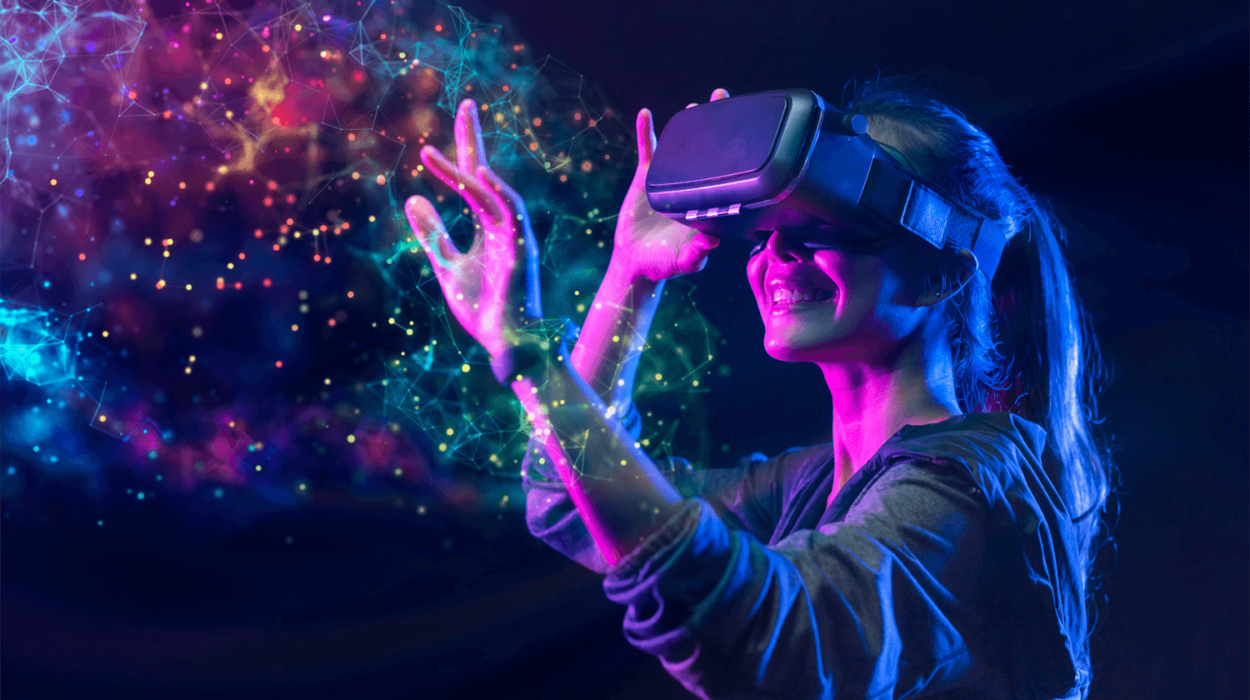
Virtual environments can allow students to explore scientific concepts, historical events, or mathematical models in immersive ways.
By making learning more interactive, AI can help transform education from a passive experience into an active process of discovery.
Engaged students are often more motivated, curious, and willing to persist through challenges.
AI and Special Education
Students with disabilities often require individualized support that can be difficult to provide consistently.
AI technologies are opening new possibilities in special education.
Speech recognition systems can assist students with communication challenges.
Predictive text tools can support learners with writing difficulties.
Visual recognition technologies can help individuals with visual impairments navigate educational content.
Adaptive learning systems can adjust instructional approaches based on specific needs.
For many students, these technologies offer greater independence and participation in educational environments.
While human support remains essential, AI can complement existing services and help create more inclusive learning experiences.
Breaking Language Barriers
Language remains one of the most significant obstacles to global education.
Students often encounter valuable resources written in languages they do not understand.
AI-powered translation systems are becoming increasingly sophisticated.
Educational content can now be translated into numerous languages within seconds.
Speech translation tools allow learners to engage with instructors and materials from around the world.
As translation technologies improve, access to knowledge becomes less dependent on linguistic background.
This development has profound implications for global education.
A student in one country may gain access to lectures, research, and educational materials created on the other side of the planet.
Knowledge becomes more universal and less restricted by language boundaries.
Helping Students Learn Complex Subjects
Many academic subjects can seem intimidating.
Advanced mathematics, physics, chemistry, computer science, and engineering often involve abstract concepts that challenge learners.
AI tools can help simplify difficult topics.
Instead of presenting information in a single format, AI can generate explanations tailored to different learning styles.
A concept might be explained using analogies, diagrams, examples, visualizations, or step-by-step reasoning.
If one explanation does not work, alternative approaches can be provided instantly.
This flexibility makes learning more accessible and reduces frustration.
Students are less likely to feel stuck when support is readily available.
Encouraging Lifelong Learning
The modern world changes rapidly.
Technologies evolve, industries transform, and new careers emerge.
As a result, education is no longer limited to childhood and early adulthood.
Lifelong learning has become increasingly important.
AI supports this shift by making education more accessible, flexible, and personalized.
Professionals can update skills throughout their careers.
Workers can retrain for new industries.
Retirees can pursue intellectual interests and personal enrichment.
The future of education may involve continuous learning throughout life rather than a fixed period of formal schooling.
AI helps make this vision more practical and achievable.
AI and Higher Education
Universities are also experiencing significant changes due to AI.
Students use AI tools for research, writing assistance, coding support, and data analysis.
Professors employ AI to identify learning gaps, manage coursework, and improve educational design.
Research itself is being accelerated through AI-driven analysis.
Scientists can process vast datasets more efficiently, identify patterns, and generate insights that might otherwise remain hidden.
Universities are increasingly integrating AI literacy into curricula because understanding intelligent technologies is becoming an essential skill across many fields.
Higher education is evolving from merely teaching information to helping students work effectively alongside intelligent systems.
The Rise of AI Literacy
As AI becomes more integrated into society, understanding how it works is becoming increasingly important.
Future generations will likely interact with AI systems daily.
Therefore, students need more than technical skills. They need AI literacy.
AI literacy involves understanding what AI can and cannot do, recognizing its limitations, evaluating outputs critically, and using intelligent technologies responsibly.
Students must learn to question information rather than accept it blindly.
They need to understand issues such as bias, accuracy, transparency, and ethical decision-making.
Education in the AI era involves teaching people how to collaborate effectively with technology while maintaining independent thinking.
Ethical Challenges in AI-Powered Education
Although AI offers tremendous benefits, it also raises important ethical concerns.
Educational systems collect large amounts of student data.
Questions arise regarding privacy, security, and responsible data usage.
Students and parents deserve transparency regarding how information is collected, stored, and analyzed.
Bias is another concern.
AI systems learn from data, and if that data contains biases, those biases may influence outcomes.
Educational tools must be designed carefully to ensure fairness and inclusivity.
There is also the risk of excessive dependence on technology.
Students should use AI as a tool for learning, not as a substitute for thinking.
Balancing innovation with responsibility will be one of the most important challenges in the future of education.
Academic Integrity in the Age of AI
The ability of AI systems to generate essays, solve problems, and answer questions has sparked debates about academic integrity.
If a machine can write a paper in seconds, how should educators evaluate student learning?
Traditional assessment methods may need to evolve.
Increasingly, educators are focusing on critical thinking, creativity, collaboration, and problem-solving skills that require deeper engagement.
Classroom discussions, project-based learning, oral presentations, and practical applications may become more important.
Rather than fighting technological change, educational systems may adapt by emphasizing skills that remain uniquely human.
The goal is not to prevent AI use entirely but to encourage responsible and meaningful engagement with it.
Human Skills Become More Valuable
Ironically, as AI becomes more capable, certain human skills may become even more important.
Creativity, empathy, communication, ethical reasoning, leadership, and emotional intelligence are areas where humans continue to excel.
AI can generate information, but it does not experience emotions.
It can analyze data, but it does not understand human relationships in the way people do.
Future education will likely place greater emphasis on these distinctly human abilities.
Students will need technical knowledge, but they will also need interpersonal skills that allow them to collaborate, innovate, and lead.
The future belongs not to humans competing against AI but to humans working effectively alongside it.
AI and the Future Classroom
The classroom of the future may look quite different from today’s educational environments.
AI systems could continuously monitor learning progress and recommend personalized activities.
Virtual tutors might provide real-time support.
Interactive simulations could allow students to explore complex concepts through immersive experiences.
Teachers might spend less time lecturing and more time facilitating discussions, mentoring students, and encouraging critical thinking.
Learning environments may become more flexible, collaborative, and individualized.
Technology will likely become increasingly invisible, operating in the background while supporting educational experiences.
The focus will remain on learning rather than the technology itself.
Preparing Students for Future Careers
The workforce is changing rapidly.
Many future jobs will involve technologies that do not yet exist.
AI is already transforming industries such as healthcare, finance, manufacturing, transportation, and scientific research.
Education must prepare students for this evolving landscape.
Beyond technical skills, students need adaptability, curiosity, resilience, and a willingness to learn continuously.
AI-powered educational systems can help individuals acquire new skills more efficiently and respond to changing career demands.
The future workplace will likely reward those who can combine human strengths with technological capabilities.
Global Collaboration Through AI
AI is making it easier for learners to connect across geographic boundaries.
Students from different countries can collaborate on projects, share ideas, and learn from diverse perspectives.
Translation technologies reduce language barriers.
Digital platforms facilitate communication and teamwork.
This increased connectivity encourages cultural understanding and global cooperation.
Education is becoming a worldwide experience rather than a local one.
Students are gaining access not only to information but also to international communities of learners.
This broader perspective may help prepare future generations for an increasingly interconnected world.
The Future Is Not About Machines Replacing Humans
One of the biggest misconceptions about AI in education is the belief that machines will eventually replace human teachers and learners.
In reality, education is fundamentally a human endeavor.
Learning involves curiosity, relationships, motivation, emotion, and personal growth.
AI can support these processes, but it cannot fully replicate them.
The most promising future is one in which technology enhances human potential rather than replacing it.
Teachers become more effective.
Students receive more personalized support.
Educational opportunities become more accessible.
Knowledge becomes easier to share.
Human creativity and intelligence remain at the center of the learning experience.
Conclusion
Artificial Intelligence is reshaping education in ways that were difficult to imagine only a few decades ago. From personalized learning and virtual tutoring to intelligent assessment and increased accessibility, AI is creating new opportunities for students, educators, and lifelong learners around the world. These technologies have the potential to make education more flexible, inclusive, efficient, and responsive to individual needs.
Yet the future of education is not simply a story of technological advancement. It is also a story about people. The most successful educational systems will be those that combine the strengths of AI with the uniquely human qualities of empathy, creativity, critical thinking, and ethical judgment.
As classrooms evolve and intelligent tools become increasingly common, the purpose of education remains unchanged: helping people grow, understand the world, and reach their full potential. AI is becoming a powerful partner in that mission. If used thoughtfully and responsibly, it may help create a future where quality education is more accessible, personalized, and empowering than ever before, opening doors of opportunity for learners across every corner of the globe.