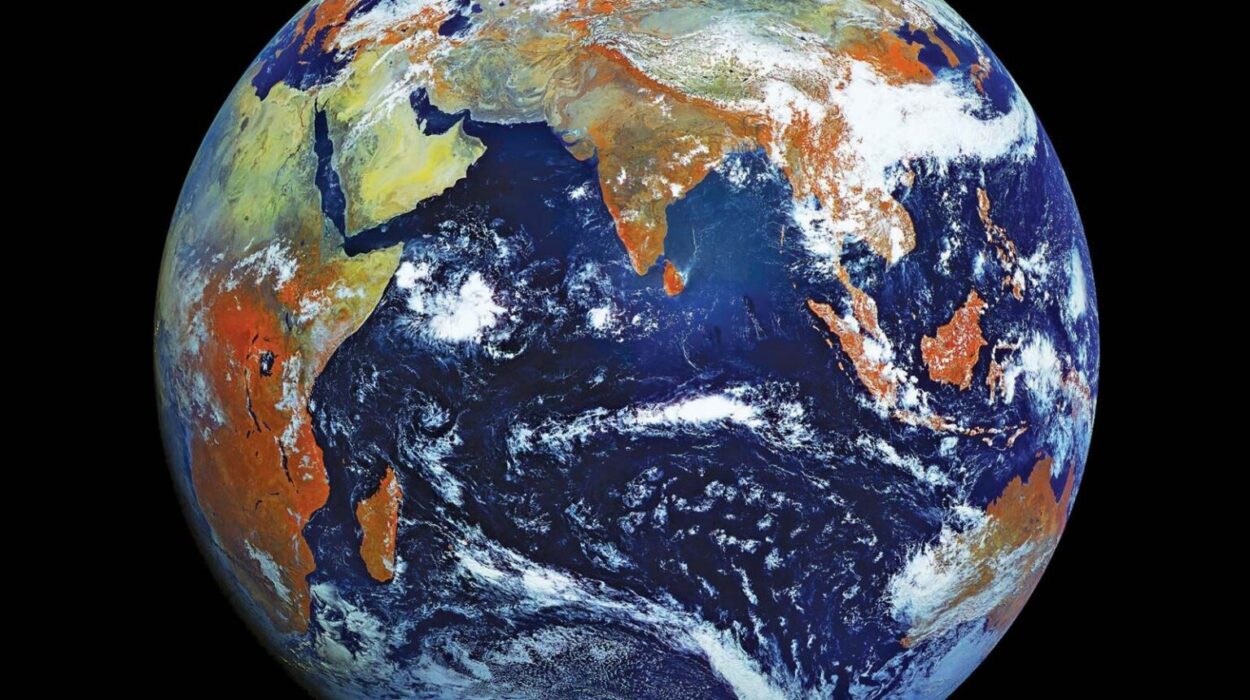
Yes, a planet can be habitable without resembling Earth. Although Earth provides the only confirmed example of a world that supports life, scientists do not consider its exact size, atmosphere, oceans, or surface conditions universal requirements for habitability. Other planets could support living organisms under very different conditions, including beneath thick atmospheres, under layers of ice, or in environments where liquid water exists far below the surface.
The key distinction is between a planet that looks like Earth and one that provides the conditions necessary for life. Earth-like features can make a world a promising place to search, but they are not necessarily prerequisites for life itself. Understanding this difference expands the possibilities for where life might exist beyond our planet.
What makes a planet habitable?
Habitability refers to a world’s capacity to support life, not proof that life actually exists there. A habitable planet may be lifeless, while a world that looks inhospitable from the outside could contain environments suitable for microorganisms.
On Earth, life depends on several interacting factors. Liquid water provides a medium in which many essential chemical reactions occur. Chemical elements such as carbon, hydrogen, oxygen, nitrogen, phosphorus, and sulfur help form the molecules used by living organisms. Energy powers biological processes, whether it comes from sunlight, chemical reactions, or another usable source. Environmental conditions must also remain sufficiently stable for life to develop and persist.
These requirements do not translate into one universal set of surface conditions. Earth organisms inhabit boiling hot springs, acidic environments, deep-sea hydrothermal vents, polar ice, and rocks far beneath the ground. Some survive without sunlight, using energy from chemical reactions involving substances such as hydrogen and sulfur compounds.
Such organisms are known as extremophiles because they tolerate conditions once considered incompatible with life. Their existence demonstrates that life can persist across a wider range of environments than ordinary surface conditions might suggest. However, the limits of life on Earth do not establish the full range of conditions under which extraterrestrial life could exist.
Scientists therefore distinguish between the conditions required by life as we know it and the broader possibilities that might exist elsewhere. The first category provides a practical starting point for exploration. The second remains an open scientific question.
Why Earth is not necessarily the ideal model
Earth is a rocky planet with a relatively thin atmosphere, abundant surface water, moderate temperatures across much of its surface, and an active geological system. These characteristics have helped create and maintain environments where life can thrive. Yet they represent one successful combination of conditions, not a proven blueprint that every inhabited world must follow.
Even within our own solar system, environments differ dramatically. Venus has a dense atmosphere and an extremely hot surface. Mars is cold, with a thin atmosphere and little stable liquid water at its surface today. Jupiter’s moon Europa has an icy exterior and strong evidence for a subsurface ocean, while Saturn’s moon Titan has a thick atmosphere and lakes of liquid methane and ethane.
These worlds are not equally promising for every form of life, and none has confirmed extraterrestrial life. Nevertheless, they illustrate why habitability cannot be judged by surface appearance alone. A world with no exposed ocean might contain liquid water underground. A planet with a crushing atmosphere might have conditions very different from Earth’s, even if its surface is unsuitable for familiar organisms.
Earth’s biology also influences how scientists search for life. Because all confirmed life comes from one planetary example, researchers cannot know with certainty which of Earth’s characteristics are essential to life generally and which merely reflect the particular evolutionary history of our planet.
The most useful approach is therefore to study what makes environments chemically and physically suitable for life, rather than requiring every potentially habitable world to look like Earth.
A planet can be habitable beneath its surface
One of the strongest reasons to look beyond Earth-like planets is that habitability does not require a comfortable surface. A planet or moon could have a frozen exterior, a hostile atmosphere, or little sunlight while maintaining a potentially habitable environment underground.
Subsurface environments can offer protection from radiation, temperature extremes, and some of the destructive effects of surface conditions. If liquid water and suitable chemical energy sources are present, underground habitats could potentially support microbial life.
Europa provides a particularly interesting example. Its icy shell is thought to cover a global ocean, kept liquid at least in part by tidal heating. As Jupiter’s gravity changes the shape of the moon during its orbit, internal friction can generate heat. This process may help maintain liquid water despite Europa’s great distance from the Sun.
Saturn’s moon Enceladus offers another compelling case. Observations of material escaping from its south polar region have revealed evidence of a subsurface ocean and water-rich plumes containing a variety of chemical compounds. These findings suggest that its interior has some ingredients relevant to habitability, although they do not establish that life exists there.
A rocky planet could potentially host similar environments if it retained sufficient internal heat and water. However, a subsurface ocean is not automatically habitable. Scientists would also need to understand its chemistry, energy sources, temperature, and interactions with surrounding rock.
The broader lesson is that a planet’s exterior may provide an incomplete picture of its biological potential. In some cases, the most important environment could be hidden from view.
Could a world survive without much sunlight?
Sunlight is essential to Earth’s dominant ecosystems because photosynthesis uses solar energy to build energy-rich organic molecules. But sunlight is not the only possible energy source for life.
At Earth’s deep-sea hydrothermal vents, organisms can form the foundation of ecosystems without depending directly on sunlight. Certain microorganisms use chemical energy from reactions involving substances released by the seafloor. This process, called chemosynthesis, allows them to produce organic matter that supports other organisms.
A similar process could potentially support life in subsurface oceans elsewhere. If water interacts with chemically reactive rock, reactions may generate hydrogen and other compounds that microorganisms could use as energy sources. Hydrothermal systems may also create chemical gradients, meaning differences in the concentrations of substances that can provide energy for biological reactions.
Tidal heating could help sustain these environments by supplying internal heat and promoting interactions between water and rock. Radioactive decay inside a rocky world can also produce heat over long periods.
However, heat alone does not guarantee habitability. Life requires usable energy, not simply warmth. An environment may contain liquid water but lack the chemical imbalances needed to power metabolism. Conversely, a world with abundant chemical energy might still be unsuitable if its water chemistry, temperature, or other conditions fall outside the limits life can tolerate.
The possibility of life without substantial sunlight therefore changes how scientists evaluate distant worlds. A planet does not necessarily need to receive Earth-like levels of stellar radiation if other processes can maintain suitable environments and provide usable energy.
Could a planet with a very different atmosphere support life?
An atmosphere influences a planet’s temperature, surface pressure, climate, and exposure to radiation. It can help maintain liquid water, transport heat around the globe, and shield the surface from some harmful radiation. Yet there is no single atmospheric composition that guarantees habitability.
Earth’s atmosphere is dominated by nitrogen, with oxygen forming a substantial fraction and smaller amounts of other gases, including carbon dioxide and water vapor. Oxygen is especially important to many organisms on Earth, but it was not abundant in the planet’s earliest atmosphere. Life existed long before oxygen accumulated to modern levels.
This history matters because it shows that an oxygen-rich atmosphere is not a prerequisite for life to originate. Many organisms do not require oxygen for their metabolism, and some are harmed by it. An alien biosphere could therefore exist on a planet whose atmosphere contains little or no free oxygen.
Other atmospheric compositions might also support suitable environments. Carbon dioxide can contribute to warming through the greenhouse effect, while gases such as hydrogen could influence climate under certain conditions. The consequences depend on the planet’s atmospheric pressure, temperature, distance from its star, and the interactions among its atmospheric gases and surface.
An atmosphere that is too thin may be unable to maintain stable liquid water at the surface under many conditions. An extremely dense atmosphere can produce crushing pressures and intense heat, depending on its composition. Certain gases can also destroy useful atmospheric components or create hostile chemical conditions.
A thick atmosphere is not automatically a sign of habitability, just as a thin atmosphere does not rule out every possibility. The important question is whether the atmosphere and the planet’s other systems create at least some environments in which life could survive.
Could life exist on a planet with no oceans?
Earth’s oceans cover most of its surface, and liquid water is central to the biology of every known organism. This makes surface oceans a useful indicator when scientists search for habitable worlds. Nevertheless, a planet does not necessarily need vast open oceans to provide suitable habitats.
Liquid water could exist in underground reservoirs, within porous rocks, or in localized environments where heat and pressure prevent it from freezing or evaporating. Small, isolated bodies of water might support microbial communities if they contain appropriate nutrients and energy sources.
Even on Earth, life does not occupy only oceans and lakes. Microorganisms survive in groundwater, deep rock formations, and thin films of water within soil and ice. Some organisms can endure long periods of dryness and resume activity when water becomes available.
A planet with a largely frozen surface could therefore be more promising than its appearance suggests. If internal heat maintains liquid water beneath the ice, the world might offer stable environments protected from harsh surface conditions.
There are important limits to this possibility. Water must be available in a form that organisms can use, and its chemistry must permit essential reactions. Extremely salty water, for example, can remain liquid at low temperatures, but high salinity can also make it difficult for organisms to obtain water. The mere presence of liquid does not establish that it is biologically suitable.
Other liquids, such as methane and ethane on Titan, raise a different question: could life use a solvent other than water? These liquids support chemistry, but they behave differently from water and operate under very different temperature conditions. Scientists do not know whether life could originate or function in such environments. Water-based life remains the strongest foundation for current habitability research because it is the only kind of life known to exist.
Can planets hotter or colder than Earth still be habitable?
Temperature is a major factor in habitability, but a planet’s average surface temperature does not tell the whole story. Different regions of the same world can have different conditions, and subsurface environments may differ dramatically from the surface.
On Earth, organisms survive in environments far hotter or colder than those comfortable for humans. Certain microorganisms tolerate temperatures near the boiling point of water under suitable pressures, while others remain active in extremely cold environments. These examples demonstrate that the range of biologically tolerable temperatures is broader than the range suitable for human life.
Still, biological activity depends on more than temperature alone. At sufficiently low temperatures, chemical reactions become extremely slow, and liquid water may be unavailable. At high temperatures, proteins, membranes, and other biological structures can lose their functional properties. The precise limits vary with the organism and the environment.
A cold planet could retain subsurface liquid water through internal heating, insulation, or pressure. A hotter world might contain cooler regions at higher elevations, underground, or within environments shielded from intense stellar radiation. Such possibilities depend on the planet’s geology and atmosphere rather than temperature alone.
Scientists also consider how long favorable conditions persist. A temporary environment might allow some chemical processes to occur without remaining stable long enough for life to originate or evolve into complex forms. Long-term stability is not an absolute requirement for every possible biological process, but it can strongly influence a world’s potential to sustain a biosphere.
Thus, habitability is better understood as a question about the range and persistence of suitable environments than as a simple comparison between a planet’s average temperature and Earth’s.
What about planets that are much larger or smaller than Earth?
Planetary size affects gravity, atmospheric retention, internal heat, and geological evolution. These factors influence habitability, but Earth-sized planets are not the only worlds worth considering.
A smaller rocky planet generally has weaker gravity and a larger surface-area-to-volume ratio. It may lose internal heat more quickly and have greater difficulty retaining a thick atmosphere over geological time, depending on its composition and history. If its atmosphere becomes too thin, surface water may be lost or become unstable.
Mars illustrates some of these challenges. Its lower gravity and geological history have contributed to an atmosphere much thinner than Earth’s. Although ancient Mars appears to have had conditions that allowed liquid water at its surface, its present-day surface is generally cold and dry. The exact history of its water and climate remains an important subject of planetary research.
Larger planets can retain atmospheres more effectively and may keep their interiors warm for longer. But greater size does not automatically improve habitability. A sufficiently massive planet may accumulate a thick envelope of hydrogen and helium, producing high pressures and temperatures that prevent an Earth-like solid surface from remaining accessible. A rocky planet with a deep atmosphere could therefore offer very different environments from those found on Earth.
The distinction between a planet’s overall size and its composition is crucial. A planet’s radius alone cannot reveal whether it has a rocky surface, a deep atmosphere, abundant water, or suitable chemical conditions.
For this reason, researchers study planetary mass, density, atmospheric properties, and orbital characteristics together. These measurements help determine which environments a world might support, even when its size differs considerably from Earth’s.
The habitable zone does not guarantee habitability
Astronomers often use the term habitable zone for the region around a star where a planet could, under appropriate atmospheric conditions, maintain liquid water on its surface. Its boundaries depend on the star’s energy output and on how the planet’s atmosphere absorbs and reflects radiation.
This concept is useful because surface liquid water is important to life as we know it. However, being inside the habitable zone does not prove that a planet has liquid water, a suitable atmosphere, or life. A planet could lack sufficient atmospheric pressure, have an unsuitable climate, or have lost much of its water over time.
Likewise, a planet outside the traditional habitable zone is not necessarily incapable of supporting life. Internal heating could sustain a subsurface ocean even where sunlight is weak. A sufficiently insulating atmosphere could also affect the range of temperatures a planet experiences, although the outcome depends on its composition and physical properties.
The habitable zone is therefore a useful starting point rather than a complete definition of habitability. It focuses on one important possibility: liquid water at the surface. It does not capture every environment in which life might persist.
The distinction also matters when evaluating planets around other stars. A planet may receive a similar amount of stellar energy to Earth but still have very different surface conditions because of its atmosphere, rotation, clouds, oceans, and geological activity. Two planets in the same habitable zone can have very different prospects for life.
How scientists assess habitability on unfamiliar worlds
Because no single characteristic can establish habitability, scientists evaluate multiple lines of evidence. They consider a planet’s size, mass, orbit, estimated temperature, atmosphere, and possible sources of water and energy. They also examine the properties of its star, since stellar radiation and activity can influence atmospheric stability and surface conditions.
Observations of a planet’s atmosphere can reveal the presence of gases and provide clues about temperature, pressure, and chemical processes. Astronomers may use the light passing through an atmosphere during a transit, or the light emitted or reflected by a planet, to identify certain molecules. These measurements are challenging, and atmospheric interpretations can remain uncertain when observations are limited.
The search for potential biosignatures adds another layer. A biosignature is a substance, pattern, or other observable feature that might indicate the presence of life. Certain combinations of atmospheric gases could be biologically interesting if they are difficult to maintain together without continuous replenishment. But nonbiological processes can also produce gases that resemble signs of life.
A credible claim of extraterrestrial life would therefore require more than detecting one potentially suggestive molecule. Scientists would need to assess alternative explanations, understand the planet’s environment, and seek multiple independent lines of evidence where possible.
Habitability itself is also difficult to establish remotely. A distant planet may have the right size and orbit while lacking the water or chemistry required for life. Another may show little resemblance to Earth but contain conditions that are more favorable than its appearance suggests. Current observations can narrow the possibilities, but they often cannot determine every important property.
What scientists still do not know about life beyond Earth
The greatest uncertainty is that Earth remains the only confirmed example of a living world. Scientists have not established whether life arises readily when suitable conditions exist or whether its origin requires a rare combination of events.
This uncertainty limits how confidently researchers can predict the range of habitable environments. Life on Earth demonstrates that organisms can exploit sunlight, chemical energy, liquid water, and a wide variety of habitats. It does not prove that life could originate independently in every environment where these ingredients are present.
The distinction between the origin of life and the survival of life is particularly important. An environment may be capable of sustaining microorganisms without being a place where life could originate. For example, organisms might survive in a subsurface ocean if they arrived there from elsewhere, even if the ocean’s chemistry were unsuitable for the initial emergence of life.
The possibility of complex life introduces additional uncertainties. Microorganisms tolerate a wider range of environmental conditions than humans do, and the requirements for large, complex organisms may be more restrictive. A world that supports microbial life might not support animals, plants, or anything resembling Earth’s familiar ecosystems.
Scientists must also distinguish between habitability at a particular moment and habitability over geological time. Life may require sustained access to energy and essential materials, while major climatic or geological changes can transform a planet’s environment. A world that once supported life may no longer do so, and a currently inhospitable world may have possessed more favorable conditions in the past.
These uncertainties do not make the search for life futile. They define the questions that observations and future exploration must answer.
Habitability is about environments, not appearances
A planet does not have to be a second Earth to be habitable. It may be smaller or larger, lack an oxygen-rich atmosphere, receive little sunlight, or conceal its liquid water beneath a frozen surface. Under suitable conditions, chemical energy and internal heat could help sustain environments very different from those found on our planet.
At the same time, unusual conditions should not be confused with evidence of life. A world must provide the appropriate combination of accessible materials, usable energy, suitable chemistry, and environmental conditions. The presence of water, warmth, or an atmosphere alone is not enough to establish that life can exist there.
Earth remains the essential reference point because it is the only known living planet. But it is a starting point for understanding habitability, not a universal template that every inhabited world must match. The most productive search for life beyond Earth will examine not only planets that resemble our own, but also worlds whose hidden oceans, unfamiliar atmospheres, and unusual energy sources could create environments where life is possible.