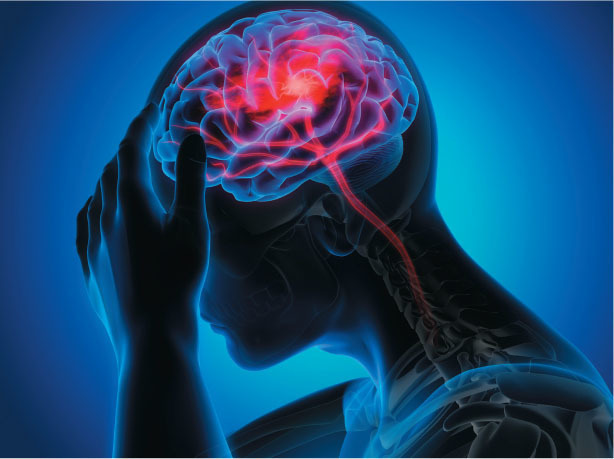
Pain is one of the most familiar human experiences, yet it is surprisingly easy to misunderstand. We often think of pain as a direct readout of bodily damage: tissue gets injured, nerves detect the injury, and the brain receives a message saying, “This hurts.”
That picture captures part of what happens, but it leaves out something crucial. Pain is not simply a measurement of damage. It is an experience produced by the nervous system to help protect the body. The brain constantly combines information from the body with attention, emotion, memory, expectations, context, and past experience to determine how much pain, if any, should be felt.
This helps explain several apparent contradictions. A small injury can hurt intensely, while a much more serious injury may initially cause surprisingly little pain. Someone can keep playing during a competition despite an injury and notice the pain only afterward. A person may feel severe pain even after an injury has healed. And in some circumstances, the brain can temporarily dampen pain so effectively that a person barely notices an injury until the immediate danger has passed.
Understanding these phenomena begins with understanding what pain is actually for.
Pain is a protective experience, not simply a damage signal
Pain exists because organisms need ways to detect and respond to threats. If touching a hot surface produces a painful sensation, withdrawing the hand quickly reduces the chance of further injury. If a sprained ankle hurts when weight is placed on it, the pain encourages rest and limits movements that could make the injury worse. If an inflamed area becomes tender, that sensitivity can discourage contact while the body repairs itself.
In this sense, pain is part of the body’s defense system.
But the nervous system does not contain a simple “damage meter.” Instead, specialized sensory neurons called nociceptors detect potentially harmful mechanical, thermal, or chemical conditions. Their activity can begin a chain of neural processing that ultimately contributes to pain. The process is known as nociception, and it is not identical to pain itself.
This distinction matters. Nociception refers to the nervous system’s detection and processing of potentially damaging stimuli. Pain is the conscious, unpleasant sensory and emotional experience associated with actual or potential tissue damage. The two usually interact, but they are not interchangeable.
A person can have nociceptive activity without consciously experiencing pain, and pain can occur with little or no ongoing tissue damage. The brain is involved in both cases, and what ultimately reaches conscious awareness depends on much more than signals arriving from injured tissue.
How the body detects potentially harmful stimuli
Nociceptors are sensory nerve endings found throughout many tissues, including the skin, muscles, joints, and internal organs. They respond when conditions become sufficiently threatening to tissue.
For example, extreme heat can activate temperature-sensitive receptors. Strong mechanical pressure can activate mechanically sensitive nociceptors. Chemical changes associated with inflammation can activate or sensitize nociceptors as well.
When nociceptors are activated, electrical signals travel along peripheral nerves toward the spinal cord. From there, information is processed through several neural pathways before reaching brain regions involved in sensation, attention, emotion, motivation, and decision-making.
The process is not merely a one-way telephone line from an injured body part to the brain. Signals are modified as they travel. The spinal cord and brain can increase or decrease the transmission of nociceptive information. The brain also sends signals downward into the spinal cord that can alter how strongly incoming information is processed.
This two-way communication is one reason pain can change dramatically according to circumstances.
Why pain does not always match the amount of damage
One of the most important facts about pain is that its intensity does not provide a precise measurement of tissue damage.
A paper cut can hurt intensely despite involving very little tissue. A serious injury may initially produce less pain than expected. During recovery, tissue can sometimes remain sensitive even after the original injury has largely healed.
There are several reasons.
Different tissues contain different numbers and types of sensory receptors. Some parts of the body are particularly sensitive because detecting threats there is especially useful. The fingertips, for example, are highly sensitive to touch and potentially damaging stimuli.
Inflammation also changes sensory processing. Chemicals released during an inflammatory response can make nociceptors more responsive. This is useful because it encourages protection of an injured area, but it can also make normally tolerable pressure or movement painful.
At the same time, the brain interprets incoming information in context. The meaning assigned to a sensation can influence the resulting experience. A sudden sensation during a dangerous situation may be treated differently from an otherwise identical sensation in a calm environment.
Pain therefore reflects an interaction between incoming bodily information and the brain’s interpretation of what that information means.
The brain does not passively receive pain
It is tempting to imagine the brain as a screen on which pain signals are displayed. Modern neuroscience instead supports a more active model.
The brain continuously receives information from the body while also using expectations, memories, attention, emotions, and environmental context to interpret that information. Pain emerges from this broader process.
This does not mean pain is imaginary. Pain is a genuine biological and psychological experience. Saying that the brain contributes to pain does not mean that a person is choosing to feel it or that the sensation is somehow unreal.
It means that pain is constructed by a nervous system whose job is to protect the organism, rather than being a simple recording of physical damage.
That protective function helps explain why the same bodily stimulus can produce different experiences at different times.
How the brain can turn pain down
The nervous system has built-in mechanisms for reducing pain. These are sometimes described as descending pain modulation or descending pain control.
Brain regions involved in evaluating danger, attention, emotion, and motivation can influence networks in the brainstem and spinal cord. These pathways can reduce the transmission of nociceptive signals toward higher brain regions.
The effect can be substantial.
During an emergency, for example, a person may suffer an injury without immediately experiencing the level of pain that would normally be expected. The body’s stress response can alter attention and pain processing, allowing behavior to remain focused on escaping danger or dealing with the immediate situation.
This is sometimes called stress-induced analgesia. “Analgesia” means reduced pain.
The phenomenon is not an evolutionary trick that makes injuries harmless. The injury still exists, and pain may become prominent later. Rather, the nervous system can temporarily change the priority assigned to pain when other actions appear more urgent.
Why adrenaline can change the experience of pain
When the body perceives a serious threat, it can activate the sympathetic nervous system and release stress hormones such as adrenaline and related chemical messengers.
These responses prepare the body for rapid action. Heart rate and blood flow patterns change, attention becomes focused, and energy becomes readily available for immediate demands.
Pain processing can change during this state as well.
A person involved in a frightening accident may be able to move, run, or help someone else before fully noticing an injury. After the immediate danger passes and the stress response subsides, pain may become much more obvious.
This delayed awareness is not proof that the injury suddenly became worse. Part of the change can reflect a shift in how the nervous system is processing and prioritizing sensory information.
The same principle helps explain why people sometimes report little pain during intense physical activity but notice pain later. Attention, arousal, expectation, and descending pain-modulation systems can all influence the experience.
The famous example of the athlete who “doesn’t feel” an injury
Competitive sports provide familiar examples of altered pain perception. An athlete may continue competing after being injured and only realize the extent of the problem afterward.
Several factors can contribute. During competition, attention is strongly focused on the task. The person may be highly aroused and motivated, surrounded by teammates and spectators, and operating under intense time pressure. The nervous system can temporarily suppress or deprioritize some pain processing under these conditions.
This does not mean athletes are immune to pain, nor does it mean that pain should routinely be ignored. Continuing to use an injured body part can sometimes worsen an injury.
The important lesson is that pain perception is flexible. The nervous system can change how strongly pain is experienced depending on what the brain considers most important at the moment.
Attention can make pain more or less noticeable
What a person attends to can influence how much pain enters conscious awareness.
When attention is intensely occupied, some painful sensations may become less prominent. This is one reason distraction can sometimes reduce perceived pain. Engaging conversation, immersive entertainment, demanding mental tasks, or focused activity can compete with pain for limited attentional resources.
The reverse can also occur. When a person continually monitors a painful sensation, its prominence may increase. Worrying about what a sensation means can draw further attention toward it, making it harder to ignore.
This does not mean attention creates pain from nothing. Rather, attention helps determine how strongly an existing sensory experience is represented in consciousness.
Why fear and anxiety can amplify pain
The brain’s interpretation of threat can also increase pain.
If a sensation is interpreted as dangerous, the nervous system may become more vigilant. Attention can narrow toward the painful area, muscles may tense, and the person’s expectations can shift toward further discomfort.
Fear can therefore become part of a feedback loop. Pain can create fear, fear can increase vigilance, heightened vigilance can increase the salience of bodily sensations, and the resulting experience can feel even more threatening.
This is one reason two people with similar injuries can experience very different levels of pain.
It also helps explain why chronic pain can be difficult to resolve. Once pain persists, the nervous system may become increasingly responsive to signals associated with threat. The original injury may no longer fully account for the intensity of the experience.
Expectations can influence pain
Expectations are another important part of pain processing.
If someone expects a procedure to be extremely painful, the brain may interpret incoming sensations in a way that produces a stronger pain experience. If the person expects a sensation to be manageable, the resulting experience may be different.
This effect is closely related to the placebo and nocebo phenomena.
A placebo effect occurs when positive expectations and the context surrounding a treatment contribute to beneficial changes in symptoms, including pain, even when the treatment itself lacks a direct therapeutic ingredient responsible for the effect. A nocebo effect describes the opposite pattern: negative expectations can contribute to worse symptoms or side effects.
These effects are not evidence that pain is “all in the mind.” Expectations can influence genuine physiological processing in the nervous system, including systems involved in pain modulation.
Why pain sometimes disappears even when an injury remains
Pain is useful, but the nervous system does not necessarily keep pain at maximum intensity for as long as tissue damage exists.
During an acute threat, reducing pain may help an organism act. After the danger has passed, pain can return. During recovery, pain may gradually decline as inflammation resolves and tissues repair.
The relationship is therefore dynamic.
A person can also experience temporary pain relief because of changes in attention, emotion, social context, medication, physical activity, expectation, or endogenous pain-control mechanisms. None of these necessarily means that the underlying tissue has fully recovered.
This distinction is especially important in sports and other situations where people are tempted to interpret reduced pain as proof that an injury is safe to use.
Pain is informative, but it is not a perfect diagnostic instrument.
The body’s own painkillers
The nervous system contains several mechanisms capable of reducing pain. Among the best known are endogenous opioids, naturally produced substances that can act on opioid receptors and reduce pain signaling.
Endogenous opioids are part of a broader system of internal pain modulation. They can be released in response to stress and other conditions and can influence how nociceptive information is processed.
Other neurotransmitters and neural pathways also participate in descending pain control. Serotonin, norepinephrine, and several other signaling systems can influence spinal and brain circuits involved in pain.
These mechanisms do not simply switch pain off. Their effects depend on the circumstances and the specific neural systems involved. Pain modulation can suppress some aspects of pain while leaving others relatively intact.
Why rubbing an injured area can sometimes help
A simple example of pain modulation can be felt when rubbing or gently pressing an area that hurts.
Touch and pressure signals travel through sensory pathways that interact with nociceptive processing, particularly in the spinal cord. This interaction can reduce the transmission or perception of some pain signals.
This idea is often associated with the “gate control” theory of pain, proposed in the 1960s. The original theory has since been expanded considerably, but its central insight remains influential: pain transmission is modulated rather than being a simple unaltered stream of information from the body to the brain.
The same broad principle helps explain why massage, pressure, heat, cold, electrical stimulation, and other sensory inputs can sometimes alter pain.
Why pain can continue after an injury heals
One of the most difficult features of pain is that it can persist after the original injury has improved.
Acute pain is generally associated with a relatively recent injury, inflammation, or other identifiable threat and often serves a protective function during healing. Chronic pain is different. It can persist for months or longer and may become a condition in its own right.
Persistent pain can involve changes in the nervous system called sensitization. With repeated or prolonged nociceptive input, neural circuits can become more responsive. Signals that were previously tolerated may become painful, and painful stimuli may produce stronger responses.
Peripheral sensitization can occur near injured or inflamed tissue. Central sensitization involves increased responsiveness within the central nervous system.
These changes can help explain phenomena such as hyperalgesia, in which normally painful stimuli become more painful, and allodynia, in which a normally nonpainful stimulus, such as light touch, can become painful.
Persistent pain is therefore not necessarily evidence that an injury remains exactly as it was at the beginning. The nervous system itself can change.
Phantom limb pain shows how strongly the brain contributes
Phantom limb experiences provide one of the clearest demonstrations that pain cannot be reduced to signals from currently damaged tissue.
After an amputation, some people experience sensations that seem to come from the missing limb. These may include pain, pressure, movement, tingling, or other sensations.
There is no longer a physical limb from which ordinary peripheral nociceptive signals could arise in the usual way. Yet the brain can still generate a vivid experience associated with that body part.
Phantom limb phenomena reflect the complex organization of the nervous system’s representation of the body. Neural networks involved in representing movement and sensation do not simply vanish when a limb is removed. Changes in peripheral nerves, the spinal cord, and the brain can all contribute.
Phantom limb pain demonstrates particularly clearly that pain is an experience generated by the nervous system rather than a direct readout from damaged tissue.
Why some injuries hurt less than expected
There are many situations in which severe physical damage and relatively modest initial pain occur together.
Shock, intense concentration, fear, excitement, and stress can all alter pain processing. In some circumstances, the body’s pain-control systems may be strongly activated.
There is also an important distinction between immediate pain and later pain. A person who is injured in a high-stakes situation may initially experience little discomfort and then develop significant pain minutes or hours later.
This does not mean that the nervous system has accurately determined that the injury is harmless. It means that pain is being regulated according to the broader circumstances.
In fact, the absence of pain cannot reliably rule out a serious injury.
Why some pain is necessary for learning
Pain is not merely an alarm. It is also a learning signal.
When an action causes pain, the nervous system can learn to avoid repeating it. A child who touches something hot learns to be cautious around heat. A person who sprains an ankle learns that certain movements or surfaces may be unsafe during recovery.
Memory and learning therefore become part of pain’s protective function.
This is one reason pain can sometimes be triggered by reminders of an earlier injury. The nervous system learns associations between sensations, movements, environments, and threats. Those associations can be useful when they help prevent reinjury, but they can become problematic if the nervous system continues to respond as though danger is present when it is no longer relevant.
Pain is both sensory and emotional
Pain is often described as a sensation, but that description is incomplete.
Pain contains sensory qualities, such as intensity, location, and character, but it also has an emotional dimension. The unpleasantness of pain is central to its ability to motivate behavior.
A sensation can therefore be processed differently depending on whether it is perceived as threatening, meaningful, expected, or manageable.
This helps explain why pain can change without an equivalent change in the physical stimulus. The sensory input matters, but so does what the brain believes the input means.
Pain also interacts with mood. Depression, anxiety, stress, fear, and poor sleep can influence pain perception and coping. At the same time, persistent pain can worsen mood, disrupt sleep, restrict activity, and increase stress.
These relationships can become mutually reinforcing without implying that psychological factors are the sole cause of someone’s pain.
Why chronic pain is more than a prolonged alarm
The protective function of acute pain makes intuitive sense: injury creates danger, and pain encourages protection.
Chronic pain is more complicated because the alarm can continue after the original threat has changed.
In some conditions, ongoing tissue pathology remains an important contributor. In others, nervous-system changes become increasingly important. Sometimes the original cause cannot be identified with certainty even though the person’s pain is genuine and disabling.
Modern pain science therefore treats chronic pain as a complex interaction among biological, psychological, and social factors.
This does not divide pain into “physical” versus “psychological.” The distinction is misleading because psychological processes are themselves biological processes carried out by the nervous system, and social circumstances can affect physiology, behavior, stress, sleep, and access to care.
Why people can experience the same injury differently
Pain varies substantially between individuals.
Genetics can influence pain sensitivity and the effectiveness of endogenous pain-control systems. Previous experiences shape expectations and learned responses. Sleep, stress, mood, attention, and context can affect perception. Culture and social environment can influence how people interpret, express, and respond to pain.
Even within one person, pain can change from day to day.
A headache after a good night’s sleep may feel different from a similar headache after severe sleep deprivation. An injury may feel different when someone is calm at home compared with when the person is frightened or urgently trying to complete a task.
This variability does not make pain unreliable or subjective in the sense of being arbitrary. It reflects the complexity of the biological system generating the experience.
Can the brain completely ignore pain?
Sometimes pain can be greatly reduced or temporarily absent despite injury, but “ignore” can be misleading.
The nervous system may suppress or deprioritize pain signals, while other aspects of sensory processing remain active. A person may recognize that an injury has occurred without experiencing much pain at first.
In rare circumstances, people have unusually low sensitivity to pain because of genetic differences affecting pain pathways. Such conditions illustrate why pain is protective: people who cannot experience normal pain can be vulnerable to burns, wounds, fractures, and other injuries because they lack important warning signals.
The goal of a healthy nervous system is therefore not to eliminate pain altogether. It is to regulate pain according to perceived threat and biological need.
Too much pain can be disabling. Too little pain can remove a valuable protective mechanism.
What pain tells us—and what it does not
Pain tells us that the nervous system is generating a protective experience. It can provide useful information about where the body may be threatened, which movements may be aggravating a problem, and whether something has changed.
But pain does not provide a precise measurement of tissue damage.
Severe pain does not necessarily mean severe tissue destruction, just as mild pain does not guarantee that an injury is minor. A person can have significant pathology with little pain, or severe pain with relatively little ongoing tissue damage.
For that reason, clinicians do not diagnose injuries solely by asking how much something hurts. They consider the history, physical examination, pattern of symptoms, functional changes, and, when appropriate, diagnostic testing.
Pain is an important signal, but it is one part of a larger biological picture.
Why understanding pain changes the way we think about it
The most useful way to think about pain is neither as a perfect damage detector nor as something purely psychological.
Pain is a protective experience created by a nervous system that constantly evaluates information from the body and the surrounding world. Nociceptors provide important information about potentially harmful conditions, but the brain determines how that information is processed into conscious experience.
That processing can be amplified or reduced by attention, emotion, expectation, stress, memory, context, and descending control from the brain. It can change rapidly during emergencies and more gradually during persistent pain. The nervous system can learn from painful experiences, become sensitized, and sometimes continue producing pain long after an original injury has healed.
The result is a system that is remarkably flexible. That flexibility is part of what makes pain useful: it can command attention when protection is needed and recede into the background when other demands become more urgent. But the same flexibility can also contribute to persistent or disproportionate pain when the nervous system’s protective responses become disconnected from the immediate level of tissue threat.