Scientists have not found alien life because the search is extraordinarily difficult, the universe is vast, and researchers still have limited ways to detect biology beyond Earth. Although astronomers have discovered thousands of planets orbiting other stars, identifying a world that might support life is not the same as finding organisms on it. Even if extraterrestrial life exists, it could be too distant, too small, too rare, or too different from what scientists know to recognize with current technology.
There is no confirmed evidence of life beyond Earth. Scientists have detected potentially habitable environments, discovered complex organic molecules in space, and identified planets that may have conditions suitable for liquid water. These findings make the search scientifically compelling, but none establishes that life has emerged elsewhere.
Understanding why the search remains unsuccessful requires looking at the scale of the universe, the difficulty of detecting living organisms, the uncertain conditions needed for life, and the possibility that intelligent civilizations may be much harder to find than their existence would suggest.
The universe is enormous, and the search has barely begun
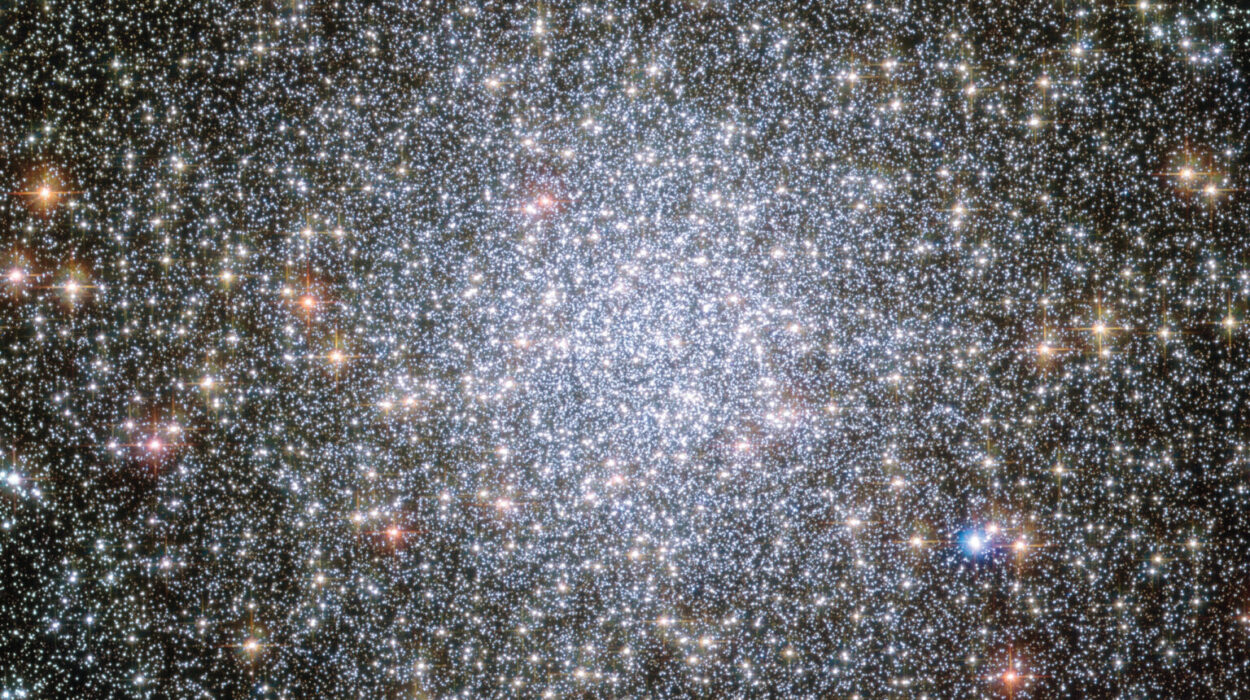
The observable universe contains an immense number of galaxies, each with stars and, in many cases, planets. The Milky Way alone contains hundreds of billions of stars. Astronomers have established that planets are common, including rocky worlds that may have some of the conditions associated with life on Earth.
Yet the size of the universe creates a fundamental problem: searching for extraterrestrial life is not simply a matter of looking everywhere at once. Scientists must choose specific targets, use instruments suited to those targets, and collect enough evidence to determine what they are observing.
Even within our own galaxy, stars and planets are separated by enormous distances. The nearest star system beyond the Sun is more than four light-years away. A light-year is the distance light travels in one year, approximately 5.9 trillion miles. With present-day spacecraft technology, reaching another star would take far longer than a human lifetime.
These distances make direct exploration of distant worlds impractical for now. Scientists instead rely heavily on telescopes that collect light from planets, stars, and their surrounding environments. Such observations can reveal some of the properties of distant worlds, but they rarely provide the kind of close-up evidence needed to identify living organisms.
The result is a search that covers only a tiny fraction of the places where life might exist. Scientists have examined many astronomical targets, but the number of potentially relevant environments is vastly greater than the number they can investigate in detail.
Finding a habitable planet does not mean finding life
One of the most important advances in modern astronomy has been the discovery of planets orbiting other stars. These planets, known as exoplanets, show that planetary systems are not unusual features of the universe.
Some exoplanets orbit within their stars’ habitable zones, the regions where temperatures could allow liquid water to exist on a planet’s surface, assuming suitable atmospheric conditions. Liquid water matters because every known form of life on Earth depends on it.
However, the habitable zone is only a starting point. A planet’s actual surface conditions depend on factors such as its atmosphere, cloud cover, reflectivity, internal heat, and geological activity. A world located in the habitable zone could still be too hot, too cold, or otherwise unsuitable for life as we know it.
Venus illustrates how different planetary conditions can become despite similarities in basic characteristics. Venus is relatively close to Earth in size, yet its dense atmosphere and powerful greenhouse effect produce extreme surface temperatures. Mars, meanwhile, preserves evidence of ancient environments in which liquid water flowed, but its present surface is cold, dry, and exposed to radiation.
Scientists therefore need more than a planet’s distance from its star to assess its potential habitability. They must investigate its atmosphere, surface chemistry, climate, and history wherever possible.
Even if a planet has liquid water and suitable temperatures, life might never develop there. The conditions that allow organisms to survive are not necessarily the same conditions that cause life to originate.
Scientists do not yet know how easily life begins
Life on Earth is built from complex chemical systems that can grow, use energy, respond to their surroundings, and reproduce. Scientists understand many of the processes that sustain existing organisms, but they do not yet have a complete explanation of how nonliving chemistry first gave rise to life.
This transition is called abiogenesis. It involves the emergence of living systems from nonliving matter through natural chemical processes.
Early Earth contained water, minerals, sources of energy, and a variety of chemical compounds. Under suitable conditions, chemical reactions could have produced increasingly complex molecules and systems. Over time, some processes may have become capable of maintaining themselves and passing information to new generations.
Researchers investigate several possible pathways, including reactions in water, chemical activity around hydrothermal vents, and interactions between organic molecules and mineral surfaces. These possibilities are not necessarily mutually exclusive, and the precise sequence of events that produced the first life remains uncertain.
That uncertainty matters when scientists estimate how common extraterrestrial life might be. If life emerges relatively easily whenever suitable conditions persist, it could be widespread. If its origin requires a rare combination of circumstances, living worlds might be much less common.
Earth provides only one confirmed example of a planet where life has originated. That makes it difficult to distinguish between conditions that are generally sufficient for life and conditions that happened to work in this particular case.
Scientists can study how life originated on Earth and test chemical processes in laboratories, but they cannot yet calculate confidently how often life begins on suitable planets elsewhere.
Simple life may be much more common than intelligent life
When people imagine alien life, they often picture intelligent beings capable of building spacecraft or communicating across interstellar distances. Scientifically, however, there is no reason to assume that extraterrestrial life must resemble humans or possess advanced technology.
On Earth, life existed for billions of years before humans appeared. Microorganisms dominated much of the planet’s biological history, and single-celled organisms remain extraordinarily widespread.
This history suggests an important distinction between the emergence of life and the evolution of technological intelligence. The first may require chemical processes that can occur under suitable environmental conditions. The second requires a long sequence of biological and environmental developments whose likelihood is much less certain.
A planet could host microbes for billions of years without ever producing organisms capable of building radios, telescopes, or spacecraft. Complex multicellular life might also be absent, even if simple organisms thrive.
Consequently, a universe containing many living worlds would not necessarily contain many civilizations capable of contacting Earth. The number of inhabited planets and the number of technologically advanced societies are separate questions.
Scientists have no reliable way to determine how frequently intelligence evolves beyond Earth. Human intelligence demonstrates that technological civilization is possible, but one example cannot establish how common that outcome is.
Detecting life from another star is extraordinarily difficult
Even if a distant planet supports living organisms, detecting them presents a separate challenge. Planets are faint compared with their host stars, and the light reflected or emitted by a planet can be overwhelmed by the star’s brightness.
Astronomers have developed several methods to study exoplanets. One method, called the transit technique, detects the slight dimming of a star when a planet passes in front of it. Another measures small changes in a star’s motion caused by the gravitational pull of an orbiting planet.
These techniques can reveal a planet’s presence, size, orbit, and, in some cases, mass. They do not directly establish whether the planet contains life.
To investigate a planet’s atmosphere, scientists may analyze its spectrum: the distribution of light across different wavelengths. Atmospheric gases absorb or emit particular wavelengths, leaving patterns that can reveal chemical composition.
This method can sometimes identify gases such as water vapor, carbon dioxide, and methane. Under the right circumstances, researchers may look for combinations of gases that could be associated with biological activity.
The challenge is that no single gas automatically proves life. Methane, for example, can be produced by biological processes on Earth, but it can also arise through nonbiological chemistry. Oxygen can accumulate through biological activity, yet interpreting its presence requires understanding the planet’s atmosphere, surface, and history.
Scientists therefore look for possible biosignatures, meaning observable features that might indicate life. A convincing biosignature would need to be supported by several lines of evidence and assessed against plausible nonbiological explanations.
For distant planets, the available observations may be too limited to distinguish between these explanations. A potentially interesting chemical signal can motivate further research without providing a definitive detection.
Life might exist in places that telescopes cannot easily examine
The search for extraterrestrial life is not limited to planets resembling Earth. Some of the most interesting possibilities within our own solar system are environments where liquid water may exist beneath an icy surface.
Jupiter’s moon Europa and Saturn’s moon Enceladus are important examples. Evidence indicates that both contain subsurface oceans beneath their outer ice layers. Their environments may also provide some of the chemical ingredients and energy sources that life requires.
On Earth, microorganisms survive in environments far removed from sunlight, including deep beneath the ocean floor and around hydrothermal vents. Some use chemical reactions rather than sunlight as their primary source of energy.
This demonstrates that life can occupy a wider range of environments than early ideas about habitability might have suggested. It also gives scientists reasons to investigate oceans beneath extraterrestrial ice.
However, the presence of liquid water does not prove that these oceans contain organisms. Researchers must determine whether suitable chemistry, energy sources, and environmental stability exist, and whether life ever originated there.
Exploring these environments is particularly challenging. A spacecraft would need to reach the relevant moon, gather useful evidence, and potentially penetrate or sample material from beneath its icy surface. Detecting microscopic organisms or unambiguous biological chemistry would require carefully designed instruments and procedures.
Planetary exploration also faces a contamination problem. Spacecraft can carry microorganisms or organic material from Earth. If investigators detect biological material on another world, they must be able to distinguish a genuine extraterrestrial discovery from contamination introduced by the mission.
This is why spacecraft are designed and handled according to planetary protection requirements. Preventing contamination protects both the environments being studied and the scientific reliability of the results.
The search for intelligent civilizations faces a different problem
Searching for microbes and searching for technologically advanced civilizations are related but distinct scientific efforts. The latter is often called the search for extraterrestrial intelligence, or SETI.
One approach involves searching for artificial radio signals that might be transmitted by another civilization. Radio waves can travel across interstellar space, and certain kinds of signals could stand out from natural astronomical emissions.
Researchers can also consider other possible technosignatures, or observable signs of technology. These might include unusual emissions, artificial signals, or other effects that cannot readily be explained by natural processes.
Yet a civilization must produce a detectable signal for scientists to find it. It might communicate using technologies that astronomers are not searching for, transmit in directions that do not include Earth, or use signals too weak to detect at interstellar distances.
A signal may also be transmitted for only a short period. Human radio technology has existed for a relatively brief portion of Earth’s history, and our own emissions do not necessarily remain equally detectable across all distances and frequencies.
This creates a timing problem. Two civilizations could exist in the same galaxy but never overlap during the periods when they produce detectable signals. They could also be separated by distances that make meaningful exchanges impractically slow.
The absence of a detected signal therefore does not establish that no technological civilizations exist. It means that searches conducted so far have not produced a confirmed detection.
The silence of the universe remains an open question
The apparent lack of evidence for extraterrestrial civilizations is sometimes called the Fermi paradox. The name refers to the tension between the enormous number of possible places for life and the absence of confirmed evidence that another technological civilization has contacted us.
The paradox does not demonstrate that alien civilizations must exist. Instead, it highlights a gap between what might seem possible given the scale of the universe and what scientists have actually observed.
Several explanations could account for this gap. Life might be common while technological intelligence is rare. Civilizations might emerge at different times, making their periods of detectable activity unlikely to overlap. Interstellar travel could be too expensive or difficult to undertake on a large scale.
Another possibility is that civilizations do not necessarily broadcast signals that are easy for us to recognize. Their communication methods, energy use, or technological priorities might differ from our expectations.
It is also possible that researchers have examined too few stars, too narrow a range of frequencies, or too limited a range of potential signals to draw strong conclusions.
These explanations remain possibilities rather than established answers. Scientists do not know whether one of them accounts for the apparent silence, whether several operate together, or whether an explanation not yet considered will prove more important.
The key point is that the absence of evidence becomes meaningful only in relation to how thoroughly a hypothesis has been tested. A search that can detect only a narrow category of signals cannot rule out every possible form of technological activity.
What would count as convincing evidence of alien life?
A major challenge in astrobiology, the scientific study of life in the universe, is distinguishing biological evidence from natural processes that produce similar results.
A photograph of an unfamiliar landscape, the discovery of organic molecules, or the detection of a potentially habitable planet would not by itself establish that life exists there. Each observation would need to be interpreted in context.
Stronger evidence might include the detection of organisms, biological structures, or chemical patterns that are difficult to explain without life. Ideally, researchers would obtain multiple independent observations that support the same conclusion.
For example, a potentially biological gas in a distant planet’s atmosphere would be more persuasive if other measurements supported the interpretation and plausible nonbiological sources could be ruled out. Scientists would also need to consider whether their instruments, analytical methods, or assumptions could produce a misleading result.
A direct sample from another world could provide more detailed evidence, especially if scientists could examine its chemistry, structure, and behavior. But even a sample would require careful analysis and safeguards against contamination.
Scientific confirmation is not simply a matter of finding something unusual. It requires demonstrating that the evidence supports a particular explanation better than competing alternatives.
That standard can make discoveries slower, but it is essential for a claim as consequential as identifying the first confirmed extraterrestrial life.
Future discoveries may change the picture
The search for life beyond Earth is progressing through improvements in telescopes, spacecraft, laboratory analysis, and our understanding of how living systems function.
Astronomers can now identify planets around distant stars and investigate the properties of some of their atmospheres. Future observations may help distinguish worlds with potentially suitable conditions from those that only appear habitable based on limited information.
Within the solar system, missions that examine Mars and icy moons can investigate past or present environments that might support life. Samples and measurements from these worlds may reveal whether biological processes occurred beyond Earth or help explain why apparently suitable environments remained lifeless.
Laboratory research is also improving scientists’ ability to understand how organic molecules form, how nonliving chemical systems become more complex, and which environmental conditions might support life. These studies cannot substitute for evidence from another world, but they can help researchers identify the most informative places to search and interpret what they find.
No single technique is likely to settle every question. Atmospheric observations, planetary exploration, laboratory experiments, and searches for artificial signals address different aspects of the problem. Together, they provide a broader strategy than any one approach could offer.
Progress may also come from unexpected places. An environment initially considered unlikely to support life might turn out to have useful sources of energy or a more complex chemical history than scientists anticipated. Alternatively, researchers might discover that a world with apparently favorable conditions lacks the ingredients or stability needed for biology.
Either outcome would improve our understanding of how life depends on planetary environments.
Why the lack of discovery matters
The fact that scientists have not confirmed extraterrestrial life is an important scientific result, but its meaning must be understood carefully. It does not prove that Earth is the only inhabited world, nor does it establish that life is widespread.
At present, Earth remains the only known example of a planet with life. That makes it impossible to estimate confidently how frequently life originates elsewhere or how often it evolves into complex organisms and technological civilizations.
The uncertainty has consequences for how scientists approach the search. Researchers must avoid assuming that all life will resemble Earth organisms, but they also need testable hypotheses that guide observations and experiments. They must distinguish worlds that might support life from worlds that actually contain it, and possible signs of biology from evidence that rules out reasonable alternatives.
The search also helps scientists understand Earth itself. Investigating the limits of habitability reveals how organisms use energy, tolerate extreme conditions, and interact with their environments. Studying planetary atmospheres and geology clarifies why some worlds retain liquid water while others become hostile to known forms of life.
Scientists have not found alien life because the evidence is difficult to obtain, the relevant environments are poorly understood, and the search has not yet established whether life is common beyond Earth. The universe offers an enormous range of possible places to investigate, but possibility alone is not proof.
The answer may eventually emerge from a distant planet’s atmosphere, a sample collected elsewhere in the solar system, or a signal that cannot be explained by natural processes. It may also take much longer than expected. Until the evidence becomes convincing, the scientifically honest position is neither that we are alone nor that alien life is inevitable, but that the question remains open.