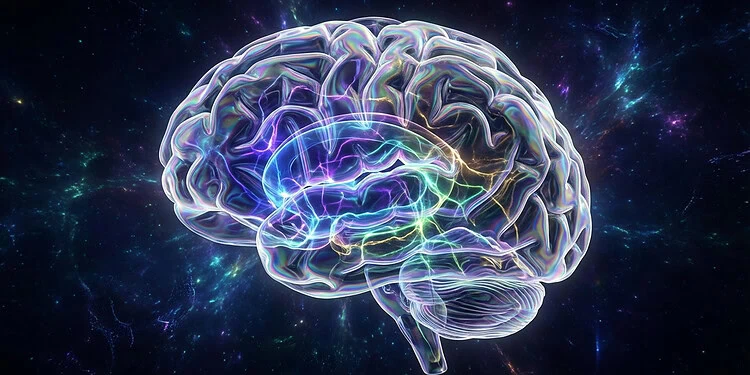
Sleep is one of the most familiar parts of human life and one of biology’s most complicated puzzles. Every day, the brain and body shift into a state in which awareness of the outside world is greatly reduced, movement is restricted, and many systems change how they operate. Yet sleep is not simply a period of inactivity. The brain remains highly active, and sleep supports processes that are essential for normal physical and mental function.
Scientists do not describe sleep as having one single purpose. Instead, sleep appears to be a coordinated biological state that helps the brain process information, regulate emotions, maintain metabolism and immune function, and preserve the health of cells and tissues. Exactly how all of these functions fit together is still an area of research.
Understanding why we sleep starts with understanding how sleep is controlled.
Sleep is an active biological state
Sleep is reversible, recurring, and regulated by the nervous system. It differs fundamentally from being unconscious because the sleeping brain follows organized patterns of electrical activity and can rapidly change between distinct states.
Human sleep is divided into two broad types: non-rapid eye movement (NREM) sleep and rapid eye movement (REM) sleep. NREM sleep itself has several stages, progressing from relatively light sleep to deep sleep. REM sleep is characterized by a distinctive pattern of brain activity, rapid eye movements, and temporary paralysis of most skeletal muscles.
These stages occur in cycles throughout the night. Early in a typical sleep period, deep NREM sleep occupies a larger share of the cycles. REM periods tend to become longer later in the sleep period. The result is not a uniform block of rest but a changing sequence of physiological states.
The distinction matters because different aspects of sleep appear to support different biological functions.
Two systems determine when you sleep
The timing of sleep is governed mainly by the interaction of two biological processes: sleep pressure and the circadian rhythm.
Sleep pressure is the tendency to sleep that builds the longer you remain awake. At the cellular level, prolonged wakefulness is associated with the accumulation of substances that promote sleepiness, including the molecule adenosine. During sleep, these pressures diminish. Caffeine can temporarily reduce the feeling of sleepiness because it blocks adenosine receptors, although it does not eliminate the underlying need for sleep.
The circadian rhythm is an approximately 24-hour biological timing system. It helps coordinate sleep and wakefulness with the day-night cycle and regulates many other processes, including body temperature, hormone activity, metabolism, and alertness.
A small region of the brain called the suprachiasmatic nucleus, located in the hypothalamus, acts as a major coordinator of this timing system. Light entering the eyes provides important information about the external day-night cycle. In response, the brain adjusts biological timing signals, including the release of melatonin, a hormone that helps signal that it is biological nighttime.
Sleep therefore depends on both how long you have been awake and what time your internal clock says it is. These systems can become temporarily misaligned after crossing time zones, working overnight, or experiencing irregular sleep schedules.
What happens in the brain during sleep?
The sleeping brain does not simply switch off. Its patterns of activity change substantially.
During light NREM sleep, brain activity begins to shift away from the patterns associated with relaxed wakefulness. As sleep deepens, large populations of neurons become more synchronized, producing characteristic slow electrical waves known as slow waves.
Deep NREM sleep is particularly associated with these slow waves. Neurons alternate between periods of relative activity and periods of reduced activity across broad networks of the brain. This synchronized activity appears to create conditions that support several important processes, including aspects of memory and cellular maintenance.
REM sleep looks different. Brain activity becomes more similar in some respects to waking activity, while most voluntary muscles remain strongly inhibited. This prevents the body from physically acting out most movements associated with dreams. Breathing and heart rate can become more variable, and vivid dreaming is especially common during REM sleep, although dreams can occur during NREM sleep as well.
The brainstem, hypothalamus, thalamus, and cerebral cortex all participate in controlling these changing states. Sleep is therefore the product of coordinated neural circuits rather than a single “sleep center.”
Sleep helps the brain process memories
One of the best-supported functions of sleep involves learning and memory.
Experiences initially produce changes in neural circuits while we are awake. Sleep appears to help stabilize, reorganize, and integrate some of those changes. This process is often called memory consolidation.
Different stages of sleep may contribute in different ways. Deep NREM sleep has been strongly associated with the consolidation of certain kinds of declarative memories, such as facts and events. REM sleep and other stages of sleep also appear to contribute to learning, emotional memory, and aspects of procedural skills.
Sleep does not simply preserve everything that happened during the day. The sleeping brain appears to reorganize information, strengthen some connections, weaken others, and integrate new experiences with existing knowledge. This may help explain why adequate sleep can improve learning and why sleep deprivation can impair attention, decision-making, and memory.
Sleep may help the brain manage its connections
Neurons communicate through connections called synapses. During waking life, experience continually modifies these connections.
One influential idea is that sleep helps regulate the overall strength of synaptic connections. During wakefulness, learning and experience can increase activity across many neural circuits. If connections were continually strengthened without some form of regulation, neural networks could become energetically expensive and less efficient.
During sleep, some synaptic connections may be selectively weakened while important patterns are preserved or strengthened. This general process is sometimes described as synaptic homeostasis: maintaining a workable balance in the strength and activity of neural connections.
The precise mechanisms remain an active area of research, but the broader principle is important: sleep is involved not only in storing memories but also in maintaining the organization and efficiency of neural networks.
Sleep supports the brain’s internal maintenance
The brain consumes substantial amounts of energy even when the body is at rest. It also produces metabolic waste as cells perform their normal functions.
During sleep, the movement of fluid through brain tissue changes, and research has identified pathways involved in clearing certain waste products from the brain. The glymphatic system is a term used for a network of fluid movements that participates in this process.
The relationship between sleep and waste clearance is more complicated than the popular claim that the brain simply “cleans itself” at night. Clearance depends on multiple physiological processes, and scientists are still determining exactly how sleep changes them and how important each mechanism is to long-term brain health.
What is clear is that sleep provides a distinct physiological environment for the brain, allowing maintenance processes to operate under conditions that differ from waking life.
Sleep affects the rest of the body, too
Sleep is regulated by the brain, but its consequences extend throughout the body.
During sleep, the autonomic nervous system changes its balance of activity, hormone secretion follows characteristic patterns, and the body regulates energy use differently from wakefulness. Deep sleep is associated with the release of growth hormone, which participates in tissue growth and repair as well as metabolic regulation.
Sleep also interacts with the immune system. Immune signaling changes during sleep, and inadequate sleep can alter immune responses. These relationships help explain why sleep is relevant to the body’s ability to respond to challenges and maintain normal physiological function.
Metabolism is closely linked to sleep as well. Persistent insufficient sleep or disrupted sleep can affect appetite-regulating hormones, glucose metabolism, and other processes involved in energy balance. Sleep is therefore part of the body’s broader system for maintaining physiological stability.
Why does the body need to be unconscious?
One obvious question remains: if sleep performs so many useful functions, why must we become largely unresponsive to the environment to perform them?
The answer is not completely known. Sleep itself carries costs. A sleeping animal is less able to respond immediately to threats, find food, reproduce, or perform other tasks. Evolution has nevertheless preserved sleep across the animal kingdom, suggesting that its biological benefits are substantial enough to outweigh these vulnerabilities.
The fact that sleep is widespread also suggests that it performs fundamental biological functions. At the same time, different animals have evolved remarkably different sleep patterns. Some species sleep for long periods; others sleep in shorter episodes. Some can rest one hemisphere of the brain while keeping the other more active. These differences show that there is no single evolutionary blueprint for sleep.
For humans, the need for sleep appears to arise from the demands of maintaining a complex nervous system and a body whose biological processes require periodic changes in activity.
What happens when you do not get enough sleep?
Sleep deprivation affects multiple systems because sleep itself has multiple functions.
After insufficient sleep, attention and reaction time can deteriorate, making it harder to sustain concentration or respond quickly. Learning and memory can suffer, and emotional regulation may become more difficult. Severe sleep loss can also produce involuntary brief episodes of sleep known as microsleeps, which are particularly dangerous during activities such as driving.
Chronic inadequate sleep is associated with broader health risks, including impaired metabolic regulation, changes in immune function, and increased risk of several chronic diseases. The relationship is not always simple: illness, stress, medications, work schedules, and other factors can both disrupt sleep and affect health. Nevertheless, sleep is an important component of normal health rather than a luxury that can be consistently traded for additional waking hours.
Why do we dream?
Dreaming is one of sleep’s most noticeable phenomena, but it is not synonymous with REM sleep.
Dreams can occur during both REM and NREM sleep, although REM dreams are often more vivid, emotional, and story-like. The exact function of dreaming remains uncertain.
Some theories propose that dreaming reflects the brain’s processing of memories and emotions during sleep. Others emphasize the brain’s attempt to construct coherent experiences from internally generated neural activity. Dreaming may involve several processes at once rather than serving one discrete biological purpose.
Importantly, scientists can explain many of the brain processes associated with dreaming without having established that dreams themselves have a specific evolutionary function.
Why is deep sleep different from REM sleep?
Deep NREM sleep and REM sleep represent fundamentally different physiological states.
Deep NREM sleep is marked by slow, synchronized brain activity, reduced responsiveness to the environment, and relatively stable breathing and heart rate. It is particularly important for physical and neural restoration and is closely involved in certain forms of memory consolidation.
REM sleep combines active-looking brain patterns with profound muscle inhibition. Brain activity during REM is associated with vivid dreaming, emotional processing, and other forms of memory-related activity. Autonomic activity is generally more variable than during deep NREM sleep.
Neither state can simply be labeled the “important” kind of sleep. Healthy sleep depends on cycling through both NREM and REM states in an organized pattern.
Why do we sleep at night?
Humans are generally adapted to sleep during the biological night because our circadian system aligns alertness and sleepiness with the light-dark cycle.
Light is the most important environmental signal for keeping the circadian clock synchronized with the outside world. As evening approaches, circadian signals promote sleepiness and melatonin secretion rises. In the morning, exposure to light helps shift the body toward wakefulness.
This does not mean humans are biologically incapable of sleeping during the day. People who work night shifts can sleep during daylight hours, for example. The difficulty is that daytime sleep often occurs at a circadian phase that promotes wakefulness, while nighttime work requires alertness when the biological clock is promoting sleep.
The important distinction is between sleep timing and sleep quantity. Getting enough hours does not completely eliminate the effects of sleeping at a biologically inconvenient time.
Sleep is not wasted time
From an evolutionary and physiological perspective, sleep is costly: it temporarily removes an organism from many activities that require awareness. Yet the nervous system repeatedly enters this state because sleep appears to enable processes that cannot be adequately accomplished during ordinary wakefulness.
During sleep, the brain changes how its networks communicate, information acquired during wakefulness is processed, metabolic and cellular maintenance occurs, and systems throughout the body are regulated in ways that differ from the waking state.
There is no single answer to “Why do we sleep?” because sleep is not a single-purpose behavior. It is a coordinated biological state that allows the brain and body to perform several kinds of maintenance, regulation, and information processing. The more scientists learn about sleep, the clearer it becomes that being asleep is not the absence of biology. Sleep is biology operating in a different mode.