Jupiter has the shortest day of any planet in our solar system. It completes one rotation on its axis in about 9 hours and 56 minutes, meaning a full day on Jupiter lasts less than 10 hours. Despite being the largest planet in the solar system, Jupiter spins faster than any other planet, creating an unusually short day.
This rapid rotation affects Jupiter’s shape, atmosphere, and weather. It also highlights an important distinction in astronomy: a planet’s day is determined by how quickly it rotates, not by how long it takes to orbit the Sun.
What determines the length of a planetary day?
A planet’s day depends primarily on its rotation, the movement of the planet around its own axis. One complete rotation marks the time it takes for the planet to turn through 360 degrees relative to the stars. This is called a sidereal day.
The time required for a planet to complete one orbit around the Sun is different. That period is called a year. Earth, for example, rotates approximately once every 24 hours while taking about 365.25 days to complete its orbit around the Sun.
The relationship between rotation and orbit can make the definition of a day more complicated. A solar day measures the time between successive appearances of the Sun in the same position in the sky. Because a planet also moves along its orbit while rotating, its solar day can differ from its sidereal day.
For Jupiter, the difference is relatively small compared with the length of its rotation. Its day is roughly 9 hours and 56 minutes when measured relative to the stars, although commonly quoted values can vary slightly depending on the measurement method.
Why does Jupiter rotate so quickly?
Jupiter’s rapid rotation is largely a result of how the planet formed. Billions of years ago, Jupiter developed from a vast cloud of gas and dust surrounding the young Sun. As material gathered under gravity, it brought angular momentum into the growing planet.
Angular momentum describes the rotational motion of an object. When a rotating cloud contracts, its rotation can speed up, much as an ice skater spins faster by pulling their arms closer to their body. This principle, known as the conservation of angular momentum, helps explain why collapsing astronomical clouds can produce rapidly rotating objects.
Jupiter accumulated enormous amounts of gas and became a giant planet composed primarily of hydrogen and helium. Its large mass and rapid formation helped produce a planet with substantial rotational momentum.
The result is a world that spins once in less than half an Earth day. Jupiter’s rotation has persisted over billions of years, although its internal structure, atmospheric circulation, and magnetic field make measuring its exact rotation period more complicated than measuring the spin of a solid object.
How Jupiter’s short day affects its shape
Jupiter’s rapid rotation has a noticeable effect on its shape. Rather than being a perfect sphere, the planet is flattened at its poles and bulges around its equator. This shape is known as an oblate spheroid.
As Jupiter spins, the outward effect associated with rotation is strongest near the equator. Gravity pulls material toward the planet’s center, while rotation contributes to the equatorial bulge. The faster a planet rotates, the more pronounced this effect can become, provided other factors are comparable.
Jupiter’s equatorial diameter is considerably larger than its diameter measured from pole to pole. Its rapid spin is a major reason for this difference.
Earth also has an equatorial bulge, but the effect is less dramatic because Earth rotates more slowly and has a different internal structure. Jupiter demonstrates how rotation can influence the overall shape of a planet, even when gravity remains the dominant force holding the planet together.
How a short day influences Jupiter’s atmosphere
Jupiter’s rapid rotation also plays an important role in its atmospheric behavior. Its atmosphere contains powerful jet streams, enormous storms, and alternating bands of clouds that circle the planet.
Rotation influences the movement of air through an effect called the Coriolis effect. On a rotating planet, moving air and other large-scale flows are deflected relative to the surface. This helps organize atmospheric circulation into broad bands and contributes to the development and persistence of large weather systems.
Jupiter’s distinctive cloud bands form partly because its atmosphere moves at different speeds at different latitudes. Some regions contain strong eastward winds, while others have westward winds. The interactions among these currents create the planet’s complex weather patterns.
The Great Red Spot, a giant storm that has persisted for centuries, is one of Jupiter’s best-known atmospheric features. Its existence involves many factors, including atmospheric circulation and the dynamics of rotating fluids. Jupiter’s fast rotation helps establish the conditions in which such large-scale storms develop, although rotation alone does not explain every detail of their behavior.
Because Jupiter is primarily gaseous, it does not have a solid surface like Earth. Its visible clouds sit above deeper atmospheric layers, and different regions of the atmosphere can rotate at different rates. Consequently, the planet does not behave like a rigid ball turning at precisely the same speed everywhere.
How Jupiter compares with the other planets
Jupiter holds the record for the shortest day among the eight recognized planets, but the other planets vary widely in their rotation periods.
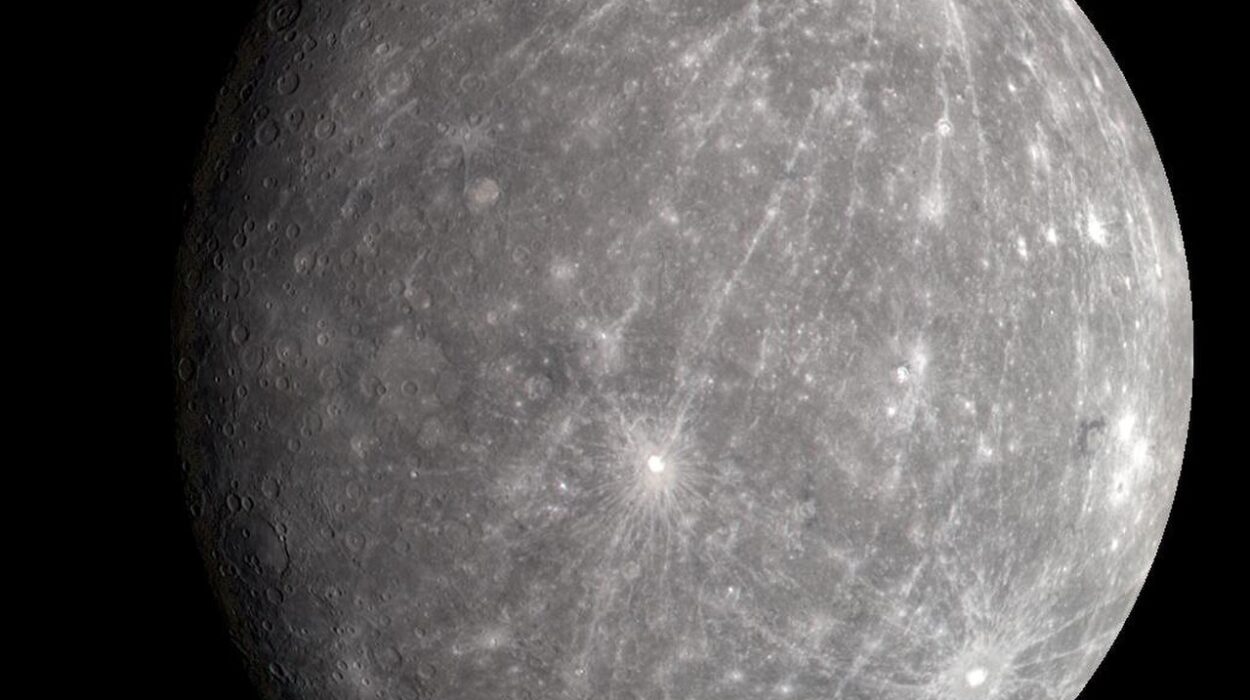
Mercury rotates slowly, taking about 59 Earth days to complete one rotation relative to the stars. Its combination of slow rotation and rapid orbital motion produces a solar day lasting about 176 Earth days.
Venus rotates even more slowly, taking about 243 Earth days to complete one sidereal rotation. It also rotates in the opposite direction to most planets in the solar system. A solar day on Venus lasts about 117 Earth days.
Earth completes one sidereal rotation in approximately 23 hours and 56 minutes. Its familiar 24-hour solar day is slightly longer because Earth continues moving around the Sun as it rotates.
Mars has a rotation period of about 24 hours and 37 minutes, making its day only slightly longer than Earth’s. This similarity is one reason the Martian day is often convenient to compare with an Earth day.
Saturn, the second-largest planet, also rotates rapidly, completing a rotation in roughly 10.5 hours. Uranus takes about 17 hours, while Neptune takes approximately 16 hours.
These figures are approximate, and the rotation periods of the giant planets can be more difficult to establish precisely because they lack solid surfaces and have complex magnetic fields and atmospheric motions. Nevertheless, the overall pattern is clear: Jupiter rotates fastest, while Mercury and Venus rotate much more slowly.
Why Jupiter’s rotation is difficult to measure precisely
Measuring the rotation of a rocky planet is relatively straightforward because scientists can track surface features as they move across the planet. Jupiter presents a different challenge.
The planet has no accessible solid surface. Astronomers instead observe cloud patterns, atmospheric features, radio emissions, and other signals that provide clues about its motion.
Cloud features can move independently of the deeper interior, so tracking them does not always reveal the planet’s underlying rotation rate. Jupiter’s atmosphere contains different currents at different latitudes, making a single rotation period an approximation of a more complicated system.
Scientists can also use radio emissions associated with Jupiter’s magnetic field to investigate its rotation. These measurements provide information about the planet’s interior, although the relationship between the magnetic field and the planet’s bulk rotation is not perfectly simple.
As a result, published rotation periods may differ slightly according to the method used and the specific motion being measured. Such differences do not challenge Jupiter’s status as the planet with the shortest day; they reflect the difficulty of defining a single rotation rate for a giant planet.
Does Jupiter’s short day mean its year is also short?
No. A day and a year measure different kinds of motion. Jupiter rotates rapidly on its axis, but it takes much longer to travel around the Sun than Earth does.
Jupiter completes one orbit in about 11.86 Earth years. Its great distance from the Sun means that it travels along a much larger orbital path, and the Sun’s gravitational pull at that distance produces a longer orbital period.
This contrast shows why rotation speed and orbital speed should not be confused. A planet can rotate quickly while taking years to complete a single orbit, or rotate slowly while completing its orbit in a relatively short time.
Jupiter combines one of the shortest days in the solar system with a year nearly 12 Earth years long. Its rapid spin and extended orbit are separate features of its motion, each shaped by different aspects of the planet’s formation and its gravitational relationship with the Sun.
What Jupiter teaches us about planetary motion
Jupiter’s exceptionally short day illustrates how a planet’s physical properties and history influence its present-day behavior. Its rotation affects its shape, helps organize its atmosphere, and provides clues about its interior.
The planet’s rapid spin also demonstrates that size alone does not determine how quickly a world rotates. Jupiter is enormous, yet it turns faster than every other planet in the solar system. Its rotation reflects the angular momentum it acquired during formation and the physical processes that have shaped it since.
For anyone comparing planetary days, the essential distinction is between rotation and revolution. Rotation determines how quickly a planet turns on its axis, while revolution describes its orbit around the Sun. Jupiter’s rotation takes about 9 hours and 56 minutes, giving it the shortest day of any planet in our solar system.