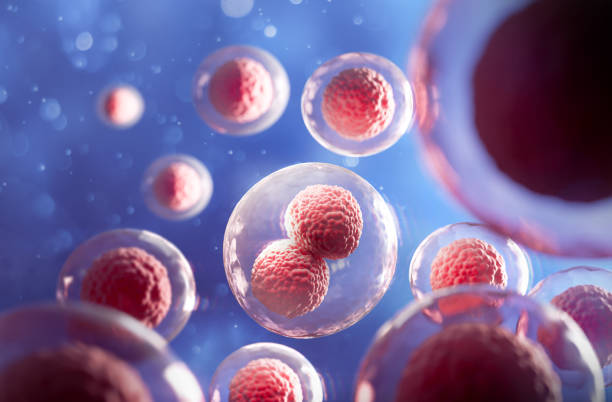
A cell is the smallest unit of life that can carry out the basic processes needed to stay alive. Whether it belongs to a bacterium, a mushroom, an oak tree, or a human being, a living cell must do more than simply contain biological molecules. It must maintain an organized internal environment, obtain and use energy, respond to changes, preserve and use genetic information, grow or repair itself, and participate in reproduction or the continuation of its lineage.
That is what makes the question “What makes a cell living?” more interesting than it first appears. A cell is not alive because it has a particular shape or because it contains a nucleus. Some living cells have no nucleus, and cells can take remarkably different forms. Instead, life emerges from a coordinated network of processes. Structures such as membranes, ribosomes, DNA, and enzymes matter because they enable those processes to work together.
Understanding those essential features also helps explain why viruses occupy a complicated place at the boundary of biology and why a dead cell can still contain many of the molecules that were present when it was alive.
A living cell is an organized, self-maintaining system
At the most basic level, a living cell is a highly organized chemical system capable of maintaining itself.
This organization is essential. Cells contain water, proteins, lipids, carbohydrates, nucleic acids, ions, and many other substances, but simply mixing those ingredients together does not produce life. Inside a cell, molecules are arranged and controlled so that thousands of chemical reactions can occur in coordinated ways.
The cell membrane is central to this organization. It forms a boundary between the cell and its surroundings and controls what enters and leaves. Inside the boundary, chemical reactions occur in particular locations and under particular conditions. Genetic information directs the production of many proteins, while proteins and other molecules regulate the processes that maintain the cell.
This creates a useful distinction between having biological components and being a living system. A cell is alive because its components interact continuously as a functioning system.
The different characteristics of life are therefore not isolated checkboxes. They are deeply interconnected. Metabolism provides energy for maintaining internal conditions. DNA provides information needed to build cellular machinery. The membrane helps maintain the conditions in which that machinery works. Reproduction depends on genetic information and on the cell’s ability to copy and organize its components.
Cells maintain an internal environment
Living cells constantly face changes in their surroundings. Temperature, acidity, concentrations of salts, nutrients, water, and other substances can all vary. Yet many cellular processes work properly only within relatively narrow ranges.
Cells deal with this challenge through homeostasis, the maintenance of relatively stable internal conditions despite changes outside the cell.
Homeostasis does not mean that everything inside a cell remains perfectly constant. Instead, cells continuously adjust their internal chemistry. For example, the cell membrane regulates the movement of ions and molecules, while cellular reactions can alter concentrations of particular substances.
Some transport processes require energy. Others take advantage of existing differences in concentration. In all cases, the cell must regulate its boundary rather than simply allowing substances to move in and out without control.
This regulation is one reason a membrane is more than a protective wrapper. The membrane is an active interface between the cell and its environment. It allows the cell to acquire useful materials, remove wastes, communicate with other cells, and maintain chemical conditions compatible with life.
Cells use energy to keep themselves alive
Life requires continuous energy use.
A cell must spend energy to build molecules, transport substances, maintain chemical gradients, move cellular structures, repair damage, and perform many other tasks. Without a continuing supply of usable energy, the organized processes that characterize life eventually stop.
Cells obtain energy in different ways. Animals, for example, obtain chemical energy from food. Plants and algae can capture light energy through photosynthesis. Many microorganisms obtain energy from chemical reactions involving inorganic or organic substances.
The specific source of energy differs, but the underlying principle is similar: cells transform energy from their surroundings into forms that can power cellular work.
One especially important energy-carrying molecule is ATP, or adenosine triphosphate. ATP can transfer usable energy to many cellular processes. Cells continually make and consume ATP rather than storing enormous amounts of it for long periods.
Energy use is closely tied to metabolism. Metabolism refers to the complete network of chemical reactions occurring within a cell or organism. Some metabolic reactions break molecules down and release energy; others use energy to build more complex molecules.
These two broad kinds of reactions are often called catabolic and anabolic reactions. Catabolic processes break substances down, while anabolic processes construct cellular components. Together, they allow cells to acquire materials, extract energy, and build the structures they need.
Cells are made of chemicals, but their chemistry is controlled
A living cell is a chemical system, but its chemistry is extraordinarily regulated.
Many cellular reactions would happen too slowly on their own to support life. Cells use enzymes, specialized molecules—usually proteins—that speed up particular chemical reactions. Enzymes do this by lowering the amount of energy needed for a reaction to proceed.
An enzyme does not simply make any reaction happen. Its structure allows it to interact with particular molecules, called substrates. Because enzymes are highly specific, cells can control complex chemical pathways by regulating which enzymes are active and how much of each enzyme is available.
This organization allows a cell to perform many reactions simultaneously without everything turning into uncontrolled chemical chaos.
The chemistry of life also depends on information. A cell needs instructions for producing proteins and regulating many of its processes. That information is encoded primarily in DNA.
Cells store and use genetic information
DNA, or deoxyribonucleic acid, is the main hereditary material of cellular life. It contains information that cells use to produce RNA molecules and proteins and to regulate cellular activities.
The information in DNA is encoded in the sequence of its nucleotide building blocks. Particular stretches of DNA, known as genes, contain information used in the production of functional biological products, often proteins or functional RNA molecules.
The relationship between DNA and proteins is fundamental to cellular life. Proteins perform an enormous range of tasks. They act as enzymes, form structural components, transport substances, receive signals, regulate genes, and participate in movement and defense.
But DNA does not directly perform most of these jobs. Instead, genetic information is expressed through cellular machinery.
In broad terms, cells use DNA information to make RNA, and information in many RNA molecules is then used to guide protein production. Ribosomes, molecular machines found in all cells, assemble proteins from amino acids according to information carried by messenger RNA.
This creates a remarkable cycle. DNA provides information for making proteins, while proteins help copy, read, regulate, repair, and maintain DNA. The cell’s machinery therefore depends on an interconnected system of information and chemical activity.
Cells have boundaries that separate them from their surroundings
Every cell has a plasma membrane, a thin boundary that separates its interior from the external environment.
The membrane is primarily made of a double layer of phospholipids, called a phospholipid bilayer, together with proteins and other molecules. Its structure allows it to be selectively permeable: some substances can cross relatively easily, while others require specific transport proteins or energy-dependent processes.
This selective boundary is essential for life.
A cell must be able to take in nutrients and other useful substances, remove waste products, maintain appropriate concentrations of ions, and receive chemical signals. At the same time, it must prevent its internal environment from simply becoming identical to the environment around it.
The membrane also enables communication. Receptor proteins embedded in the membrane can detect particular molecules outside the cell and trigger changes inside the cell.
In multicellular organisms, this communication becomes especially important because cells must coordinate their activities with neighboring cells and with the organism as a whole.
Cells respond to their environment
A living cell is not isolated from its surroundings. It continuously senses and responds to changes around it.
Responses can be as simple as altering metabolism when a nutrient becomes available or as complex as changing gene expression in response to a chemical signal.
Bacteria provide straightforward examples. Some bacteria can move toward favorable chemical conditions, a behavior known as chemotaxis. Other cells can respond to temperature, light, osmotic conditions, hormones, or signals from neighboring cells.
A response does not necessarily involve movement. A cell might instead change which genes are active, alter its metabolism, open or close membrane channels, change its shape, or produce particular proteins.
The ability to respond is important because survival depends on adjusting to changing conditions. A cell that could neither detect nor respond to its environment would have little ability to maintain its internal stability.
Cells grow, repair themselves, and change their components
Living cells are dynamic. Their molecules are constantly being produced, modified, transported, and broken down.
Growth involves more than simply becoming larger. A growing cell synthesizes additional cellular material and increases its capacity to perform its functions. Depending on the organism and cell type, this may include producing proteins, membranes, nucleic acids, and other components.
Cells also experience damage. Molecules can be chemically altered, proteins can lose their proper structures, and DNA can acquire damage. Cells therefore possess repair and quality-control mechanisms that identify and correct many problems.
This continual maintenance is another distinguishing feature of life. A living cell is not a static structure. It is continually rebuilding itself while preserving enough organization to continue functioning.
Cells reproduce, passing biological information to new cells
Reproduction is one of the defining characteristics associated with life, but it is important to phrase the idea carefully.
An individual cell does not necessarily reproduce throughout its entire existence. Some highly specialized cells in multicellular organisms have limited or no capacity to divide. Nevertheless, cellular life as a whole persists through the production of new cells and the transmission of genetic information.
In many organisms, cells reproduce by dividing.
Prokaryotic cells, such as bacteria and archaea, generally reproduce through a process called binary fission, in which a cell copies its genetic material and divides into two cells.
Eukaryotic cells—the cells of animals, plants, fungi, and many single-celled organisms—use more complex forms of cell division. Mitosis produces daughter cells with genetic material corresponding to that of the parent cell, while meiosis is associated with the production of reproductive cells in many organisms and involves genetic reshuffling.
Before a cell divides, its DNA must be copied so that genetic information can be passed to the resulting cells.
This connection between reproduction and heredity is crucial. Life does not merely produce more biological material; it transmits information that can persist across generations.
Prokaryotic and eukaryotic cells show that life does not require one particular design
There are two broad categories of cellular organization: prokaryotic and eukaryotic.
Prokaryotic cells, which include bacteria and archaea, do not have a membrane-bound nucleus. Their DNA is located in a region of the cell called the nucleoid. They generally have a simpler internal organization than eukaryotic cells, although prokaryotes are sophisticated organisms with extensive molecular machinery.
Eukaryotic cells have a nucleus surrounded by a membrane. They also contain membrane-bound organelles that perform specialized functions. For example, mitochondria are involved in energy metabolism, while plant cells and some other eukaryotes contain chloroplasts that carry out photosynthesis.
Despite these differences, both types of cells share fundamental features. Both have genetic material, ribosomes, a plasma membrane, cytoplasm, and systems for obtaining and using energy.
This commonality is one of the clearest signs that the basic principles of cellular life are deeply conserved.
Why viruses complicate the definition of life
Viruses are useful for understanding what scientists mean when they describe something as living.
A virus contains genetic material enclosed in a protein-based structure, and some viruses also have a lipid envelope. Viruses can evolve, reproduce their genetic material, and undergo natural selection. Yet they do not have the full cellular machinery required for independent metabolism and reproduction.
Instead, viruses depend on host cells. A virus can enter a suitable host cell and use the host’s molecular machinery to produce viral components and assemble new virus particles.
For this reason, viruses are generally not classified as cells or as independently living organisms. Their status highlights an important point: possessing one or two characteristics associated with life is not necessarily enough. Life is best understood as an integrated set of processes rather than a single defining property.
Scientists continue to study the origins of cellular life and the transition from nonliving chemistry to self-sustaining biological systems. The earliest stages of that transition are difficult to reconstruct directly, so questions about exactly how the first cells arose remain active areas of research.
What happens when a cell dies?
Death provides another way to understand what makes a cell alive.
A dead cell may still contain DNA, proteins, membranes, and other structures for some time. Simply possessing those components does not make the cell living.
What has been lost is the coordinated activity that maintained the system.
Energy production stops or becomes insufficient. Membrane gradients collapse. Regulation breaks down. Chemical reactions become uncontrolled or cease. Proteins and other molecules begin to degrade. Eventually, the organized structure that distinguished the living cell from its surroundings is lost.
This illustrates an important principle: life is a process, not merely a collection of parts.
A functioning cell continuously maintains itself through energy use, chemical reactions, information processing, regulation, repair, and interaction with its environment. When those processes can no longer sustain one another, the cell is no longer alive even though many of its molecular components may remain.
The essential features of life work as one system
It is tempting to memorize a list of characteristics of life: organization, metabolism, homeostasis, growth, response, reproduction, and heredity. Those categories are useful, especially in introductory biology, but they can obscure how tightly connected the characteristics really are.
A cell maintains its internal conditions because its membrane and molecular machinery regulate the movement and transformation of substances. It needs energy to perform that regulation. It uses genetic information to produce proteins that carry out much of the work. Those proteins help maintain DNA and other cellular structures. When cells reproduce, they copy and transmit genetic information. Environmental signals can alter cellular behavior by changing metabolism or gene activity.
In other words, the characteristics of life form a network.
The membrane helps define the cell as a distinct system. Metabolism supplies energy and materials. Genetic information provides instructions. Proteins and other molecules execute and regulate cellular processes. Homeostasis keeps conditions within workable ranges. Environmental responses allow the system to adapt its behavior. Growth, repair, and reproduction allow cellular organization to persist through time.
That integration is what makes a cell living. No single molecule inside a cell is independently alive. DNA is not alive by itself; neither is a ribosome, a membrane, or an enzyme. Life emerges from the coordinated activity of the entire cellular system.
This is why the cell is so central to biology. Every organism recognized as living is made of one or more cells, and every cell represents a functioning system in which matter, energy, and biological information are organized into a process capable of maintaining itself and, at the level of cellular lineages, continuing through time.