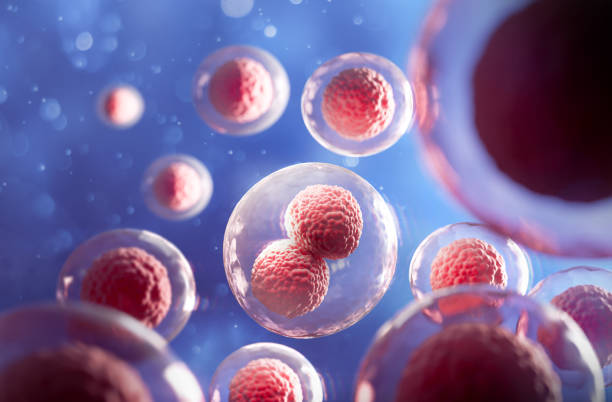
Microorganisms are living things so small that most cannot be seen without a microscope. They include bacteria, archaea, many fungi, protozoa, and microscopic algae. Some viruses are also commonly discussed alongside microorganisms, although whether viruses count as living organisms is a matter of scientific definition.
Microorganisms are not simply germs or causes of disease. Most are harmless to humans, and many are essential to life. They help plants obtain nutrients, break down dead material, produce foods, recycle elements through ecosystems, and support the communities of microbes that live on and inside our bodies.
Their small size hides an enormous range of biological diversity. Microorganisms can live in soil, oceans, freshwater, food, dust, hot springs, deep underground environments, and inside other organisms. Understanding them provides a clearer picture of how ecosystems function—and why life on Earth depends on processes we cannot see with the naked eye.
What exactly is a microorganism?
A microorganism, or microbe, is an organism that is generally too small to be seen clearly without magnification. The term describes size rather than a single biological group.
Some microorganisms consist of just one cell. Bacteria and archaea are single-celled organisms, as are many protozoa and microscopic algae. Some fungi, including yeasts, are also microscopic and can consist of individual cells. Other microorganisms may be made of multiple cells or form microscopic structures.
This distinction matters because “microorganism” is not equivalent to “single-celled organism.” It is also not equivalent to “germ.” A germ is an informal term usually referring to a microorganism capable of causing disease, whereas the vast majority of microorganisms do not cause human illness.
Microbes range widely in size. Individual bacterial cells are typically measured in micrometers, or millionths of a meter. Many are only a few micrometers across, while some microorganisms are considerably larger. A human hair, for comparison, is tens of micrometers wide.
The major groups of microorganisms
Microorganisms belong to several very different branches of life. Their cells, genetics, metabolism, and evolutionary histories can differ profoundly.
Bacteria
Bacteria are single-celled organisms with relatively simple cell structures. They do not have a nucleus enclosed by a membrane; instead, their DNA is located in a region of the cell called the nucleoid.
Bacteria are extraordinarily diverse. Some obtain energy from organic matter, while others use light or chemical reactions involving inorganic substances. They inhabit nearly every environment where life is possible.
Many bacteria are beneficial. Soil bacteria participate in nutrient cycling, some form close relationships with plants, and certain bacteria are used to make foods such as yogurt and cheese. Bacteria also live as members of microbial communities on and within humans.
A smaller subset can cause disease. These pathogenic bacteria may damage tissues directly, produce harmful substances, or trigger damaging immune responses.
Archaea
Archaea are also single-celled organisms without a membrane-bound nucleus, but they are distinct from bacteria. Their cell membranes, molecular machinery, and genetic characteristics differ from those of bacteria in important ways.
Some archaea are famous for living in environments that seem extreme to humans, including very salty, very hot, or oxygen-poor habitats. But archaea are not confined to extreme environments. They also occur in ordinary soils, oceans, sediments, and animal digestive systems.
Archaea are particularly important in global nutrient cycles. Certain species, for example, produce methane as part of their metabolism.
Fungi
Fungi include organisms such as yeasts, molds, and mushrooms. Many fungi grow as networks of microscopic filaments called hyphae, while yeasts are often single-celled.
Fungi obtain nutrients by releasing enzymes into their surroundings and absorbing the resulting dissolved compounds. This makes them important decomposers. They help break down dead plants and animals and return nutrients to ecosystems.
Some fungi are useful to humans in food production and biotechnology. Others can spoil food or cause infections. Mold growing on an old piece of food and the yeast used to make bread are both examples of fungi, despite their very different appearances and roles.
Protozoa
Protozoa is a broad term traditionally used for various microscopic, single-celled eukaryotes. Unlike bacteria and archaea, these cells contain a nucleus and often have complex internal structures.
Many protozoa live in freshwater, seawater, or soil, where they feed on bacteria, algae, organic material, or other organisms. They are important members of aquatic and soil food webs.
Some protozoa are parasites. Certain species can cause human disease, but parasitic forms represent only a fraction of the enormous diversity of microscopic eukaryotes.
Microscopic algae
Algae are a diverse collection of organisms capable of photosynthesis. Many are microscopic, although some algae are large enough to form the familiar seaweeds found along coastlines.
Microscopic algae occur abundantly in oceans and freshwater environments. Through photosynthesis, they use light energy to build organic molecules from carbon dioxide and water, releasing oxygen in the process. They also serve as food for other organisms and form the foundation of many aquatic food webs.
What about viruses?
Viruses are microscopic infectious agents, but they differ fundamentally from cellular microorganisms.
A virus generally consists of genetic material enclosed in a protein-based structure, sometimes surrounded by an additional membrane. It does not have the cellular machinery needed to reproduce independently. Instead, it enters a suitable host cell and uses the host’s machinery to make new virus particles.
Because viruses do not carry out independent cellular metabolism and cannot reproduce on their own, scientists do not universally classify them as living organisms. They are therefore best treated separately from cellular microorganisms when discussing the basic organization of life.
Viruses can infect humans, animals, plants, fungi, and even bacteria. Their effects range from causing disease to producing little obvious harm to their hosts.
Where are microorganisms found?
Microorganisms are essentially everywhere that conditions permit life.
They inhabit freshwater lakes and rivers, oceans, forests, grasslands, deserts, agricultural soils, and sediments. They occur on surfaces in homes and workplaces and are carried through the environment in water, dust, and air.
They also live on and inside plants and animals. The human body supports diverse microbial communities on the skin and in places such as the mouth and digestive tract.
The environment determines which microbes can thrive. Temperature, acidity, salinity, available nutrients, moisture, pressure, and the presence or absence of oxygen all influence microbial survival and growth. Some microbes require oxygen, while others are harmed by it. Some can tolerate conditions that would quickly damage most familiar forms of life.
This adaptability helps explain why microorganisms occupy such a wide range of habitats.
How do microorganisms get energy?
Like larger organisms, microorganisms need energy and raw materials to grow, maintain themselves, and reproduce. What makes microbes remarkable is the variety of chemical strategies they use to obtain them.
Some microorganisms consume organic molecules, such as sugars and other compounds produced by living organisms. Others capture energy from sunlight through photosynthesis.
Still others obtain energy from chemical reactions involving inorganic substances. Depending on the organism, these reactions can involve compounds containing sulfur, nitrogen, iron, hydrogen, or other elements.
This metabolic diversity has major consequences for ecosystems. Microorganisms can perform chemical transformations that make nutrients available to other organisms or return elements to forms that can be used again.
In other words, microbes are not merely passengers in ecosystems. They actively drive many of the chemical processes that make ecosystems function.
Why are microorganisms important?
Their importance comes largely from what they do rather than from their size.
They recycle nutrients
When plants and animals die, microorganisms help decompose their remains. Bacteria and fungi break down complex organic materials, releasing simpler compounds and returning elements such as carbon and nitrogen to the environment.
Microbes also participate in transformations of nutrients while organisms are alive. These processes help move essential elements through soil, water, organisms, and the atmosphere.
They support plants
Plants depend on microorganisms in several ways. Microbial activity in soil helps make nutrients accessible to plants. Some bacteria form associations with plant roots and can help plants obtain nitrogen in usable forms.
Fungi can also form intimate relationships with plant roots. In mycorrhizal associations, fungal structures extend into the surrounding soil and exchange resources with their plant partners.
They help produce food
Microorganisms have long been used to transform food. Yeasts ferment sugars to produce carbon dioxide and alcohol, a process central to breadmaking and many beverages. Bacteria are involved in fermenting foods such as yogurt, cheese, pickles, and other cultured products.
Fermentation can change flavor, texture, acidity, and shelf life while producing compounds that would not otherwise be present in the food.
They live with us
The human body is home to complex microbial communities. These microbes interact with one another, with food passing through the digestive system, and with the body’s tissues and immune system.
The relationship is not simply one of “good bacteria” versus “bad bacteria.” Microbial communities are ecosystems, and their effects depend on the organisms involved, where they are located, and the surrounding conditions.
They can cause disease
Some microorganisms are pathogens, meaning they can cause disease. Pathogenic microbes can damage cells directly, consume host resources, produce toxins, or provoke harmful immune reactions.
Human disease can be caused by certain bacteria, fungi, protozoa, and viruses. The fact that some microbes are dangerous, however, should not obscure the much larger role microorganisms play in supporting life and maintaining ecosystems.
How do microorganisms reproduce?
Different microorganisms reproduce in different ways.
Many bacteria reproduce by binary fission, in which a cell copies its DNA and divides into two daughter cells. Under favorable conditions, populations can therefore increase rapidly.
Many single-celled eukaryotes reproduce by cell division, while fungi may reproduce through spores, budding, or other processes depending on the species.
Rapid reproduction does not mean every microbial population grows continuously. Food availability, temperature, acidity, waste products, competition, predators, and other environmental factors eventually limit growth.
Microorganisms can also exchange genetic material or acquire genes from other sources. This genetic flexibility can contribute to rapid evolutionary change, including the development of resistance to antimicrobial drugs in some bacterial populations.
How do scientists study microorganisms?
Because most microorganisms cannot be observed directly with the unaided eye, microbiology relies on tools that reveal their structure, genetics, chemistry, and behavior.
Microscopes allow scientists to observe individual cells and microbial structures. Culturing techniques can grow particular microorganisms under controlled conditions, making it possible to study their physiology and interactions.
Modern researchers can also study microbial DNA and RNA directly. This is important because many microorganisms are difficult or impossible to grow using standard laboratory methods. By analyzing genetic material from an environmental sample, scientists can detect organisms based on their biological signatures rather than needing to grow them first.
Scientists may also examine the chemicals microorganisms consume and produce. These approaches help reveal how microbial communities function even when individual members are difficult to isolate.
Microorganisms and everyday life
You encounter microorganisms constantly, even when you cannot see them.
A piece of bread rises because yeast produces carbon dioxide during fermentation. Yogurt develops its characteristic acidity through microbial activity. Soil fertility depends partly on microbial decomposition and nutrient transformations. Food can spoil when microorganisms grow and alter its chemical composition.
Microorganisms are also important in medicine and biotechnology. Scientists use microbes and microbial processes to produce useful substances, study biological mechanisms, and develop industrial processes. At the same time, controlling harmful microorganisms is essential for sanitation, food safety, infection prevention, and medical treatment.
The central lesson is that microorganisms cannot be placed neatly into a category of either helpful or harmful. They are a vast collection of organisms with different biology and ecological roles. Some cause disease, some support other forms of life, some do both under different circumstances, and many have no direct relationship with human health at all.
Why microorganisms matter to life on Earth
Microorganisms have been shaping Earth’s environments for billions of years. Their activities affect the cycling of carbon, nitrogen, sulfur, and other elements, influencing ecosystems on scales ranging from microscopic communities to the global environment.
Their ability to use many different energy sources allows life to persist in places where familiar plants and animals could not survive. Microbial activity also creates relationships among organisms, moves nutrients through ecosystems, and helps transform the physical and chemical conditions around them.
Although individual microbes are tiny, their collective influence is enormous. Much of the living world operates through microscopic organisms and processes that remain invisible until we look closely enough to see them.